
When a Brain Injury Changes Everything: What Louisiana Victims Need to Know
A louisiana brain injury attorney can help you pursue compensation for medical costs, lost wages, pain and suffering, and long-term care after a traumatic brain injury (TBI) caused by someone else’s negligence.
Here’s what you need to know at a glance:
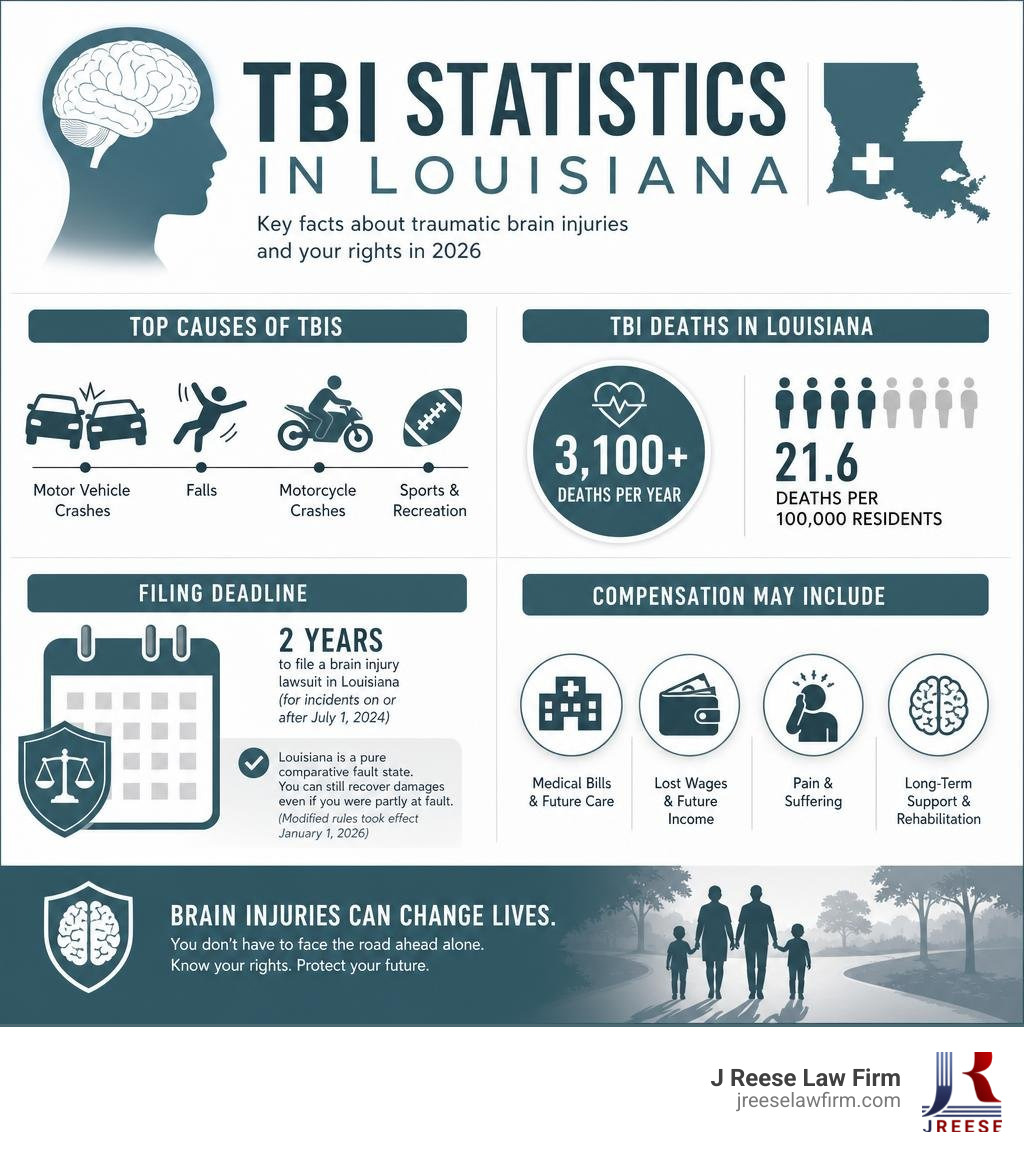
- You have 2 years to file a brain injury lawsuit in Louisiana (for incidents on or after July 1, 2024)
- Louisiana is a pure comparative fault state — you can still recover damages even if you were partly at fault (modified rules took effect January 1, 2026)
- Compensation can include medical bills, future care costs, lost income, and pain and suffering
- Normal CT or MRI scans do not end your claim — neuropsychological testing and symptom records still support a strong case
- Brain injury lawyers work on contingency — no upfront costs, no fee unless you win
Brain injuries are one of the most devastating — and most misunderstood — injuries a person can suffer. Many victims walk away from a crash feeling “okay,” only to experience headaches, memory problems, mood changes, and fatigue weeks later. By then, critical evidence may be gone and insurance companies may already be working to minimize your claim.
Louisiana sees more than 3,100 brain injury deaths per year — a rate of 21.6 per 100,000 residents. And for every death, many more survivors face a lifetime of physical, cognitive, and emotional challenges.
This guide explains your rights, your options, and what to expect when pursuing a brain injury claim in Louisiana.
Understanding Traumatic Brain Injuries and Common Causes in Louisiana
According to the Centers for Disease Control and Prevention (CDC), a traumatic brain injury (TBI) is defined as a disruption in the normal function of the brain caused by a bump, blow, or jolt to the head, or a penetrating head injury.
However, a TBI does not always require a direct, physical blow to the skull. Violent whiplash or sudden head rotation—common in high-impact collisions—can cause the brain to bounce or twist inside the hard protective shell of the skull. This movement can stretch, tear, or damage delicate neural pathways, disrupting the electrical and chemical signals that govern who we are, how we think, and how we move.
What is a TBI and How is it Diagnosed?
Diagnosing a brain injury requires a multi-step medical approach. In emergency settings, doctors frequently rely on the Glasgow Coma Scale (GCS)—a 15-point test that measures a patient’s motor responses, verbal responses, and ability to open their eyes—to gauge the initial severity of the injury.
Neurological examinations and advanced diagnostic imaging are also critical. While doctors utilize CT scans and MRI scans to rule out immediate, life-threatening emergencies like brain bleeds (hematomas) or skull fractures, these standard scans often fail to capture microscopic cellular damage.
To understand how TBIs are categorized, it is helpful to look at the three primary levels of severity:
| TBI Severity | Glasgow Coma Scale (GCS) Score | Key Symptoms & Diagnostic Indicators |
|---|---|---|
| Mild (Concussion) | 13 to 15 | Brief or no loss of consciousness (under 30 minutes); temporary confusion; headaches; normal standard CT/MRI scans. |
| Moderate | 9 to 12 | Loss of consciousness for 30 minutes to 24 hours; persistent confusion; cognitive deficits; potential abnormalities visible on imaging scans. |
| Severe | 3 to 8 | Loss of consciousness exceeding 24 hours (coma or vegetative state); profound cognitive, physical, and emotional impairments; visible brain trauma on standard scans. |
Common Causes of Brain Trauma in Louisiana
In our local communities, traumatic brain injuries occur across a wide variety of everyday scenarios. Car accidents and other vehicular crashes are responsible for one out of every five brain injuries requiring hospitalization.
When negligent parties fail to act with reasonable care, devastating brain trauma can occur in the following ways:
- Motor Vehicle Crashes: High-speed impacts on local roads can cause drivers and passengers to strike their heads against steering wheels, dashboards, or windows. When you or a loved one is hurt on the road, working with a New Orleans Car Accident Lawyer is essential to preserving evidence.
- Commercial Trucking Collisions: The massive size and weight of commercial rigs mean that collisions often result in catastrophic head trauma. A specialized New Orleans Truck Accident Attorney can help navigate the complex federal safety regulations governing these commercial carriers.
- Motorcycle Wrecks: Even when wearing a helmet, motorcyclists are highly vulnerable to traumatic head impacts when thrown from their bikes. If you have been injured, a New Orleans Motorcycle Accident Attorney can fight to protect your rights.
- Slip and Fall Accidents: Wet floors, uneven walkways, and poorly lit stairwells can cause sudden falls, leading to severe head strikes. These claims fall under the category of Premises Liability, and an experienced New Orleans Slip and Fall Attorney can help hold negligent property owners accountable.
- Workplace and Industrial Incidents: Construction sites, maritime wharves, and local industrial facilities carry high risks for falling objects or falls from elevated heights, which are primary drivers of TBI-related hospitalizations.
Long-Term Physical, Cognitive, and Emotional Effects
A brain injury is not a single, isolated event; it is often the start of a lifelong health journey. Up to 20% of mild brain injury survivors develop post-concussion syndrome (PCS), experiencing debilitating symptoms that can persist for months or even years.
The long-term effects of a TBI generally fall into three categories:
- Physical Symptoms: Chronic headaches, dizziness, vertigo, seizures (post-traumatic epilepsy), fatigue, sleep disturbances, and loss of balance or coordination.
- Cognitive Deficits: Persistent memory loss, difficulty concentrating, slowed processing speeds, executive dysfunction (trouble planning or organizing), and speech or language impairment.
- Emotional and Behavioral Changes: Inappropriate mood swings, increased irritability, anxiety, depression, personality changes, and difficulty regulating anger.
Proving the “Invisible Injury” When Scans Appear Normal

One of the most frustrating aspects of a mild TBI or concussion is that it is frequently an “invisible injury.” A patient may struggle to remember basic tasks, suffer from blinding headaches, and experience dramatic mood swings, yet their standard emergency room CT scan or MRI looks completely normal.
This happens because standard clinical imaging is designed to detect structural damage, such as bleeding or swelling. It cannot capture the microscopic tearing of axons or the metabolic and chemical crises occurring at the cellular level. Insurance adjusters regularly exploit normal scans to argue that a victim is exaggerating their symptoms or has fully recovered.
How a Louisiana Brain Injury Attorney Proves Mild TBI
Proving a mild TBI requires looking beyond standard emergency room scans. When we build a case for a client, we work closely with specialized medical experts to compile objective, comprehensive evidence of cognitive and functional impairment.
To establish the full impact of a brain injury, a qualified New Orleans Catastrophic Injuries Attorney will utilize:
- Neuropsychological Testing: These standardized, multi-hour cognitive assessments evaluate memory, attention, executive function, and language skills, providing objective data on brain function.
- Advanced Imaging Technologies: We look to specialized neurological diagnostics, such as Diffusion Tensor Imaging (DTI) or PET scans, which can highlight functional abnormalities and white matter tract damage missed by standard MRIs.
- Symptom Logs and Chronological Records: Keeping a daily log of headaches, memory lapses, and missed work helps establish a clear timeline of the injury’s impact.
- Witness Testimony: Statements from family members, friends, coworkers, and supervisors are incredibly powerful. They can describe real-world functional changes, such as a previously mild-tempered person becoming easily angered, or an organized employee struggling to manage basic tasks.
The Financial Reality: Lifetime Costs and Recoverable Compensation

The financial impact of a traumatic brain injury can be staggering. Unlike minor physical injuries that heal within a few weeks, a moderate to severe TBI can require a lifetime of medical care, specialized support, and modified living arrangements.
Lifetime Costs of Traumatic Brain Injuries
The lifetime costs of managing a severe brain injury can easily reach millions of dollars. These expenses extend far beyond the initial emergency room visit and may include:
- Rehabilitation and Specialized Therapies: Months or years of physical therapy, occupational therapy, speech-language pathology, and cognitive rehabilitation.
- Life Care Plans: We work with certified life care planners to project the lifetime costs of medical care, prescription medications, assistive mobility devices, and home health aides.
- Home and Vehicle Modifications: Wheelchair ramps, widened doorways, specialized bathroom fixtures, and adaptive vehicle equipment to accommodate physical limitations.
- Long-Term Care Facilities: In severe cases, a survivor may require round-the-clock nursing care or placement in a specialized residential rehabilitation facility.
Recoverable Damages in a Louisiana TBI Claim
Under Louisiana law, victims of negligence are entitled to pursue both economic and non-economic damages. A comprehensive claim seeks to recover:
- Past and Future Medical Expenses: All costs associated with emergency treatment, surgeries, therapies, medications, and future care.
- Lost Income and Diminished Earning Capacity: Compensation for wages lost during recovery, as well as the long-term loss of the ability to earn a living if the victim cannot return to their previous line of work.
- Pain and Suffering: Compensation for the physical pain and discomfort caused by the injury.
- Mental Anguish and Emotional Distress: Damages for the psychological toll of the injury, including depression, anxiety, and the loss of one’s sense of self.
- Loss of Enjoyment of Life: Compensation for the inability to participate in hobbies, sports, and daily activities enjoyed before the accident.
- Loss of Consortium: Damages awarded to close family members for the loss of companionship, affection, and support resulting from the victim’s severe injuries.
Navigating Louisiana Brain Injury Laws: Timelines and Fault Rules
Louisiana has a unique legal system rooted in its Civil Code. Navigating these laws requires a deep understanding of strict statutory deadlines and changing rules regarding shared fault.
Louisiana’s Statute of Limitations for Personal Injury
In Louisiana, the legal deadline to file a personal injury lawsuit is known as the prescriptive period. For many years, Louisiana maintained an exceptionally short one-year prescriptive period for personal injury claims. However, significant legislative changes have altered this timeline.
For accidents and injuries occurring on or after July 1, 2024, Louisiana has extended the statute of limitations to two years from the date of the injury. If your injury occurred prior to that date, the traditional one-year limit may still apply.
To understand how these complex timing rules apply to your specific situation, it is highly beneficial to review Louisiana’s One Year Statute of Limitations and consult with an attorney immediately to ensure you do not miss critical filing deadlines.
Comparative Fault and the 2026 Legal Changes
Louisiana applies comparative fault rules when determining liability in personal injury claims. This means that if you are found to be partially responsible for the accident that caused your brain injury, your financial recovery will be reduced by your percentage of fault.
Historically, Louisiana operated under a pure comparative fault system, allowing victims to recover damages even if they were 99% at fault. However, effective January 1, 2026, Louisiana transitioned to a modified comparative fault system with a 51% bar rule. Under these updated rules:
- If you are 50% or less at fault, you can still recover damages, though your compensation will be reduced by your percentage of responsibility.
- If you are found to be 51% or more at fault, you are completely barred from recovering any compensation from other parties.
These shifting legal standards highlight Why Louisiana Personal Injury Cases Are Different and underscore the absolute necessity of building a rock-solid liability case from day one.
Why You Need a Louisiana Brain Injury Attorney for Your Claim
Attempting to handle a complex brain injury claim on your own is a high-risk endeavor. Insurance companies are well-aware of the high potential costs associated with TBI claims, and their adjusters are trained to minimize payouts. They may offer a quick, early settlement before the full, long-term impact of your brain injury is medically understood. Accepting an early, lowball offer legally releases the negligent party from all future liability, leaving your family financially stranded when long-term complications arise.
Maximizing Your Claim Value with Legal Representation
A dedicated louisiana brain injury attorney protects your family’s future by handling every aspect of your legal claim. When you partner with a specialized New Orleans Traumatic Brain Injury Attorney, we will:
- Investigate the Accident: Gather police reports, obtain surveillance footage, secure witness statements, and work with accident reconstruction specialists to establish clear liability.
- Collaborate with Medical Experts: Work alongside independent neurologists, neuropsychologists, and life care planners to document the true extent of your cognitive impairments and future medical needs.
- Manage Insurance Communication: Handle all phone calls, paperwork, and negotiations with insurance adjusters, shielding you from aggressive settlement tactics.
- Prepare for Trial: If an insurance company refuses to offer a fair settlement that covers your lifetime needs, we are fully prepared to present your case before a judge and jury.
How Contingency Fees Work for TBI Victims
We believe that high-quality legal representation should be accessible to everyone, regardless of their financial situation. That is why we handle personal injury claims on a contingency fee basis.
Under a contingency fee agreement:
- No Upfront Costs: You pay nothing out of pocket to hire us or begin working on your case.
- We Cover Litigation Expenses: Our firm advances all costs associated with gathering medical records, hiring expert witnesses, and filing court documents.
- No Fee Unless We Win: We only receive a fee if we successfully secure a financial settlement or jury verdict on your behalf. Our fee is a pre-agreed percentage of your final recovery, making your legal representation completely risk-free.
Frequently Asked Questions About Louisiana Brain Injury Claims
What should I do immediately after a suspected brain injury in Louisiana?
Your health and safety must always be your top priority. If you suspect that you or a loved one has suffered a brain injury, take the following steps immediately:
- Seek Immediate Medical Attention: Go to the nearest emergency room or consult a doctor right away, even if you do not think the injury is severe. Adrenaline can mask symptoms, and delayed treatment can lead to greater internal complications.
- Report the Incident: Ensure that a police report is filed for motor vehicle accidents, or an official incident report is completed for slip and falls or workplace injuries.
- Document Everything: Take photographs of the accident scene, your visible injuries, and any property damage. Collect contact information from any eyewitnesses.
- Keep a Symptom Diary: Write down any physical, cognitive, or emotional changes you experience in the days and weeks following the accident.
- Avoid Speaking to Insurance Adjusters: Do not give recorded statements or sign any settlement offers until you have consulted with an attorney. For more detailed guidance, read our article on What to Do After a Car Accident in Louisiana.
What if a loved one suffered a fatal brain injury?
Tragically, some severe brain injuries are fatal. If you have lost a family member due to a catastrophic head injury caused by someone else’s negligence, you have the right to pursue a wrongful death claim and a survival action.
These legal avenues allow surviving family members to seek compensation for funeral expenses, outstanding medical bills, lost financial support, and the emotional loss of their loved one’s companionship. Consulting with a compassionate New Orleans Wrongful Death Attorney can help your family navigate this incredibly difficult time and demand justice.
How can a local Louisiana brain injury attorney help me negotiate with insurance?
Insurance companies are profit-driven corporations. Their primary goal is to settle claims as quickly and cheaply as possible. Local insurance adjusters often use a variety of tactics to devalue brain injury claims, such as arguing that your symptoms are due to pre-existing conditions, pointing to normal CT scans as “proof” you are healed, or attempting to shift the blame for the accident onto you.
A local Louisiana Brain Injury Attorney understands these tactics and knows how to counter them. We present comprehensive, expert-backed evidence packages that force insurers to take your claim seriously. We understand local parish court procedures, state minimum insurance policy limits, and how to build a trial-ready case that maximizes your recovery.
Conclusion
A traumatic brain injury can completely disrupt your life, leaving you and your family to navigate a complex path of physical recovery and financial uncertainty. You do not have to carry this heavy burden alone.
At the J Reese Law Firm, we are committed to helping brain injury survivors secure the resources, medical care, and financial compensation they need to rebuild their lives. If you or a loved one is dealing with the aftermath of a traumatic head injury, contact our New Orleans Traumatic Brain Injury Attorney today to schedule a free, confidential consultation. Let us handle the legal battle so you can focus on your recovery.