When Construction Work Goes Wrong: Your Legal Rights in New Orleans
A New Orleans construction accident lawyer can be the difference between walking away with fair compensation and being left with nothing after a serious injury on the job.
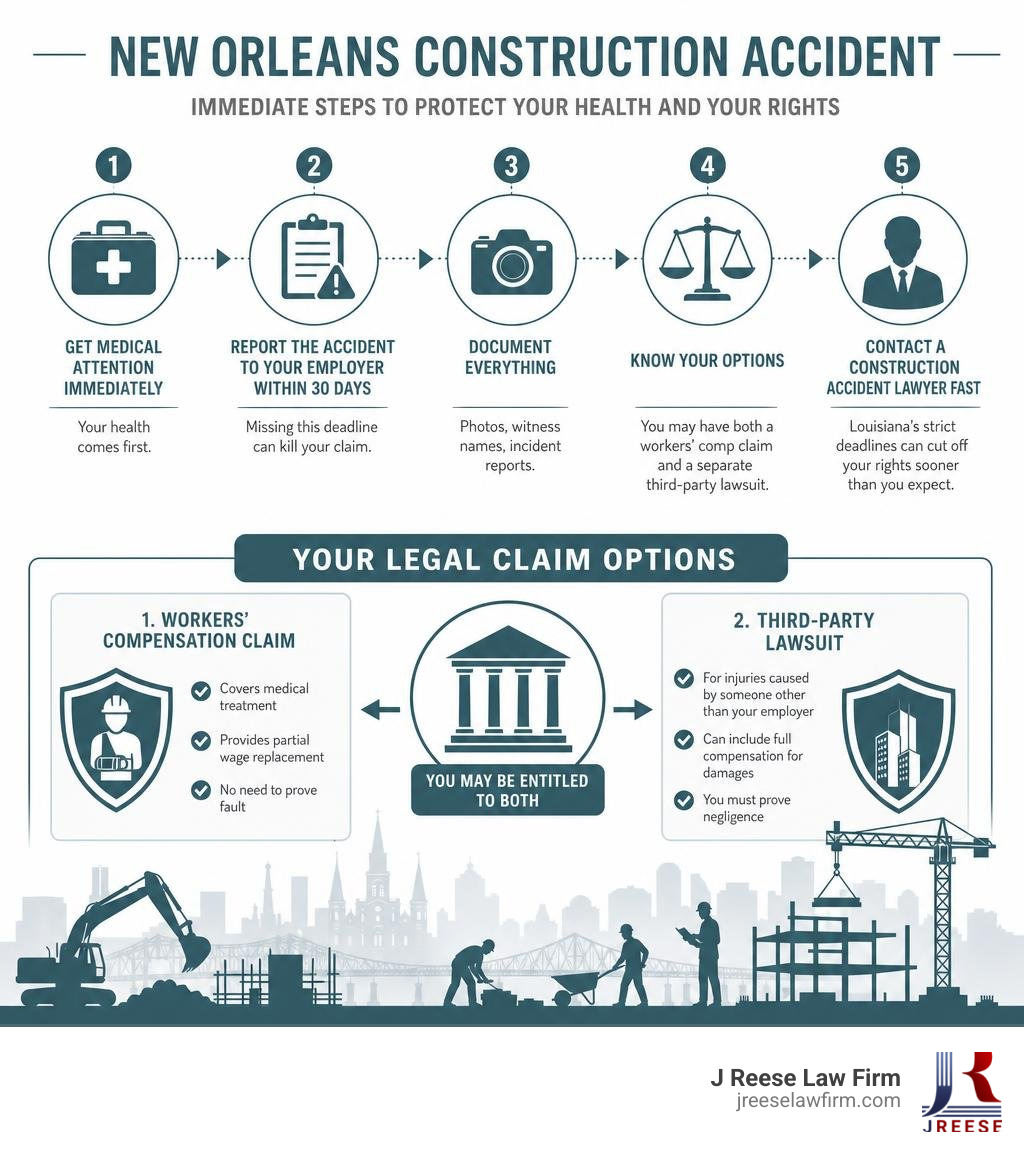
Quick answer — here’s what matters most if you’ve been hurt on a construction site in New Orleans:
- Get medical attention immediately, even if injuries seem minor
- Report the accident to your employer within 30 days — missing this deadline can kill your claim
- Document everything — photos, witness names, incident reports
- Know your options — you may have both a workers’ comp claim and a separate third-party lawsuit
- Contact a construction accident lawyer fast — Louisiana’s strict deadlines can cut off your rights sooner than you expect
Construction is one of the most dangerous industries in Louisiana. According to the U.S. Bureau of Labor Statistics, there were 104 fatalities in Louisiana’s construction and construction-related industries in 2021 alone — accounting for roughly 27% of all workplace deaths in the state that year.
And that’s just the fatal cases. Thousands more workers are left dealing with broken bones, brain injuries, amputations, and other life-altering conditions — often while facing lost wages, mounting medical bills, and pressure from insurance companies to settle fast and cheap.
If you or someone you love has been hurt on a construction site in the New Orleans area, this guide walks you through everything you need to know — from understanding your legal options to choosing the right attorney to fight for you.
Common Hazards and Injuries on New Orleans Construction Sites

New Orleans is a city defined by constant renewal. From restoring historic shotgun homes in the Garden District to raising massive commercial high-rises downtown, our local construction boom keeps the economy moving. However, the unique geographic and structural landscape of Crescent City also presents distinct safety hazards.
When contractors rush to meet high-pressure deadlines, cut corners on safety protocols, or fail to provide proper training, the results are often catastrophic.
The “Fatal Four” and Other Site Hazards
The Occupational Safety and Health Administration (OSHA) heavily regulates job site safety, yet violations remain incredibly common. OSHA identifies four primary hazards—coined the “Fatal Four”—that account for the vast majority of construction-related injuries and fatalities:
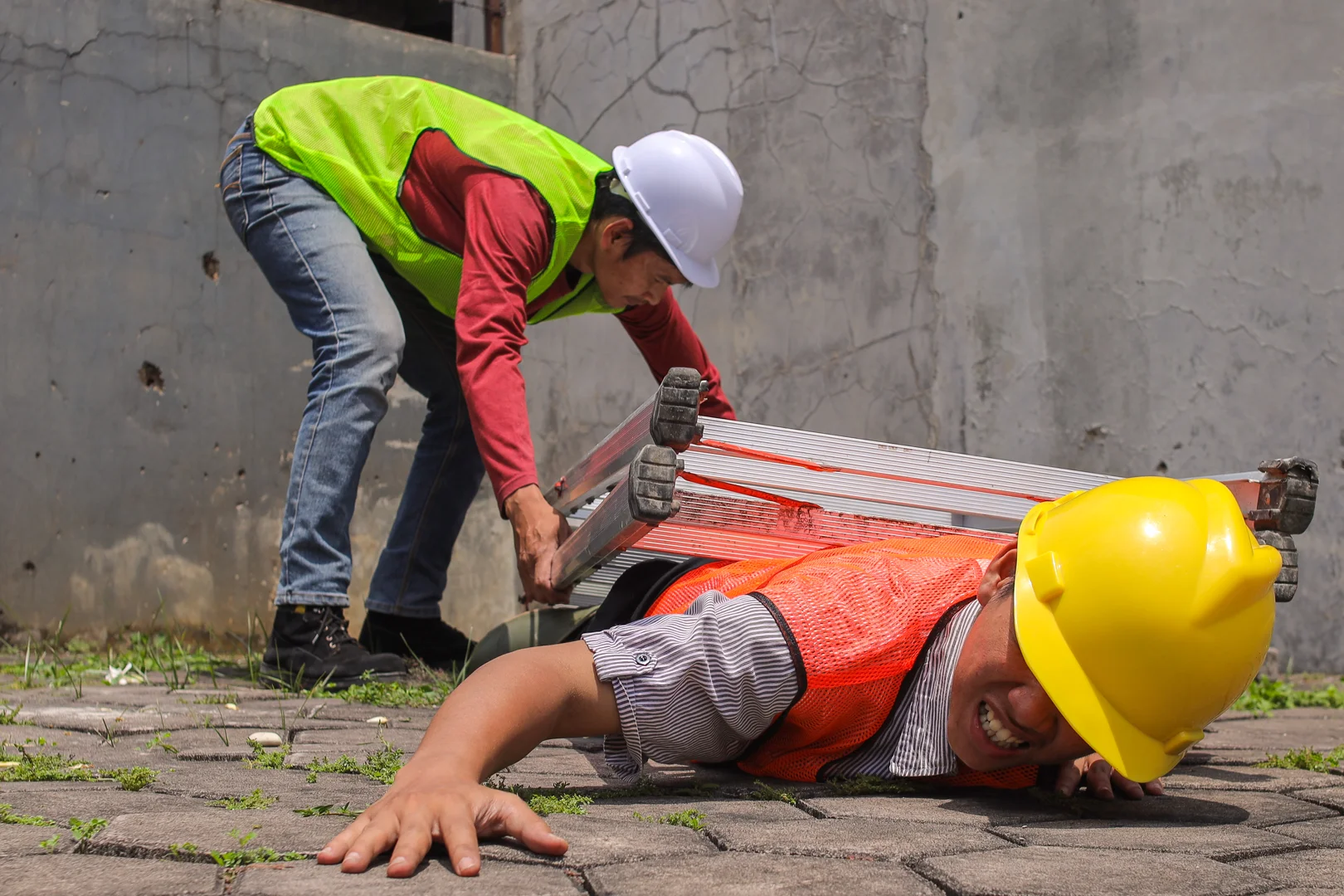
- Falls from Heights: Unsecured scaffolding, poorly maintained ladders, and missing guardrails on roofs or elevated platforms are the leading causes of construction injuries.
- Struck-by Accidents: Falling tools, flying debris, and moving heavy machinery (like cranes or forklifts) pose constant dangers to anyone on the ground.
- Electrocutions: Unmarked live wires, faulty heavy equipment, and working near active overhead power lines can cause severe shock or death.
- Caught-in/Between Incidents: These occur when a worker is crushed, squeezed, or trapped between heavy machinery, collapsing trenches, or structural walls.
Beyond these four hazards, New Orleans road crew workers face extreme dangers from passing vehicles. Speeding motorists, missing warning signs, and poorly laid out work zones turn highway maintenance into high-risk operations. If you are navigating the city, it is helpful to understand the most dangerous intersections and corridors by reviewing New Orleans Accident Hotspots.
Severe Injuries Suffered by Construction Workers
The sheer force and weight involved in construction work mean that when accidents happen, the injuries are rarely minor. Many of our clients face permanent, life-altering physical damage:
- Spinal Cord Injuries: Falls or crush accidents frequently fracture vertebrae, leading to chronic pain, herniated discs, or partial to full paralysis.
- Amputations and Crush Injuries: Heavy machinery accidents can crush limbs beyond repair, requiring surgical amputation and long-term prosthetic care.
- Severe Burns: Electrical arc flashes, chemical spills, and explosions lead to deep-tissue burns that require intensive skin grafts and cause permanent scarring.
- Traumatic Brain Injuries (TBIs): Even when wearing a hard hat, a fall or a blow from a dropped tool can cause a severe concussion or permanent brain damage. Statistically, over 2 million Americans sustain traumatic brain injuries each year. If you or a loved one is dealing with the aftermath of a head injury, consulting a specialized New Orleans Traumatic Brain Injury Attorney is critical.
For any injury that alters your ability to work and enjoy life, securing representation from a New Orleans Catastrophic Injuries Attorney ensures your long-term medical and financial needs are fully accounted for.
Legal Pathways: Workers’ Comp vs. Third-Party Claims
If you are injured on a construction site, you might assume your only legal option is to file a workers’ compensation claim. In reality, Louisiana law provides two distinct pathways for recovering compensation. Understanding the differences between them is crucial to maximizing your financial recovery.
| Feature | Louisiana Workers’ Comp | Third-Party Liability Claim |
|---|---|---|
| Fault Required? | No. Benefits are paid regardless of who caused the accident. | Yes. You must prove the third party’s negligence caused your injury. |
| Who Can You Sue? | Your direct employer (exclusive remedy system). | Subcontractors, equipment manufacturers, property owners, etc. |
| Medical Expenses | Covered 100% for approved, accident-related treatments. | Covered 100% (including future medical care and rehabilitation). |
| Lost Wages | Limited to a portion of your average weekly wage (capped by law). | Full recovery of lost wages, lost earning capacity, and future earnings. |
| Pain & Suffering? | No. Non-economic damages are not available. | Yes. Includes physical pain, mental anguish, and loss of enjoyment of life. |
Louisiana Workers’ Compensation Benefits
Louisiana’s workers’ compensation system is a no-fault program designed to provide quick financial support to injured employees. Because it is a no-fault system, you do not have to prove your employer did anything wrong to receive benefits.
Under this system, you are generally entitled to:
- Coverage for all necessary medical treatments related to your workplace injury.
- Temporary Total Disability (TTD) benefits, which pay roughly two-thirds of your average weekly wage while you recover (up to a state-mandated cap).
- Vocational rehabilitation services if you need help transitioning to a different type of work.
However, the “exclusive remedy” rule means that in exchange for these guaranteed benefits, you generally cannot sue your direct employer or co-workers for negligence. Furthermore, you must report your injury to your employer within 30 days of the accident, or you risk losing your right to benefits entirely.
When to File a Third-Party Claim with a New Orleans construction accident lawyer
While workers’ compensation keeps some money coming in, it rarely covers the true physical and emotional toll of a severe accident. This is where third-party liability claims come into play.
If someone other than your direct employer or a direct co-worker caused your accident, you can file a personal injury lawsuit against them. Common examples of liable third parties include:
- Negligent Subcontractors: A different company working on the same site leaves a trench uncovered or knocks over scaffolding.
- Equipment Manufacturers: A tool, harness, or crane malfunctions due to a manufacturing defect.
- Property Owners: The owner of the land fails to warn workers of hidden hazards, such as unstable soil or toxic chemical exposure.
Filing a third-party claim allows you to pursue compensation for pain, suffering, emotional distress, and the full value of your lost wages.
If your accident occurred near the Mississippi River or involves port infrastructure, you may need a New Orleans Maritime Accident Lawyer to navigate complex federal maritime laws. Similarly, if your injury involved a delivery truck or heavy transport vehicle on site, a New Orleans Truck Accident Attorney can help identify the trucking company’s liability.
Step-by-Step: What to Do After a Construction Site Accident

The moments directly following a construction accident are chaotic, but the actions you take can make or break your future legal claims. Treat the aftermath of a construction accident with the same diligence you would use if you were learning What to Do After a Car Accident in Louisiana.
Immediate Steps to Protect Your Health and Claim
- Seek Medical Attention Immediately: Your health is the absolute priority. Even if you think you just have a few bruises, let a doctor evaluate you. Internal bleeding, concussions, and soft tissue damage often take hours or days to show clear symptoms. Medical records are also the foundational evidence of your claim.
- Report the Incident: Tell your foreman, supervisor, or employer about the accident immediately. Ensure they write an official incident report, and ask for a copy. In Louisiana, you have a strict 30-day window to report a workplace injury to secure workers’ comp.
- Document the Scene: Construction sites change rapidly. If you are physically able (or can ask a trusted co-worker), take photos and videos of the hazard that caused your injury, the surrounding area, any missing safety equipment, and your physical injuries.
- Gather Witness Contact Info: Collect the names, phone numbers, and employer names of anyone who saw the accident or worked in the immediate area.
- Consult a Lawyer Before Signing Anything: Insurance adjusters may offer a quick settlement. Do not sign anything, give a recorded statement, or accept a payout until you have spoken with a dedicated new orleans construction accident lawyer.
Understanding Louisiana’s One-Year Statute of Limitations
Time is not on your side. Louisiana has one of the shortest deadlines in the country for filing personal injury and third-party claims. Under Louisiana Civil Code section 3492, you generally have only one year from the date of the accident to file a lawsuit.
This strict deadline is explained in detail in our guide to Louisiana’s One Year Statute of Limitations. If you let this window close, you lose your right to hold the negligent parties accountable forever. To understand how these tight deadlines and local laws impact your case, read about Why Louisiana Personal Injury Cases Are Different.
How a New Orleans construction accident lawyer Maximizes Your Compensation
Trying to handle a construction injury claim on your own is like trying to pour a concrete foundation without a level—it is bound to crack under pressure. Large construction companies and their insurance providers employ teams of lawyers whose sole job is to minimize your payout. We level the playing field.
Proving Negligence and Recovering Damages
To win a third-party personal injury lawsuit, we must prove that the third party owed you a duty of care, breached that duty through negligence, and directly caused your injuries. We build a bulletproof case by:
- Obtaining and analyzing OSHA inspection reports and safety logs.
- Subpoenaing internal company communications and equipment maintenance records.
- Working with accident reconstruction experts and job-site safety engineers.
Through these efforts, we help you recover both economic and non-economic damages, including medical bills, lost wages, rehabilitation costs, pain and suffering, and loss of consortium. If the accident resulted in a tragic loss, we can guide your family through filing a claim with a New Orleans Wrongful Death Attorney to secure funeral costs and loss of financial support.
Choosing the Right New Orleans construction accident lawyer for Your Case
When selecting a law firm to represent you, look for these essential qualities:
- A Proven Track Record: Ask about their history of securing substantial settlements and verdicts for injured workers. You can review our past victories on our Results page.
- Trial Readiness: Many lawyers prefer quick settlements, even if they are undervalued. Choose a firm that is fully prepared to take your case to court if the insurance company refuses to play fair.
- A Contingency Fee Structure: You should never have to pay out-of-pocket legal fees to get justice. We work on a contingency fee basis, meaning we only get paid if we win your case.
Frequently Asked Questions About New Orleans Construction Accidents
Can I sue my employer for a construction accident in Louisiana?
Generally, no. Louisiana’s workers’ compensation system acts as an “exclusive remedy,” meaning you cannot sue your direct employer for standard negligence. However, there are two major exceptions: if your employer caused your injury through an intentional act, or if a third party (such as a subcontractor or equipment manufacturer) contributed to the accident.
What is the difference between workers’ comp and a personal injury lawsuit?
Workers’ compensation is a no-fault system that covers medical bills and a portion of your lost wages, but it does not pay for pain, suffering, or emotional distress. A Personal Injury lawsuit against a third party requires proving negligence, but it allows you to recover full compensation for all damages—including pain and suffering and unlimited lost earning capacity.
How soon should I contact a lawyer after a construction accident?
You should contact a lawyer as soon as possible. Evidence on construction sites can be cleared away, cleaned up, or built over within days. A lawyer can immediately issue a spoliation letter to preserve critical evidence, identify witnesses before they move to other job sites, and ensure you do not miss Louisiana’s strict one-year filing deadline.
Secure Your Recovery with J Reese Law Firm
When you are injured on a construction site, the physical, emotional, and financial toll can feel overwhelming. You do not have to carry this heavy load alone. At J Reese Law Firm, we are dedicated to helping injured workers navigate the complex legal system, stand up to aggressive insurance companies, and secure the maximum compensation they deserve.
Let us handle the legal heavy lifting so you can focus on what matters most: your recovery. Contact us today to schedule a free, no-obligation consultation, or explore our Personal Injury resources to learn more about how we protect our community.