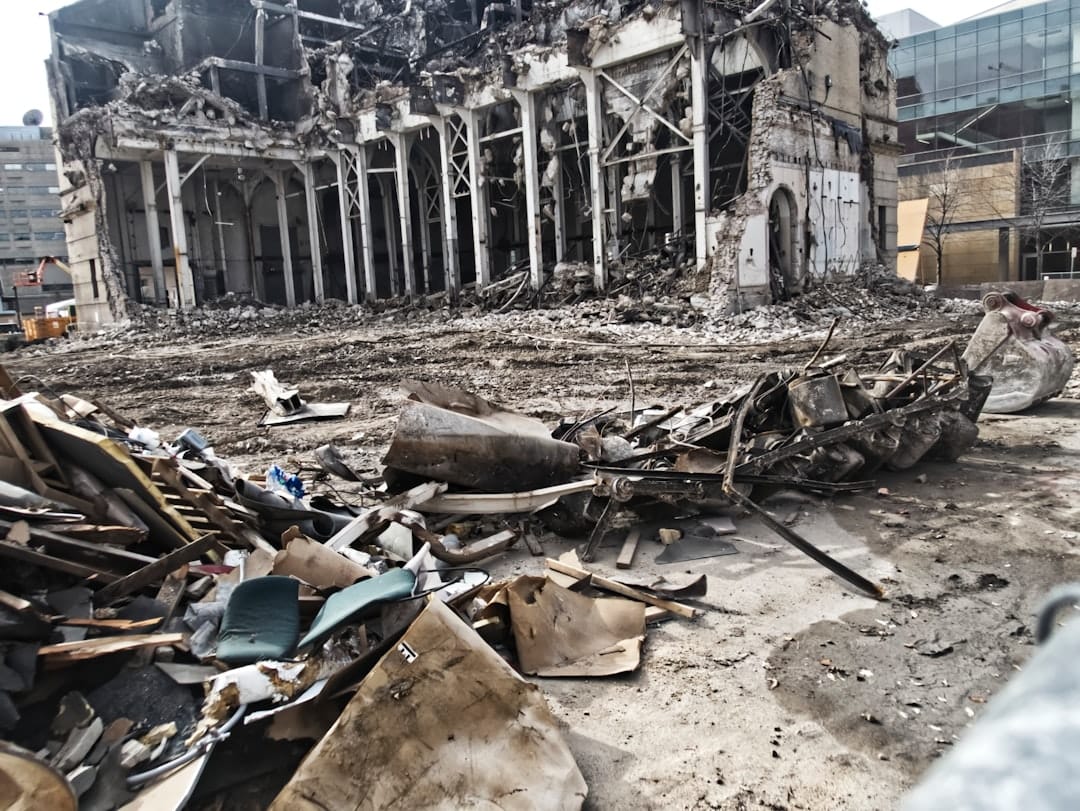
When a Factory Explosion Turns Your World Upside Down
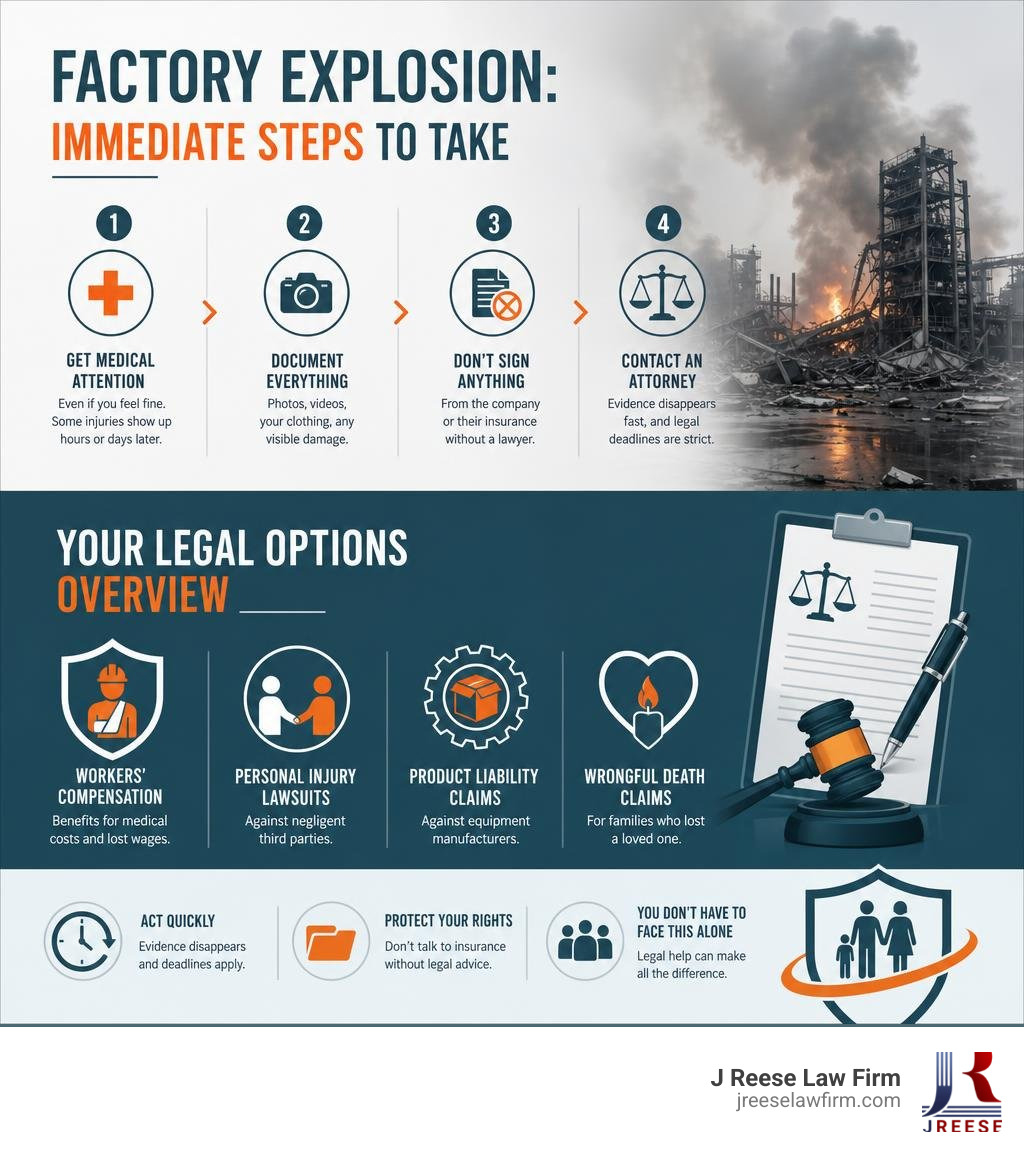
If you’re searching for factory explosion legal help, here’s what you need to know right now:
Your most important immediate steps:
- Get medical attention — even if you feel fine. Some injuries, like lung damage from chemical exposure, show up hours or days later.
- Document everything — photos, videos, your clothing, any visible damage.
- Don’t sign anything from the company or their insurance without talking to a lawyer first.
- Contact an attorney as soon as possible — evidence disappears fast, and legal deadlines are strict.
Your legal options may include:
- Workers’ compensation benefits (medical costs, lost wages)
- Personal injury lawsuits against negligent third parties
- Product liability claims against equipment manufacturers
- Wrongful death claims if you lost a loved one
Factory explosions are not random acts of fate. They are almost always the result of preventable failures — poor maintenance, ignored safety violations, inadequate worker training, or defective equipment. In fact, according to the U.S. Bureau of Labor Statistics, workplace explosions and fires cause over 100 fatal injuries every year in the U.S. alone.
The 2013 Texas fertilizer plant explosion is a stark reminder of what’s at stake: 15 people died and over 150 were injured in a single blast. And in just May 2026, a chemical tank rupture at a Washington state paper mill killed 11 workers in what the governor called the deadliest industrial tragedy in the state’s modern history.
If you or someone you love has been caught in a factory blast, the physical, emotional, and financial toll can be overwhelming. But you have real legal rights — and acting quickly can make the difference between a strong claim and a lost one.
This guide walks you through everything: causes, injuries, legal options, evidence, compensation, and how to find the right attorney.
Understanding the Causes and Science of Industrial Blasts
Industrial explosions are highly complex events. Scientifically, they occur when rapid chemical reactions release massive amounts of gas, heat, and pressure in an incredibly compressed timeframe. This often happens when flammable gases or vapors mix with oxygen in the air and meet an ignition source, such as a stray spark or an overheated machine.
Another common hazard is vapor accumulation from boiling liquids. When highly volatile chemicals are improperly stored or kept at unstable temperatures, pressure builds up within storage tanks. If a safety valve fails or the tank integrity is compromised, a catastrophic pressure vessel explosion occurs, releasing toxic or highly flammable chemical clouds into the workspace.
Industrial facilities must actively manage these risks, but negligence frequently gets in the way of safety. Some of the most common causes of factory and chemical plant explosions include:
- Poor maintenance of high-pressure systems and boilers
- Inadequate safety training for employees handling volatile compounds
- Electrical hazards, such as ungrounded wiring or non-explosion-proof fixtures
- Unsafe storage of incompatible chemicals
- Failure to follow hot-work permit procedures (such as welding near flammable materials)
- Improper labeling of hazardous substances
- Malfunctioning safety valves, sensors, and emergency shutdown systems
- OSHA violations and ignored internal safety audits
Chemical Plant and Fertilizer Factory Hazards
Chemical and fertilizer manufacturing plants handle some of the most volatile compounds in the world. Ammonia is a primary component in these industries; in fact, over 80% of the approximately 100 million metric tons of ammonia produced annually is used in the manufacturing of fertilizer and other agricultural materials.
While ammonia is highly effective for crops, it is exceptionally dangerous to human health and highly explosive under the right conditions. Because of this, OSHA sets a strict ammonia exposure limit of 25 ppm (parts per million) during an 8-hour span of time for workers. When safety protocols fail, ammonia and other chemicals can leak, vaporize, and ignite.
We see these risks locally in Louisiana. For example, incidents like the Carrollton Water Plant Explosion Injures 3 in New Orleans highlight how quickly municipal and industrial chemical processes can go wrong, leaving workers injured and local communities in danger.
Common Equipment Failures and Negligence
When we dive into the root causes of plant disasters, we find that equipment rarely fails without a paper trail of human neglect. Industrial machinery requires rigorous, scheduled maintenance. When plant operators cut corners to keep production lines running, they allow critical components to deteriorate.
Electrical hazards, such as faulty wiring near chemical storage areas, are a frequent trigger for devastating blasts. Furthermore, improper labeling of pipes and storage drums can lead to workers accidentally mixing incompatible chemicals, resulting in rapid, violent exothermic reactions. When companies put profits over safety, these violations create a ticking time bomb for everyone on site.
Catastrophic Injuries and Property Damage from Factory Explosions
The sheer force of an industrial blast is devastating. Victims are often subjected to a combination of thermal energy, toxic gas inhalation, flying shrapnel, and structural collapses.

Immediate and Delayed Physical Trauma
Explosions cause complex, multi-system trauma that requires immediate and long-term medical care. These injuries are generally categorized by how they damage the body:
- Blast Injuries (Primary Trauma): The overpressure wave from a blast can rupture eardrums, damage lungs, and cause internal bleeding or organ perforation.
- Thermal and Chemical Burns: Victims often suffer severe first-to-fourth-degree burns from extreme heat, burning debris, or corrosive chemical contact.
- Blunt Force and Penetrating Trauma: The physical force of the blast can throw workers into hard surfaces, resulting in broken limbs, damaged vertebrae, and severe lacerations from flying metal.
- Traumatic Brain Injuries (TBIs): Concussions and severe brain trauma can occur from the blast wave itself or from falling debris. If you or a loved one is struggling with cognitive issues after an incident, you can find more info on traumatic brain injuries to understand your medical and legal options.
Importantly, some of the most dangerous injuries do not show symptoms immediately. For instance, inhaling toxic chemicals like nitric acid can cause delayed pulmonary edema (fluid buildup in the lungs) that may not manifest until 4 to 24 hours after exposure. A worker might leave the blast site feeling relatively fine, only to experience life-threatening respiratory distress hours later.
Psychological and Environmental Impact
The damage from a factory explosion is rarely limited to physical scars. Survivors frequently struggle with severe Post-Traumatic Stress Disorder (PTSD), anxiety, depression, and survivor’s guilt. The psychological toll of surviving a catastrophic blast or witnessing the loss of coworkers can permanently alter a person’s quality of life.
Additionally, these disasters carry massive environmental consequences. Toxic chemical runoff can contaminate local waterways, and hazardous smoke plumes can poison the air of surrounding neighborhoods. For those dealing with the long-term fallout of these disasters, our team offers more info on catastrophic injuries to help families navigate the complex physical and environmental impacts of industrial accidents.
Navigating Your Options for Factory Explosion Legal Help
If you have been injured in an industrial blast, navigating the legal landscape can feel like trying to walk through a minefield. Understanding your rights is the first step toward securing the financial support you need to rebuild your life. To learn more about how these cases are handled, you can access more info on refinery and chemical plant accidents.
Workers’ Compensation vs. Third-Party Lawsuits
In Louisiana, if you are injured on the job, you are generally entitled to workers’ compensation benefits. This program is designed to provide “no-fault” coverage, meaning you can receive medical care and partial wage replacement even if your employer did not do anything wrong. However, in exchange for this benefit, workers’ compensation laws generally grant employers “immunity” from direct personal injury lawsuits.
However, workers’ compensation benefits are incredibly limited. They do not cover pain and suffering, emotional distress, or the full extent of your lost earning capacity. Fortunately, many factory explosions involve third-party liability. If an outside entity’s negligence contributed to the blast, you can file a personal injury lawsuit against them while still receiving your workers’ compensation benefits.
| Feature | Workers’ Compensation | Third-Party Personal Injury Lawsuit |
|---|---|---|
| Fault Required? | No, covers injuries regardless of who caused them. | Yes, you must prove the third party was negligent. |
| Who Can You Sue? | Your employer (limited to statutory benefits). | Equipment manufacturers, contractors, property owners. |
| Pain & Suffering? | No, pain and suffering is not covered. | Yes, you can recover full non-economic damages. |
| Wage Recovery | Limited to a percentage of average weekly wages. | Covers 100% of past and future lost earning capacity. |
| Punitive Damages | No. | Yes, if gross negligence or willful misconduct is proven. |
Product Liability and Negligence Claims
Third-party lawsuits often center on product liability or general negligence. For example, if a pressure vessel exploded because of a defective weld made by the manufacturer, or if an outside contractor improperly calibrated a critical safety valve, those entities can be held fully liable for your damages.
To explore these pathways, read our more info on personal injury claims to see how third-party liability can help you recover the full compensation you deserve.
How to Document Evidence and Build a Strong Claim
The moments and days following an industrial blast are chaotic, but they are also the most critical window for preserving evidence. Large industrial companies and their insurance providers will immediately deploy specialized teams to the site to protect their own financial interests. You need to act just as quickly to protect yours.
Immediate Steps to Secure Crucial Evidence
To build a strong legal claim, you and your legal team should work to secure the following evidence as soon as safely possible:
- Formal Spoliation Letters: Your attorney should immediately send a spoliation of evidence letter to the plant operators. This legally demands that they preserve all physical evidence, safety logs, maintenance records, and internal communications related to the incident.
- Comprehensive Photo and Video Documentation: Capture high-resolution images of your injuries over time, your damaged personal protective equipment (PPE), and the blast site itself if you have safe access.
- Medical Timelines and Records: Ensure every medical visit, symptom, and diagnosis is meticulously documented. Request copies of all diagnostic imaging, such as CT scans or pulmonary function tests.
- Witness Contact Information: Write down the names and contact details of coworkers, first responders, or bystanders who witnessed the explosion or the conditions leading up to it.
Why Early Action is Critical for Factory Explosion Legal Help
Industrial sites are rapidly cleaned up and rebuilt after an accident to minimize business interruption. If you wait to seek legal counsel, critical physical evidence—such as a failed valve or contaminated chemical sample—may be altered, repaired, or destroyed.
By hiring a dedicated legal team early, you can launch an independent investigation. This allows your lawyers to hire independent accident reconstructionists, metallurgy experts, and chemical engineers to analyze the site before the company covers its tracks. If you are in the New Orleans area, consulting with local New Orleans Plant & Refinery Accident Attorneys ensures you have advocates who understand the local industrial landscape and can act immediately to protect your rights.
Calculating Damages and Understanding Time Limits
The financial consequences of a factory explosion can be astronomical. A successful legal claim should account for both your immediate needs and your long-term financial security. If you have lost a family member to an industrial blast, we provide more info on wrongful death claims to help you seek justice and security for your family.
Types of Compensation Available to Victims
Depending on the details of your case, you may be eligible to recover several types of damages:
- Economic Damages: These cover quantifiable financial losses, including all past and future medical bills, physical therapy, specialized medical equipment, lost wages, and diminished earning capacity if you can no longer work in an industrial setting.
- Non-Economic Damages: These compensate you for intangible losses, such as physical pain and suffering, mental anguish, permanent disfigurement, loss of enjoyment of life, and loss of consortium (the impact of your injuries on your relationship with your spouse).
- Punitive Damages: In rare cases where an operator acted with conscious indifference or extreme recklessness, courts may award punitive damages to punish the wrongdoer and deter similar conduct in the future.
Statutes of Limitations and the Discovery Rule
Time is your greatest enemy in a personal injury claim. Every state has a strict deadline, known as the statute of limitations, for filing a lawsuit.
In Louisiana, this timeline is exceptionally short. Under state law, you generally have only one year from the date of the injury to file a lawsuit. For more details on this strict timeline, read more info on Louisiana’s one-year statute of limitations.
While some narrow exceptions exist—such as the “discovery rule” for latent toxic exposures where symptoms do not appear for years—relying on exceptions is highly risky. Missing the filing deadline means losing your right to recover compensation forever.
The Role of OSHA, EPA, and Regulatory Standards
Industrial safety is governed by strict federal and state regulations. Following a major explosion, agencies like the Occupational Safety and Health Administration (OSHA) and the Environmental Protection Agency (EPA) will launch formal investigations. Understanding these regulations is vital, and consulting a New Orleans Explosion Lawyer can help you understand how regulatory findings can be used to strengthen your civil claim.
OSHA Violations and Employer Liability
OSHA requires employers to maintain a workplace free from recognized hazards that are likely to cause death or serious physical harm. For chemical plants and factories, this includes adhering to Process Safety Management (PSM) standards, which regulate the handling of highly hazardous chemicals.
If OSHA investigators find that your employer or a third-party contractor violated safety standards—such as failing to provide adequate flame-resistant clothing or ignoring gas monitor alarms—these findings can serve as powerful evidence of negligence in your civil lawsuit. Because local industry standards and state laws can vary significantly, reviewing more info on why Louisiana cases are different can help you understand how local regulations impact your path to recovery.
EPA Regulations and Community Protection
The EPA regulates industrial facilities under the Clean Air Act’s Risk Management Program (RMP). This program requires plants using highly hazardous substances to develop comprehensive risk management plans to prevent chemical releases and mitigate the impact of explosions on the surrounding public. When plants fail to meet these requirements, they face severe federal penalties and open themselves up to massive liability from injured community members.
Frequently Asked Questions About Industrial Accidents
For more answers to your legal questions, explore our comprehensive FAQ page.
What is the first step to take after a plant blast?
Your absolute priority is your health. Seek immediate medical attention, even if you do not have obvious external injuries. Once you are safe and receiving care, write down everything you remember about the moments leading up to the blast and contact a specialized attorney to begin preserving evidence.
Can I sue my employer directly for an explosion?
Generally, workers’ compensation laws protect employers from direct personal injury lawsuits. However, there are exceptions. In Louisiana, you may be able to sue your employer directly if you can prove they committed an “intentional act” or showed a deliberate intent to cause harm, though this is a very high legal bar to meet. Additionally, you can almost always sue negligent third parties, such as equipment manufacturers or outside contractors.
How Do I Find Specialized Factory Explosion Legal Help?
Look for an attorney with a proven track record of handling complex industrial accidents and securing substantial settlements. You should partner with a firm that operates on a contingency fee basis—meaning you pay nothing upfront, and they only get paid if they win your case. You can review our past Results to see how we have successfully fought for injured workers and their families.
Conclusion
A factory explosion can change your life in a fraction of a second, leaving you to deal with severe injuries, mounting medical bills, and an uncertain financial future. You do not have to carry this heavy burden alone.
At J Reese Law Firm, we have the experience, resources, and dedication needed to stand up to large industrial corporations and their insurance companies. We will handle the complex investigations and legal battles so you can focus entirely on your physical and emotional recovery.
If you or a loved one has been injured in an industrial blast, do not wait until critical evidence is lost or legal deadlines pass. Contact J Reese Law Firm for refinery and chemical plant accidents today to schedule a free, confidential consultation and take your first step toward justice and recovery.