What Happened in the New Orleans Cruise Ship Collision?
This is a developing story, and details may change as officials confirm more information.
Passengers and crew hurt in the November 13, 2026 New Orleans cruise ship collision may have legal options under federal maritime law, including claims against vessel owners and operators if negligence is proven. The cause and fault have not been determined, and strict deadlines can apply to cruise passenger litigation. Learning your rights early helps you protect them.
What Happened in the American Heritage Cruise Ship Collision?
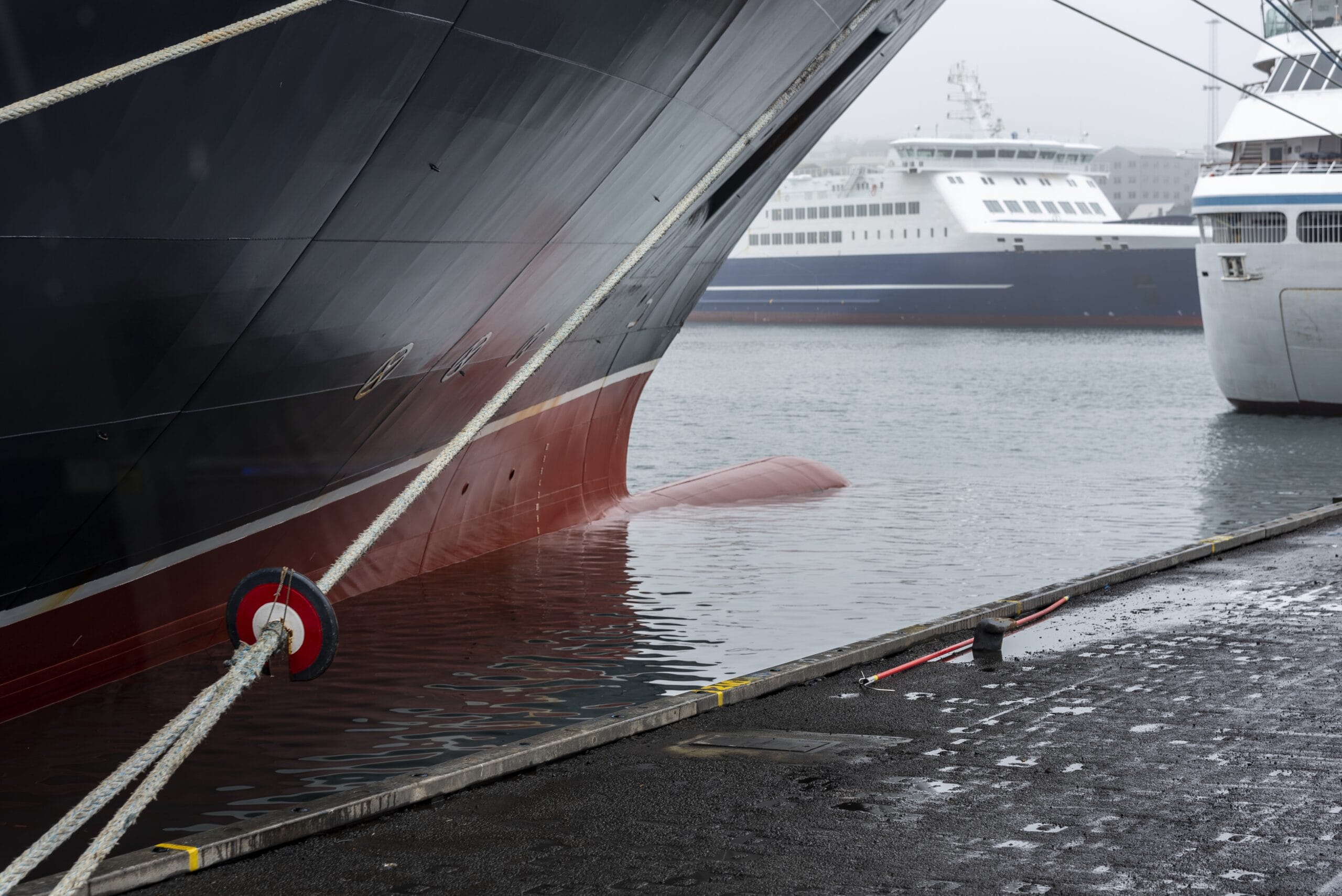
On Friday, November 13, 2026, the Atlantic Asphalt tanker struck American Cruise Lines’ American Heritage while the riverboat was docked outside 1350 Port of New Orleans Place, according to the Port of New Orleans. About 129 passengers, plus crew members, were aboard. Officials have not confirmed the cause or the number of injuries.
WDSU reports the collision happened around 12:30 p.m., roughly two hours after the ship docked to begin disembarking passengers. Passengers were brought into the Port’s Administration Building for triage, and city officials told WDSU that more than a dozen people were taken to area hospitals. The Coast Guard is responding near mile marker 96 on the Mississippi River.
As of early afternoon, New Orleans officials said multiple people had been rescued and search-and-rescue operations were still underway. Other reports describe the vessel listing heavily and taking on water. American Cruise Lines said it is coordinating with the Coast Guard and local authorities.
Everything above comes from early reporting and may change. The cause of the collision is under investigation, and fault has not been determined.
Who Could Be Held Legally Responsible for the Collision?
Responsibility depends on what investigators find. Potentially responsible parties may include the tanker’s owner and operator, its captain and crew, the cruise line, or companies that maintained vessel equipment, and fault can be shared. A tanker striking a docked vessel does not settle liability on its own, but maritime law treats that scenario in a specific way.
Maritime law distinguishes a collision between two moving vessels from an allision, where a moving vessel strikes something stationary, such as a docked ship. Because the American Heritage was reportedly docked, this event may be analyzed as an allision. Under a long-standing principle known as the Oregon Rule, courts may presume the moving vessel was at fault, though that presumption can be rebutted.
Investigators will likely look at questions like these:
- Whether the tanker lost propulsion, steering, or other critical equipment
- Whether speed and navigation were appropriate for river conditions
- Whether lookout, communications, and navigation rules were followed
- Whether both vessels followed safety and emergency procedures
- Whether any company knew of conditions that could have contributed
These are investigative questions, not findings.
What Laws Apply to Cruise Passenger Litigation on the Mississippi River?
Because the Mississippi River is a federally navigable waterway, federal maritime (admiralty) law likely governs claims from this incident. Passengers generally pursue maritime negligence claims, while qualifying crew members may have Jones Act claims. Ticket contracts can also affect notice deadlines and where a case can be filed.
Passengers. Passengers are generally owed reasonable care by the vessel operator under maritime law, and they typically do not bring Jones Act claims. Injuries can come from the impact itself, from falls during evacuation, or from exposure to river water or fuel. Psychological injuries may also be part of a claim in some circumstances.
Crew members. Crew who qualify as seamen may bring claims under the Jones Act, 46 U.S.C. § 30104. They may also be entitled to maintenance and cure and may have unseaworthiness claims, so workers’ compensation is often not their only remedy.
Cruise contracts and liability caps. A passenger ticket is a contract, and it may include notice requirements, forum-selection clauses, or other terms that affect a claim. Separately, vessel owners can ask a federal court to cap their liability, generally at the value of the vessel and pending freight, under the Limitation of Liability Act (46 U.S.C. chapter 305). That request does not automatically end an injured person’s right to seek compensation.
These overlapping federal rules are why many injured people speak with a New Orleans maritime accident lawyer early, before signing anything.
In any serious maritime incident, families who lose a loved one may have wrongful death claims under federal maritime law. The Death on the High Seas Act generally applies only beyond three nautical miles from shore, so it would not ordinarily govern an incident on a river.
How Long Do You Have to File a Claim After a Cruise Ship Accident?
The general federal deadline for maritime personal injury and wrongful death lawsuits is three years under 46 U.S.C. § 30106. Cruise tickets, however, can set shorter notice and filing periods within limits federal law allows. Do not assume you have three years; review your ticket and speak with an attorney promptly.
Federal law, 46 U.S.C. § 30526, limits how short a passenger ticket’s deadlines can be on certain vessels. For seagoing vessels, that is generally no less than six months to give notice of a claim and one year to file suit, with longer minimums for some small passenger vessels. Which rule applies to the American Heritage depends on how the vessel is classified, so passengers should have their ticket reviewed.
What Compensation May Be Available After a Maritime Injury?
Injured passengers or crew who prove a valid claim may recover compensation for medical expenses, lost income, reduced earning capacity, pain and suffering, and emotional distress. What is recoverable depends on the injuries, the evidence of negligence, the applicable law, and the person’s legal status, such as passenger or seaman.
- Emergency treatment, hospital care, future medical care, and rehabilitation
- Lost wages and reduced future earning capacity
- Physical pain and suffering
- Mental anguish and qualifying psychological injuries
- Permanent impairment or disability
- Wrongful death damages for qualifying family members
No outcome is guaranteed, and every claim depends on its own facts.
What Should Passengers and Families Do After a Vessel Collision?
Get medical care first, even if injuries seem minor, because head, neck, and back injuries can show up later. Then preserve photos, videos, medical records, and your cruise documents, and avoid signing releases or accepting payments until an attorney has reviewed them.
- Seek medical attention. Ask for an evaluation even if you feel fine.
- Document your treatment. Keep discharge papers, prescriptions, and expense records.
- Preserve photos and videos. Keep the original files and do not edit or delete them.
- Save your cruise paperwork. That includes your ticket, passenger contract, booking confirmation, and messages with American Cruise Lines.
- Be careful with releases and recorded statements. Have an attorney review them first.
- Talk with a maritime attorney. Federal maritime claims have specialized rules and deadlines.
Why Does Evidence Matter in a Commercial Vessel Collision?
Commercial vessels generate extensive records that can show what happened, including navigation data, radar, bridge communications, engine logs, and maintenance files. Some of it can be overwritten or lost quickly. An attorney can send preservation requests to potentially responsible companies, and the Coast Guard may investigate reportable marine casualties separately.
Video from the vessels and surrounding port facilities, crew training records, and witness statements can also be important.
Frequently Asked Questions
Can passengers sue a cruise line after a collision?
Possibly. If a cruise line’s negligence helped cause a passenger’s injury, the passenger may have a maritime negligence claim. Whether American Cruise Lines bears any responsibility here has not been determined, and ticket terms may affect when and where a lawsuit must be filed.
What is the difference between a collision and an allision?
A collision involves two moving vessels, while an allision is a moving vessel striking a stationary object, such as a docked ship. The distinction matters because maritime law can presume fault against the moving vessel under the Oregon Rule, though that presumption can be challenged.
Do crew members and passengers have the same legal rights?
No. Crew members who qualify as seamen may sue under the Jones Act and claim maintenance and cure, while passengers generally bring maritime negligence claims. A person’s status changes which laws, benefits, and deadlines apply, so it is worth confirming early.
Can a vessel owner limit its liability after an accident?
Sometimes. Under the Limitation of Liability Act, a vessel owner may ask a federal court to cap its liability, generally at the value of the vessel and pending freight, subject to exceptions. Injured people can challenge that request, so it does not automatically end their claims.
Should I sign a release or accept a payment before talking to a lawyer?
It is wise to wait. A release can permanently waive your right to further compensation, even if your injuries worsen later. Have an attorney review any release, payment, or recorded-statement request first, especially while the investigation and the full extent of your injuries are still unfolding.
About Justin Reese
Justin Reese leads J. Reese Law Group in Gretna, Louisiana, a firm that represents injury victims across the state, including in maritime accident matters. A New Orleans native and the son of Judge Kern Reese, he has more than 15 years of experience as a trial attorney and is also known as a cast member of Bravo’s Southern Charm New Orleans.
Contact Justin Reese
If you or a loved one has been injured in a vessel collision, a cruise-related incident, or another maritime accident like this one, you may have legal options. Contact Justin Reese for a free, confidential case review, or call (504) 547-6462.
Justin Reese grew up in New Orleans and has built his career standing up for injured people in the community he calls home. If you are unsure where to start after a serious accident, his team is ready to listen and explain your options.
This article provides general information about maritime law and is not legal advice. Reading it does not create an attorney-client relationship.