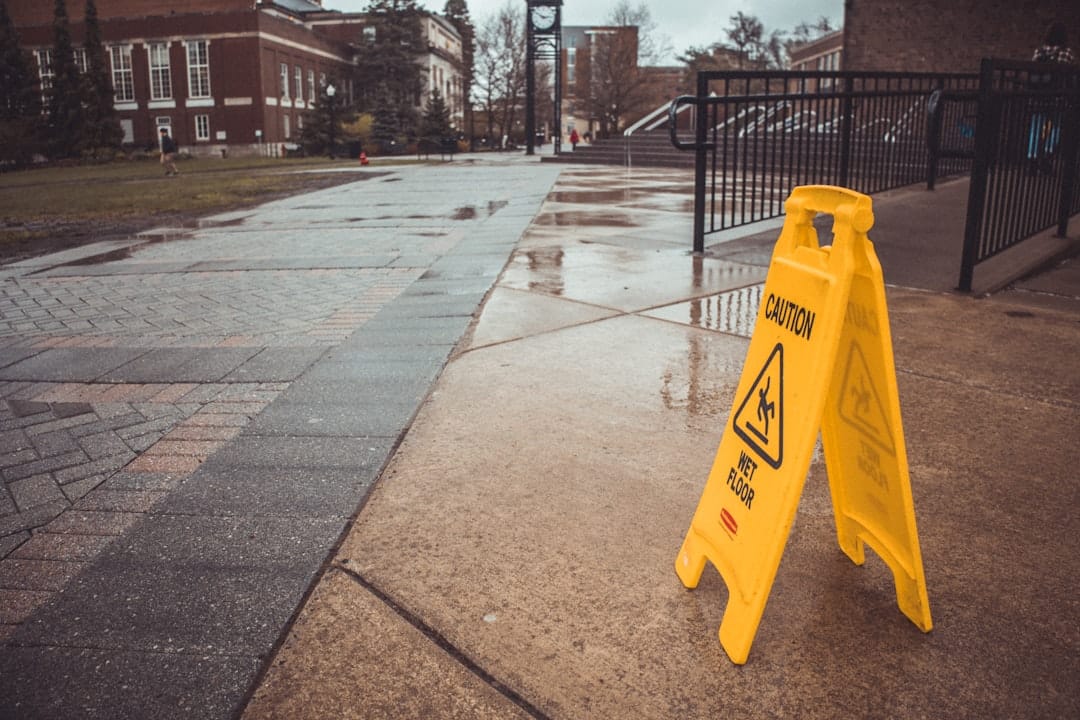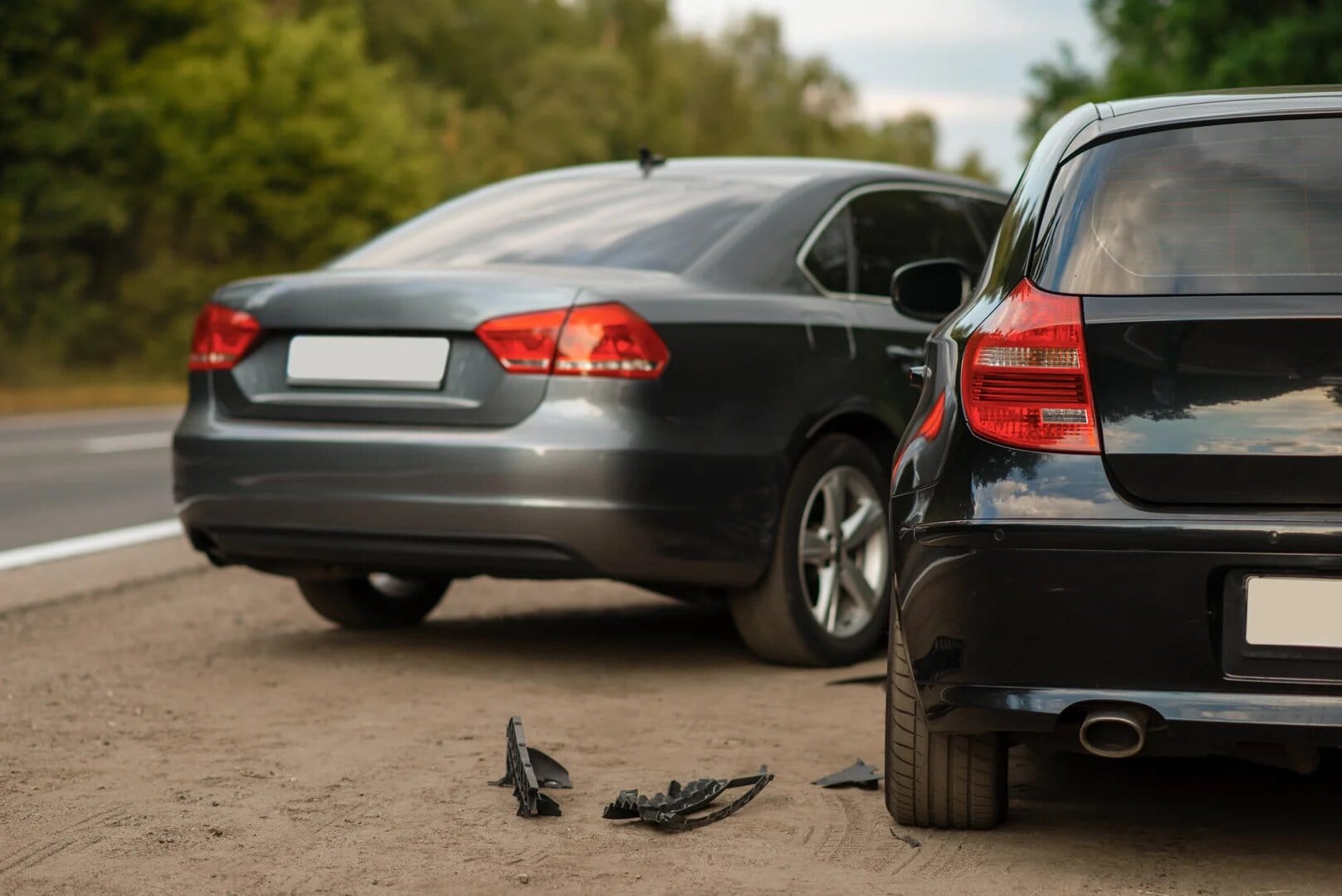
When Someone Else’s Unsafe Property Puts You in the Hospital
A premises accident lawyer is a personal injury attorney who helps people injured on someone else’s property get compensation for their losses.
Here’s what you need to know right away:
- What they do: Investigate the hazard, prove the property owner’s negligence, and negotiate or litigate your claim
- Who needs one: Anyone injured on another’s property due to a dangerous condition — wet floors, broken stairs, poor lighting, inadequate security, and more
- What you can recover: Medical bills, lost wages, pain and suffering, and sometimes punitive damages
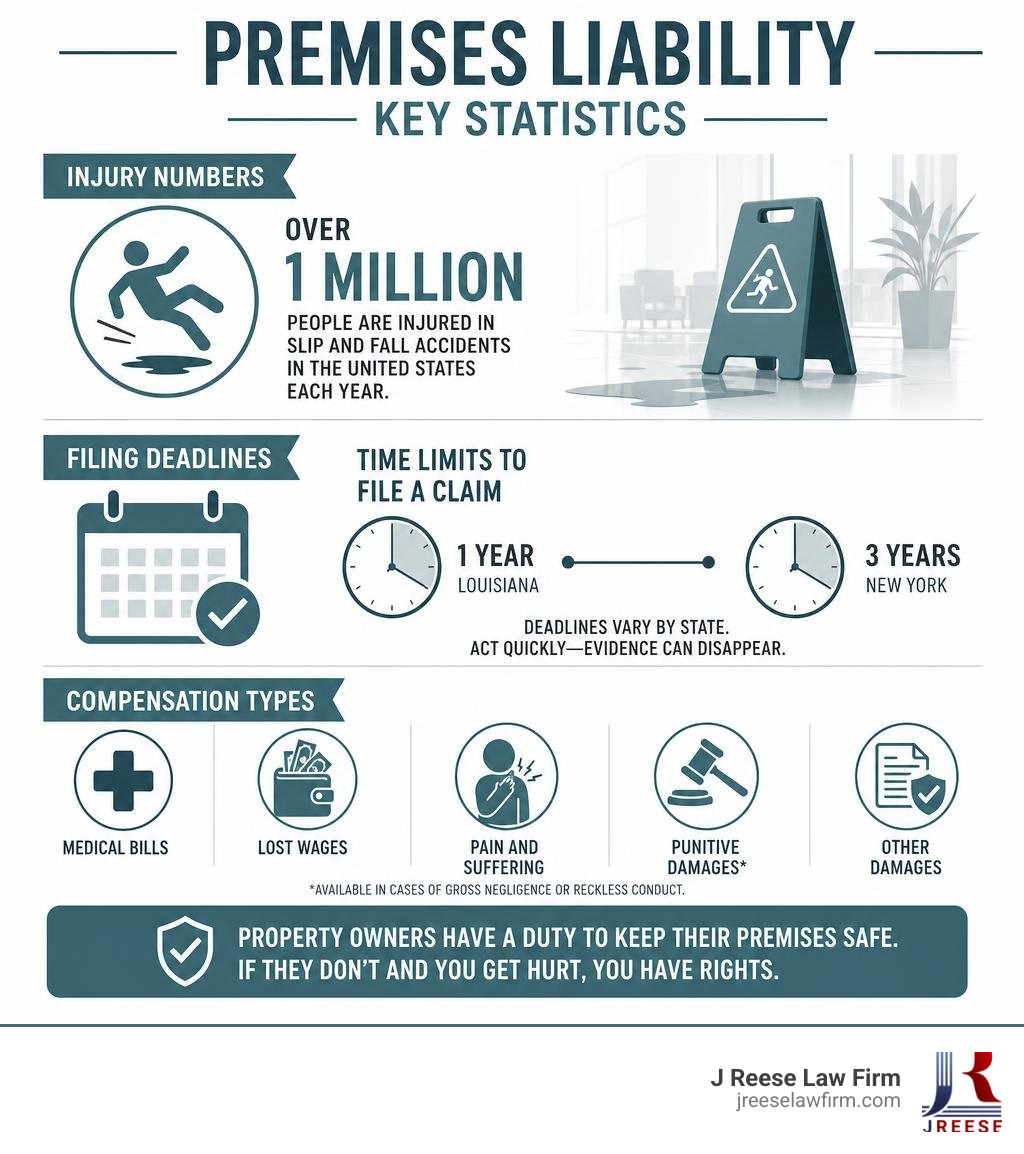
- When to act: As soon as possible — evidence disappears fast, and every state has a filing deadline (from 1 year in Louisiana to 3 years in New York)
- Cost: Most premises accident lawyers work on contingency — no upfront fees, no payment unless you win
Every year, over one million people are injured in slip and fall accidents in the United States alone. In 2022, New York City alone saw more than 2,450 slip-and-fall claims filed against the city. These aren’t just statistics — behind each number is a real person dealing with medical bills, missed work, and pain that could have been prevented if a property owner had simply done their job.
The law is clear: property owners have a legal duty to keep their premises reasonably safe. When they don’t — whether it’s a grocery store that ignores a spill, an apartment complex with broken locks, or a parking lot with no lighting — and someone gets hurt, the injured person has the right to seek compensation.
But getting that compensation isn’t always simple. Property owners have insurance companies and lawyers working to minimize what they pay. You need someone in your corner who knows the law, knows the tactics, and knows how to fight back.
That’s exactly what a premises accident lawyer does.
Understanding Premises Liability and the Role of a Premises Accident Lawyer

At its core, Premises Liability is a legal concept that comes into play in Personal Injury cases where an injury was caused by some unsafe or defective condition on someone’s property.
But simply getting hurt on someone else’s property does not automatically mean the property owner is legally responsible. To hold them accountable, we must establish that the owner or occupier was negligent in maintaining the property. This is where a premises accident lawyer steps in. We act as legal detectives, gathering the evidence needed to prove that a property owner’s carelessness directly caused your injuries.
Legal Duties Owed to Invitees, Licensees, and Trespassers
In many states, the level of care a property owner owes you depends heavily on why you were on the property in the first place. Historically, the law divides visitors into three distinct categories:
- Invitees (The Highest Level of Care): These are people who enter the property for business purposes, such as shoppers in a grocery store, diners in a restaurant, or patrons in a hotel. Property owners owe invitees the highest duty of care. They must regularly inspect the property, fix any dangerous conditions immediately, and warn visitors of any hidden hazards.
- Licensees (A Moderate Level of Care): These are social guests. If you go to a friend’s house for a backyard barbecue, you are a licensee. The property owner doesn’t necessarily have a duty to inspect the property before you arrive, but they must warn you of any non-obvious, dangerous conditions they already know exist (like a loose deck railing or a dog prone to biting).
- Trespassers (The Lowest Level of Care): These are people who enter a property without permission. Generally, property owners owe no duty to trespassers except to refrain from intentionally harming them (no setting up traps!). However, there are critical exceptions, particularly when child trespassers are involved.
Key Elements to Prove in a Claim with a Premises Accident Lawyer
To secure a settlement or win a lawsuit, a plaintiff must prove four fundamental elements:
- Duty of Care: The property owner owed you a legal duty based on your visitor status.
- Breach of Duty: The owner knew, or reasonably should have known, about a dangerous condition and failed to fix it, block it off, or warn you about it.
- Causation: The dangerous condition directly caused your slip, trip, or other accident.
- Damages: You suffered actual physical and financial harm (such as medical bills and lost wages) as a result of the accident.
Proving that a property owner “knew or should have known” about a hazard is often the hardest part of a case. This involves proving either actual notice (someone told the owner about the puddle, or they saw it themselves) or constructive notice (the hazard existed for so long that a reasonable owner conducting routine inspections would have discovered it).
Common Types of Property Accidents and Injuries
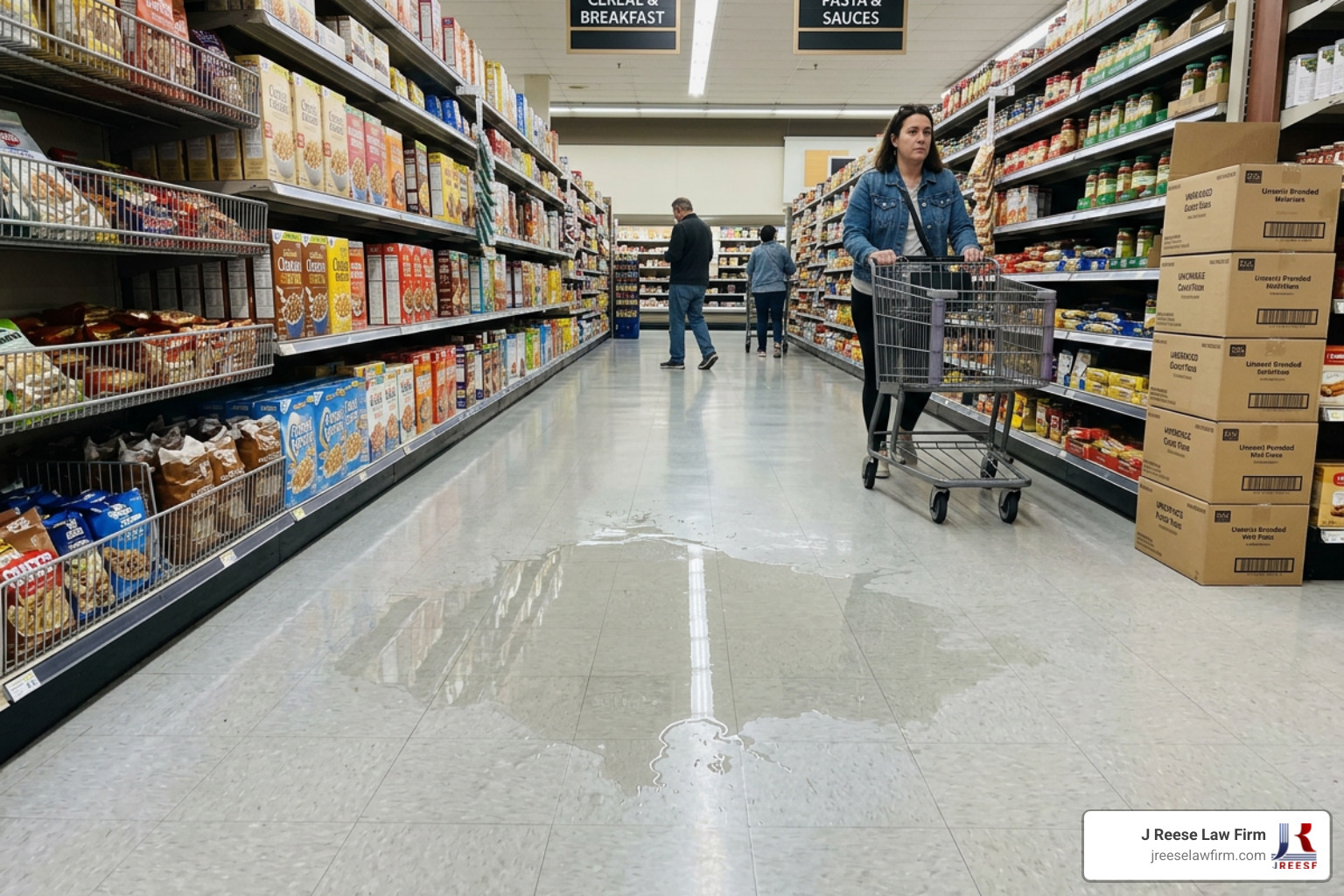
Property accidents can happen anywhere, from local grocery stores to apartment complexes. When they do, the physical consequences can be devastating. At J Reese Law Firm, we see these accidents frequently, particularly in known trouble spots like those highlighted on our list of New Orleans Accident Hotspots.
Slip and Fall Accidents and Traumatic Brain Injuries
As a dedicated New Orleans Slip and Fall Attorney, we routinely handle cases where slick surfaces, loose carpets, or unexpected obstacles cause severe falls. According to CDC fall statistics, falls are a leading cause of traumatic brain injuries (TBIs) and hip fractures, particularly among older adults. A sudden fall onto a hard concrete floor can lead to:
- Broken bones and severe fractures
- Spinal cord injuries and herniated discs
- Concussions and long-term cognitive damage
Negligent Security and Criminal Acts
Premises liability isn’t just about physical tripping hazards. It also covers situations where property owners fail to protect visitors from foreseeable criminal acts. If an apartment complex or parking garage is located in a high-crime area and the owner fails to maintain proper lighting, working locks, or security cameras, they may be held liable if a visitor is assaulted or robbed on their property.
State-by-State Variations in Premises Liability Laws
Premises liability laws are not uniform across the United States. Depending on where your accident occurred, the rules governing your claim can vary wildly.
| State | Visitor Classifications | Comparative Fault System | Key Legal Nuance |
|---|---|---|---|
| Florida | Invitee, Licensee, Trespasser | Modified Comparative Fault (50% Bar) | Sovereign immunity caps government liability at $200,000 |
| West Virginia | Unified Duty of Care (Abolished categories) | Modified Comparative Fault (51% Bar) | Strict statutory “Open and Obvious” defense |
| New Hampshire | Unified Duty of Care | Modified Comparative Fault (51% Bar) | Traditional common law negligence standard |
| Maryland | Invitee, Licensee, Trespasser | Pure Contributory Negligence (0% Bar) | If you are even 1% at fault, you recover nothing |
| Texas | Invitee, Licensee, Trespasser | Modified Comparative Fault (51% Bar) | Highly protective of independent contractors |
| New York | Unified Duty of Care | Pure Comparative Fault | Landlords strictly liable for building code violations |
| Louisiana | Unified Duty of Care | Pure Comparative Fault | Extremely short statute of limitations |
Statutes of Limitations and Notice Requirements
If you’ve been injured, you cannot afford to wait to take action. Every state has a strict deadline, known as the statute of limitations, for filing a lawsuit.
In some states, you have a comfortable window to file, such as New York’s three-year limit. In others, the clock runs out much faster. For instance, Texas has a two-year limit.
But if you are injured in Louisiana, you face the strictest deadline in the nation. Under Louisiana’s One Year Statute of Limitations, you have exactly one year from the date of the accident to file a personal injury lawsuit. If you miss this deadline, you lose your right to seek compensation forever.
Special Doctrines: Open and Obvious, Sovereign Immunity, and Attractive Nuisance
Several legal doctrines can make or break a premises liability claim:
- The Open and Obvious Doctrine: In states like West Virginia, property owners are generally not liable for injuries caused by hazards that are so clear and obvious that a reasonable person would have seen and avoided them.
- Sovereign Immunity: If you slip on public property, such as a city sidewalk or a state university campus, special rules apply. In Florida, sovereign immunity limits damages against government entities to $200,000 per person.
- Attractive Nuisance: This doctrine protects children who trespass. If a property owner has something on their land that is highly tempting to a child—like an unfenced swimming pool or a trampoline—they must take reasonable steps to secure it, or they can be held liable if a child is injured.
To understand how these complex doctrines might apply to your specific situation, it helps to review Why Louisiana Personal Injury Cases Are Different.
What to Do After an Accident and How to Maximize Compensation
What you do in the minutes and days following a property accident can directly impact your health and your legal claim. Just as we advise clients on What to Do After a Car Accident in Louisiana, there is a specific set of steps you should take to protect yourself:
- Seek Medical Attention Immediately: Your health comes first. Even if you feel okay, adrenaline can hide serious injuries like concussions, internal bleeding, or soft tissue damage.
- Report the Incident: Tell the store manager, landlord, or property owner what happened. Ask for an official incident report and request a copy.
- Gather Evidence at the Scene: Take photos and videos of the hazard, such as the liquid on the floor, spilled food, broken stair, loose rug, or poor lighting. Also capture proof that there were no wet floor signs, warning cones, barriers, or other safety warnings nearby.
- Document the Area From Multiple Angles: Photograph the scene before anyone cleans it up or repairs it. Include wide shots, close-ups, nearby cameras, lighting conditions, and anything that shows how long the hazard may have been there.
- Gather Witness Information: If anyone saw you fall or noticed the dangerous condition before your accident, get their names and phone numbers.
- Preserve Your Clothing and Shoes: Keep the shoes and clothes you were wearing in a plastic bag. They may contain evidence of water, grease, dirt, or another substance.
- Do Not Post on Social Media: Insurance adjusters may look for photos, comments, or activity that they can use to downplay your injuries.
- Contact a Premises Accident Lawyer: Speak with an attorney before giving a recorded statement or accepting anything from the insurance company.
Recoverable Damages in a Property Injury Claim
If you’ve been hurt due to property owner negligence, you can recover both economic and non-economic damages:
- Medical Expenses: Coverage for your emergency room visit, surgeries, physical therapy, medications, and any future medical care you will need.
- Lost Wages: Compensation for the income you lost while recovering, as well as loss of future earning capacity if your injuries cause a permanent disability.
- Pain and Suffering: Compensation for the physical pain, emotional distress, and loss of enjoyment of life caused by your injuries.
- Punitive Damages: In rare cases of gross negligence (where the owner acted with reckless disregard for human safety), a court may award punitive damages to punish the wrongdoer.
When to Consult a Premises Accident Lawyer and What to Expect
You should consult a premises accident lawyer as soon as possible after your injury. Most reputable personal injury firms offer a free, no-obligation consultation. During this meeting, the attorney will review your evidence, listen to your story, and tell you honestly if you have a viable claim.
Because we work on a contingency fee basis, you do not have to worry about upfront legal fees. We only get paid if we successfully recover compensation for you.
Frequently Asked Questions About Premises Liability
What is the average settlement for a slip and fall case?
There is no single “average” settlement, as every case is unique. Settlements generally range from $10,000 for minor injuries to over $100,000 (and sometimes millions) for severe, life-altering injuries. The value depends on the cost of your medical treatment, the amount of lost income, and how clearly we can prove the owner’s negligence. For a deeper look at the legal definitions of fault, you can read Cornell Law School on Negligence.
Can I still recover compensation if I was partially at fault?
In most states, yes! Under modified comparative negligence rules, you can still recover damages as long as your share of the blame is under 50% or 51% (depending on the state). However, your final payout will be reduced by your percentage of fault. For example, if you are awarded $100,000 but are found 20% at fault for texting while walking, you will receive $80,000.
Who can be held liable for an accident in an apartment building?
Liability depends on where the accident happened and what caused it. Generally, the landlord or property management company is responsible for maintaining common areas like hallways, stairs, courtyards, and parking lots. However, if you are injured inside a tenant’s rented apartment due to a hazard the tenant created, the individual tenant may be held liable instead.
Conclusion
Dealing with an injury is stressful enough without having to fight insurance companies on your own. If you or a loved one has been hurt because of a property owner’s failure to maintain a safe environment, you have legal rights.
At J Reese Law Firm, we are committed to helping injury victims navigate the complexities of Premises Liability claims so they can focus on what matters most: healing. Contact our experienced legal team today for a free case evaluation, and let us help you get the justice and compensation you deserve.