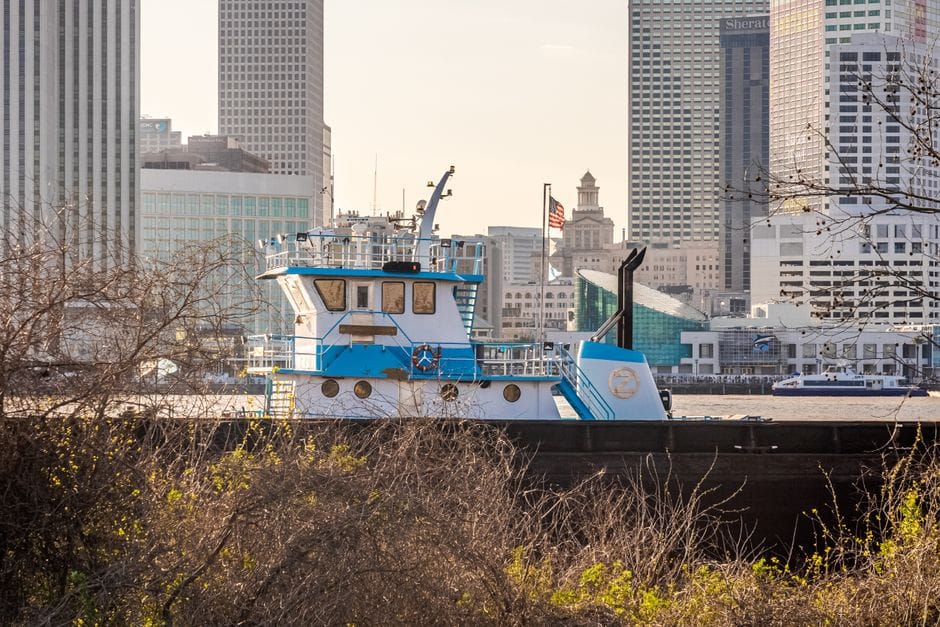
Why a New Orleans Maritime Injury Attorney Matters After a Vessel or Offshore Accident
After an injury on a vessel, dock, barge, or offshore platform, speak with a New Orleans maritime injury attorney as soon as possible. Maritime claims often follow federal laws, not the usual Louisiana injury rules. The right legal path may involve the Jones Act for qualifying seamen, the Longshore and Harbor Workers’ Compensation Act for many dock and harbor workers, or the Outer Continental Shelf Lands Act for certain offshore injuries.
A lawyer can help you protect the evidence, report the incident accurately, identify every responsible company, and pursue available compensation for medical care, lost income, pain and suffering, and other losses. This matters because Gulf of Mexico and Mississippi River accidents can involve several employers, contractors, vessel owners, and insurance companies.
I am Justin Reese, a New Orleans native and civil litigation attorney who has represented people and families in maritime accident, catastrophic injury, and wrongful death matters since 2011. As a New Orleans maritime injury attorney, I bring courtroom and trial-advocacy experience to help injured workers understand their options and take prompt action.
Easy New Orleans maritime injury attorney glossary:
- New Orleans accident injury lawyer
- New Orleans car accident attorneys
- New Orleans construction accident lawyer
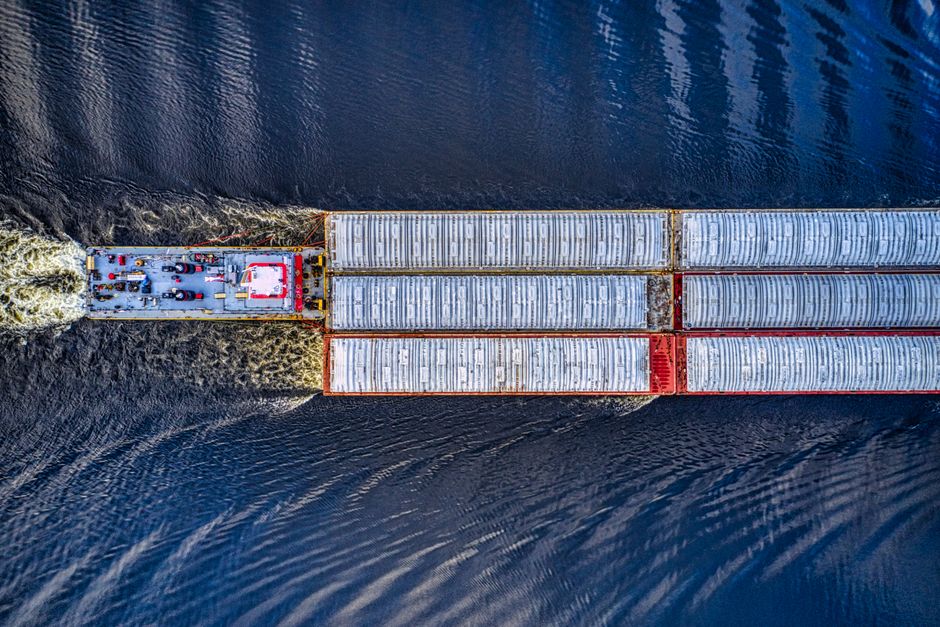
Commercial shipping along the lower Mississippi River and extensive offshore operations in the Gulf of Mexico drive the economy in South Louisiana. Yet these same waterways present serious occupational hazards. Navigating an admiralty claim is fundamentally different from a typical land-based lawsuit. A commercial vessel navigating the waters around the Port of New Orleans operates under distinct federal maritime doctrines, which dictate everything from how fault is proven to which courts have jurisdiction.
When an offshore worker, deckhand, or longshoreman sustains a severe harm, state workers’ compensation systems rarely apply. Instead, claims fall under complex federal statutes. Understanding whether your injury occurred in inland “brown-water” transport or deep “blue-water” exploration determines your legal rights, filing requirements, and financial recovery options.
| Legal Framework | Covered Workers | Primary Legal Remedies | Standard of Proof / Liability |
|---|---|---|---|
| The Jones Act (46 U.S.C. § 30104) | Master or crew members with substantial vessel connection (Seamen) | Negligence damages, Maintenance & Cure, Unseaworthiness | “Featherweight” burden of proof for employer negligence |
| LHWCA (33 U.S.C. § 901 et seq.) | Longshoremen, stevedores, harbor workers, shipbuilders | Statutory medical care and disability compensation; § 905(b) vessel negligence claims | No-fault administrative compensation system; fault-based 905(b) lawsuits |
| OCSLA (43 U.S.C. § 1331 et seq.) | Non-seamen on fixed platforms on the Outer Continental Shelf | LHWCA-style benefits, adjacent state personal injury remedies against third parties | State-law tort principles borrowed via federal statute |
Understanding Maritime Injury Law and Applicable Legal Protections
Admiralty law forms an independent legal system rooted in Article III, Section 2 of the United States Constitution. It provides unique remedies crafted over centuries to protect maritime workers facing hazardous waterborne environments. Whether an injury happens on a push boat along the river or a deepwater semi-submersible platform, the specific category of maritime work defines which statute protects the injured party.
The Jones Act and Legal Seaman Status
The Jones Act gives qualifying seamen the right to sue their employers directly for damages caused by negligence. To qualify under this law, a worker must meet a clear legal test:
- Substantial Connection: The worker’s duties must contribute to the function of the vessel or the accomplishment of its mission.
- Duration and Nature: The worker must have a connection to a vessel in navigation (or an identifiable fleet of vessels) that is substantial in both duration and nature. As a general benchmark, spending 30 percent or more of working time aboard a vessel in navigation establishes seaman status.
Under the Jones Act, the legal threshold to prove employer negligence is known as the “featherweight” burden—requiring only that the employer’s negligence played even the slightest part in producing the injury. Additionally, qualifying crew members are entitled to maintenance and cure, which provides a daily living allowance and all necessary medical treatment regardless of fault, alongside damages under the general maritime law doctrine of unseaworthiness if a vessel or its equipment was not reasonably fit for its intended use.
Harbor Workers, Dockworkers, and the LHWCA
Workers injured on docks, wharves, dry docks, shipping terminals, or ship repair facilities generally fall under the Longshore and Harbor Workers’ Compensation Act (LHWCA). This federal administrative system provides disability payments, medical coverage, and rehabilitation benefits without requiring proof of employer fault.
Importantly, Section 905(b) of the LHWCA allows injured longshore workers to bring a separate civil negligence lawsuit against third-party vessel owners whose careless actions or defective shipboard conditions contributed to the incident, preserving access to broader pain and suffering damages beyond basic workers’ compensation.
Offshore Oil Rigs and the Outer Continental Shelf Lands Act
The Outer Continental Shelf Lands Act (OCSLA) extends federal jurisdiction—and by extension, the compensation provisions of the LHWCA—to non-seamen working on fixed platforms, artificial islands, and resource extraction facilities attached to the seabed of the Outer Continental Shelf in the Gulf of Mexico.
Workers pursuing oil rig injury claims must determine whether their platform is classified as a fixed structure or a mobile offshore drilling unit (MODU) such as a jack-up or drillship. Those aboard mobile units may qualify as Jones Act seamen, while workers on fixed platforms typically assert remedies through an offshore worker injury attorney utilizing OCSLA provisions and third-party negligence laws borrowed from the adjacent state.
Why You Need a Dedicated New Orleans Maritime Injury Attorney
New Orleans serves as the legal hub of the Gulf Coast maritime industry. The U.S. District Court for the Eastern District of Louisiana hears a significant portion of the country’s admiralty disputes. Maritime defense firms and major marine insurers fight vigorously to limit injury payouts, making dedicated local counsel essential.

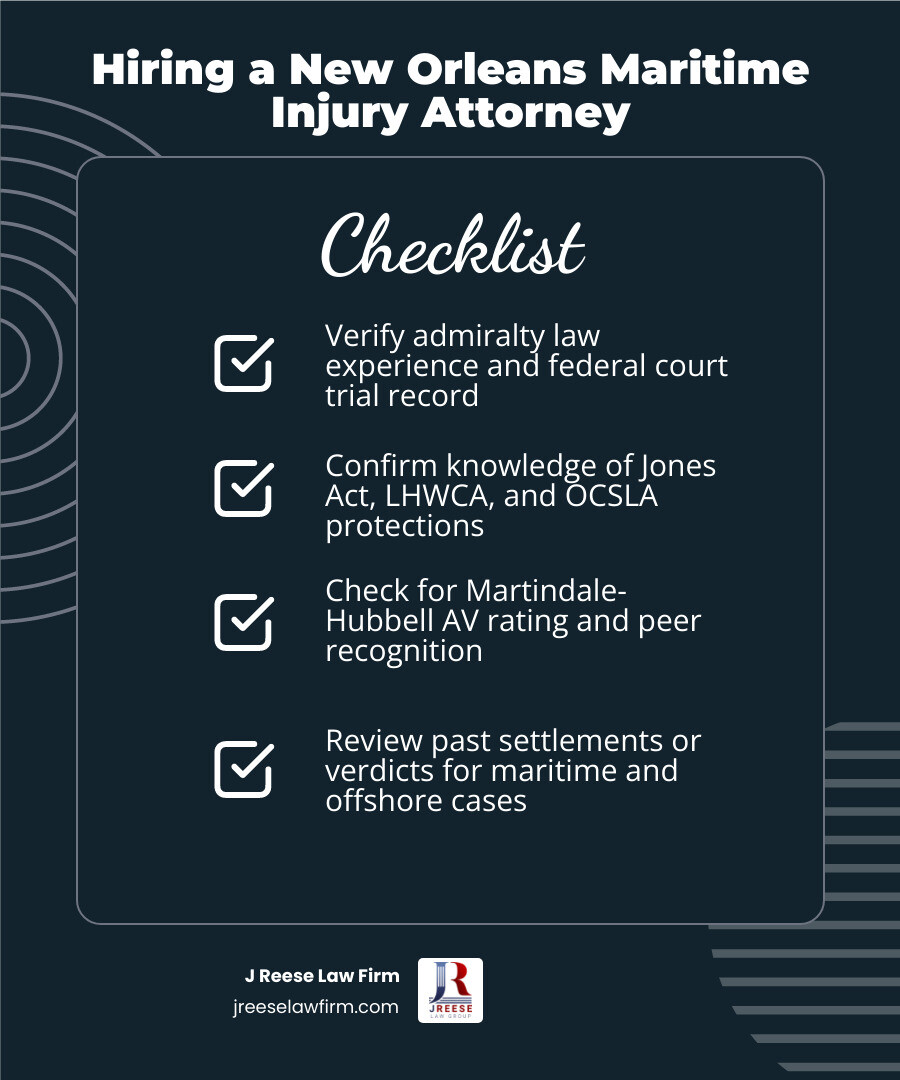
Evaluating Credentials When Hiring a New Orleans Maritime Injury Attorney
When choosing a lawyer, litigation history in admiralty court and peer recognition matter. Prominent practitioners often maintain high standing in industry organizations and legal directories, reflecting decades of courtroom practice. Selecting an attorney with established admiralty legal credentials and trial experience ensures your claim is handled by someone familiar with local judicial procedures, maritime terminology, and federal court rules.
Handling Multi-Party Liability and Complex Maritime Claims
Offshore and river operations rarely involve just one company. A single barge or drill site might involve:
- The direct employer (manning agency or service contractor)
- The vessel owner and vessel operator
- Third-party crane or logistics contractors
- Equipment leasing companies and parts manufacturers
These entities frequently use complex charter agreements and maritime indemnity provisions to shift legal responsibility. We investigate the entire operational chain to identify every responsible party, preventing insurers from passing the blame while securing all available avenues of compensation.
Critical Steps to Take After an Offshore or River Accident
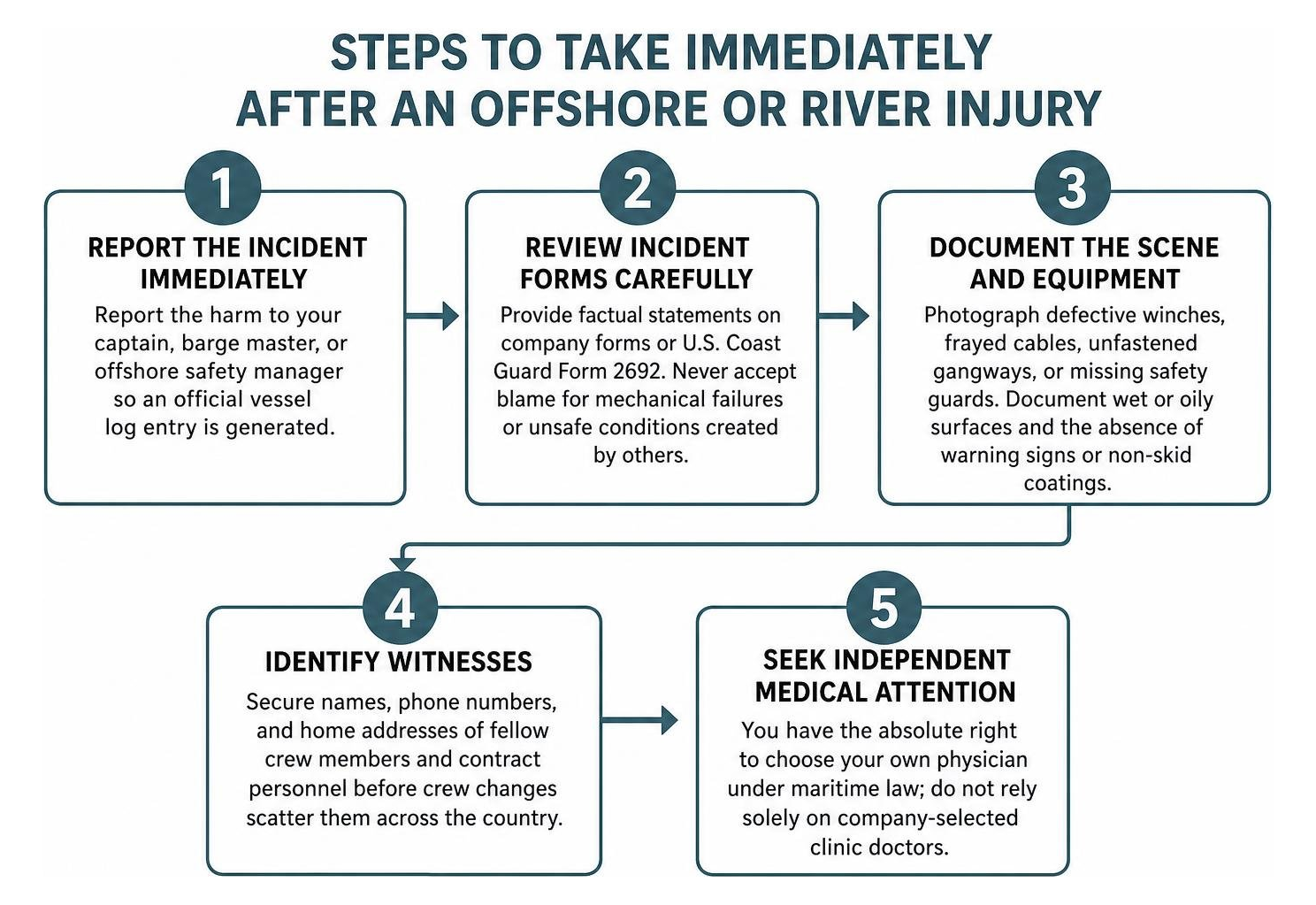
Immediate actions following an injury heavily influence the outcome of a maritime lawsuit. Marine employers and risk managers move quickly to protect their interests, so taking proactive steps is vital:
- Report the Incident Immediately: Report the harm to your captain, barge master, or offshore safety manager so an official vessel log entry is generated.
- Review Incident Forms Carefully: When filling out internal company forms or U.S. Coast Guard Form 2692, provide factual statements. Never accept blame for mechanical failures or unsafe working conditions created by others.
- Document the Scene and Equipment: Photograph defective winches, frayed cables, unfastened gangways, or missing safety guards. If your injury involves a wet or oily surface, take pictures of the substance (liquid on the deck or walkway) and document the absence of warning signs or non-skid coatings.
- Identify Witnesses: Secure names, phone numbers, and home addresses of fellow crew members and contract personnel before crew changes scatter them across the country.
- Seek Independent Medical Attention: You have the absolute right to choose your own physician under maritime law; do not rely solely on company-selected clinic doctors.
Navigating Strict Deadlines and Statutes of Limitations
Federal maritime law provides a uniform three-year statute of limitations (46 U.S.C. § 30106) for maritime personal injury and wrongful death lawsuits, including claims under the Jones Act and the Death on the High Seas Act (DOHSA).
This contrasts sharply with Louisiana’s standard one-year prescriptive period for general state personal injury claims. However, specific administrative notice rules—such as the mandatory 30-day injury notice window under the LHWCA—require prompt legal counsel to ensure no procedural deadlines are missed.
Damages and Compensation in Louisiana Maritime Claims
Maritime law allows injured seamen and maritime workers to recover full compensation when negligence or vessel unseaworthiness is proven.
How a New Orleans Maritime Injury Attorney Maximizes Financial Recovery
Maximizing financial recovery requires detailed economic forecasting and medical analysis. For workers who suffer severe harm, our firm develops comprehensive life-care plans for catastrophic injury claims to account for long-term rehabilitation and permanent loss of sea wages. In tragic situations involving fatal offshore accidents, we pursue maritime wrongful death damages to provide surviving families with financial stability and justice.
Legal Fees and the Contingency Fee Structure
We handle maritime injury claims on a contingency fee basis. Injured workers pay no upfront fees or out-of-pocket litigation costs. Our legal fees and reimbursed case expenses are deducted only as an agreed-upon percentage of the final settlement or trial verdict. If we do not secure a financial recovery, you owe no legal fees.
Frequently Asked Questions About Maritime Injury Law in New Orleans
How do I know if I qualify as a seaman under the Jones Act?
Qualification relies on meeting the substantial connection test. You must contribute to the vessel’s function and maintain a substantial connection in both duration and nature to a vessel in navigation, which typically means spending at least 30 percent of your working time aboard a vessel or fleet of vessels.
What should I do if my employer refuses to pay maintenance and cure?
If an employer unreasonably delays or refuses to pay daily living allowances and legitimate medical expenses, they may be held liable for compensatory damages, attorney fees, and punitive damages under general maritime law. Contact legal counsel immediately to file an enforcement motion.
How long do I have to file a maritime injury lawsuit in Louisiana?
Most federal maritime injury lawsuits carry a three-year statute of limitations from the date of the incident. However, formal administrative claims under the LHWCA require written notice to the employer within 30 days and claim submission within one year, making early consultation essential.
Secure Your Financial Future with Proven Maritime Advocacy
A serious injury on the water impacts your health, career, and household stability. When vessel operators or offshore employers cut corners on safety, federal admiralty laws exist to protect you and your family.
Contact J Reese Law Firm today to review your case and protect your maritime rights. When you are ready to explore your legal options, schedule a consultation for your maritime injury claim so we can begin building a strong strategy for your recovery.