What a New Orleans Bike Accident Lawyer Can Do for You
If you need a New Orleans bike accident lawyer, here is what you need to know right away:
- You have a limited time to file — Louisiana’s prescriptive period for personal injury claims is generally two years from the date of injury (La. C.C. art. 3493.1), though some sources cite one year depending on the claim type; an attorney can confirm your exact deadline
- Louisiana treats cyclists as vehicles — you have the same legal rights as drivers on the road
- Drivers must give you at least 3 feet of space when passing, under the Colin Goodier Protection Act
- You can recover medical bills, lost wages, pain and suffering, and more
- Most bike accident lawyers work on contingency — no upfront cost, no fee unless you win
- Do not speak to insurance adjusters alone — anything you say can reduce your payout
New Orleans ranks eighth in the nation for bicycle commuting. More cyclists on the road means more exposure to serious risk. When a crash happens, the injuries are rarely minor — cyclists have no steel frame, no airbags, and no protection between their bodies and a moving vehicle.
The result is often traumatic brain injuries, spinal damage, broken bones, and long recovery periods that upend work, finances, and daily life.
This guide walks you through exactly how to navigate a bike accident claim in New Orleans — step by step.
Common Causes and Severe Injuries in New Orleans Bike Accidents
Riding a bike through the historic streets of New Orleans is a wonderful way to commute or enjoy a sunny afternoon. However, the unique layout of our city—characterized by narrow, historic streets, sudden potholes, and heavy tourist traffic—creates a high-stakes environment for cyclists.
When a passenger vehicle or commercial truck collides with a bicycle, motorist negligence is almost always at the center of the incident. Some of the most common causes of bicycle crashes we see in New Orleans include:
- Distracted Driving: Despite widespread awareness, distracted driving remains an epidemic. Research shows that nearly 78 percent of people believe texting behind the wheel is a significant danger, yet more than 30 percent admit to doing it anyway. At 55 miles per hour, sending or reading a text takes a driver’s eyes off the road for approximately 5 seconds—which is enough time to cover the entire distance of a football field blindfolded. For a vulnerable cyclist, those 5 seconds of driver inattention can be fatal.
- Dooring Accidents: This occurs when a driver or passenger in a parked car opens their door directly into the path of an oncoming cyclist. This is incredibly common on busy, narrow corridors like Magazine Street or Esplanade Avenue.
- Impaired Driving: Alcohol plays a devastating role on Louisiana roads. More than 300 deaths occur throughout Louisiana each year due to alcohol-involved crashes. Drivers leaving Bourbon Street or local neighborhood bars under the influence frequently fail to spot cyclists.
- Failure to Yield and Unsafe Turning: Drivers often fail to yield the right-of-way to cyclists at intersections, or they make sudden left turns directly in front of an oncoming rider.
- Poorly Maintained Infrastructure: Missing bike lanes, broken asphalt, and massive potholes can force a cyclist to swerve into traffic or lose control. When these hazards are located near known traffic bottlenecks, the risk skyrockets. You can learn more about high-risk zones by reading our guide on New Orleans Accident Hotspots.
Because cyclists lack the structural protection of a car, the physical consequences of a collision are often catastrophic. Our legal team regularly helps victims who have suffered life-altering physical trauma, including:
- Traumatic Brain Injuries (TBIs): Roughly 3 out of 4 bicycle accidents involve some form of head injury. Even if you are wearing a helmet, a high-impact crash can lead to concussions, skull fractures, or permanent brain damage. If you or a loved one is dealing with cognitive changes or memory loss after a crash, consulting a New Orleans Traumatic Brain Injury Attorney is a vital step in securing the resources needed for long-term care.
- Spinal Cord Injuries: Damage to the neck or back can lead to chronic pain, herniated discs, or permanent paralysis. For these life-altering events, working with a New Orleans Catastrophic Injuries Attorney ensures your claim accounts for future home modifications, medical equipment, and lifetime physical therapy.
- Fractures and Broken Bones: Broken collarbones, pelvis fractures, and shattered wrists are common as riders naturally try to brace themselves during a fall.
- Severe Road Rash: Sliding across hot asphalt can cause deep friction burns that require skin grafts and carry a high risk of infection.
Louisiana Bike Laws and How They Affect Liability
To build a successful injury claim, we must establish how state and local traffic laws apply to your accident. Many drivers falsely believe that bicycles do not belong on the road or must always yield to cars. Under Louisiana law, this is completely incorrect.
First and foremost, under La. R.S. 32:194, cyclists generally have the exact same rights and responsibilities as drivers of motor vehicles. This means you have a legal right to share the road, but it also means you must obey traffic signals, stop signs, and ride with the flow of traffic.
Furthermore, Louisiana has enacted specific statutes to protect vulnerable road users:
- The Colin Goodier Protection Act: Codified under La. R.S. 32:76.1, this crucial law requires motorists to leave a safe distance of at least three feet when passing a bicycle. The driver must maintain this clearance until they have safely cleared the cyclist. Violating this law can result in a $250 fine and serves as powerful evidence of driver negligence in a civil claim. You can review the exact statutory language directly via the Louisiana State Legislature RS 32:76.1.
- Protection Against Harassment: Louisiana Revised Statute (RS) § 32-201 legally protects cyclists against harassment, taunting, or malicious acts from drivers. Road rage directed at a cyclist is not just bad behavior—it is a violation of state law.
- Dooring Prohibitions: Louisiana law explicitly prohibits opening a vehicle door on the side of moving traffic unless it is reasonably safe to do so and can be done without interfering with the movement of other traffic.
When a driver violates these laws and strikes you, their violation establishes a strong presumption of liability. A skilled new orleans bike accident lawyer will use these statutes to demonstrate to the insurance company—or a jury—that the motorist breached their legal duty to keep you safe.
How a New Orleans Bike Accident Lawyer Proves Negligence
Securing compensation after a bicycle wreck requires proving that the other party was negligent. In Louisiana, personal injury claims are built upon four fundamental components of negligence:
- Duty of Care: We must show the driver owed you a legal duty to operate their vehicle safely. All drivers owe this duty to everyone sharing the road.
- Breach of Duty: We must prove the driver failed to uphold that duty (e.g., by texting, speeding, or failing to give you three feet of space).
- Causation: We must directly link the driver’s breach of duty to the crash.
- Damages: We must document the physical, financial, and emotional losses you suffered as a result of the collision.
Proving these elements can be uniquely challenging in Louisiana due to local legal complexities. To understand why these claims require a tailored local approach, read our detailed article on Why Louisiana Personal Injury Cases Are Different.
Gathering Crucial Evidence with a New Orleans Bike Accident Lawyer
Evidence is the foundation of any successful injury claim. Because physical evidence at a crash scene can be cleared away in a matter of hours, we act quickly to preserve key details.
When you hire our firm, we immediately begin gathering:
- Official Crash Reports: We obtain and thoroughly review the police report. If the responding officer made errors or left out critical details, we work to correct the record.
- Video Footage: We canvass the area for traffic cameras, municipal security feeds, and private storefront dashcams. Video footage provides indisputable proof of how a crash occurred.
- Witness Statements: We track down and interview eyewitnesses before their memories fade.
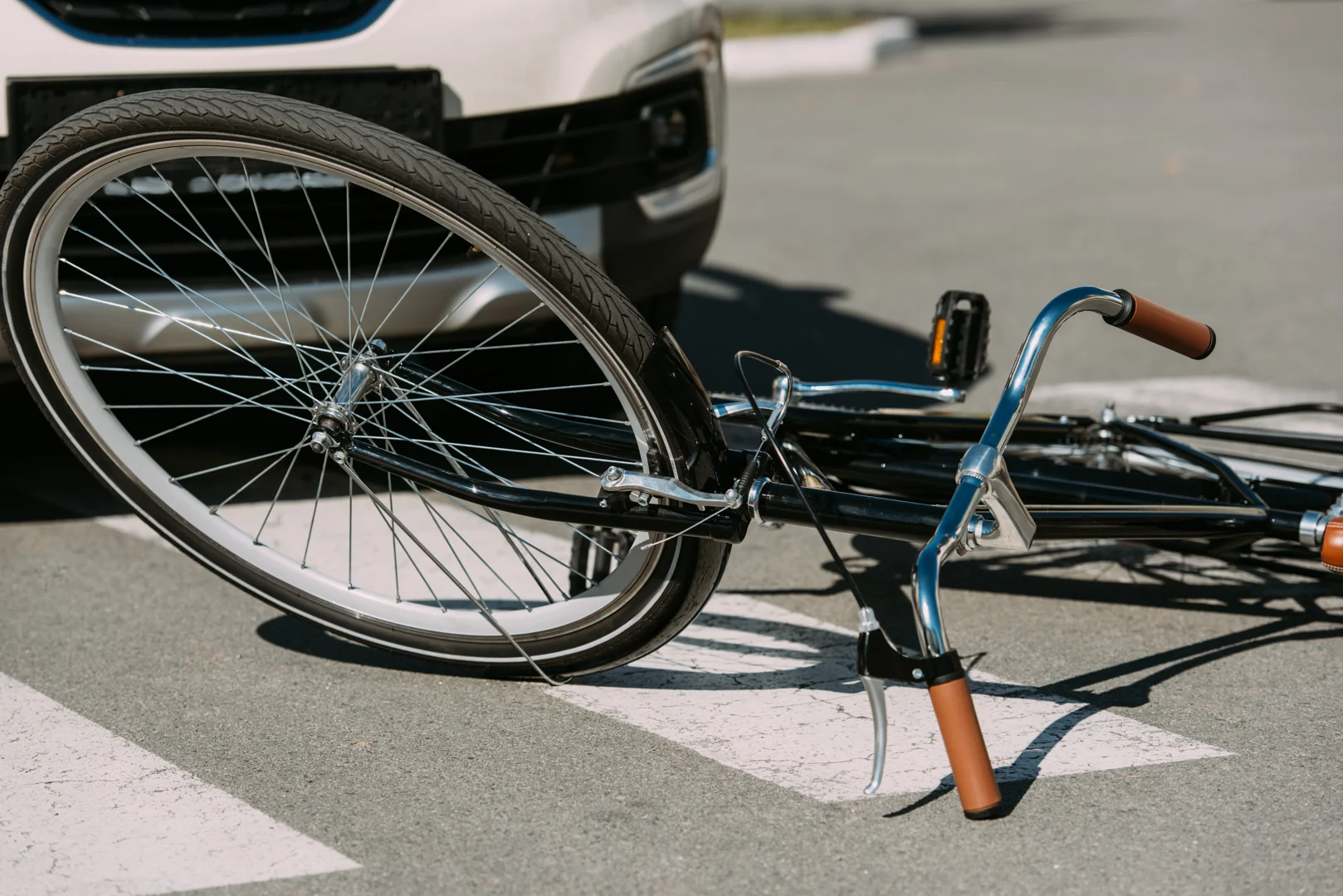
- Physical Evidence: We document the damage to your bicycle, the condition of your helmet, and your torn or bloodied riding gear.
- Accident Reconstruction: In complex cases, we work with professional accident reconstructionists who analyze skid marks, impact points, and vehicle damage to prove exactly how the driver struck you.
Overcoming Insurance Tactics with a New Orleans Bike Accident Lawyer
Insurance companies are businesses, and their primary goal is to protect their bottom line. After a bicycle accident, they may use several tactics to minimize or deny your claim:
- Offering Lowball Settlements: An adjuster might contact you days after the accident offering a quick cash settlement. While tempting, these initial offers rarely cover the true cost of future medical care and lost wages.
- Requesting Recorded Statements: Adjusters are trained to ask misleading questions during recorded calls. They may use your words out of context to argue that you admitted fault.
- Disputing Injury Severity: The insurer may argue that your injuries were pre-existing or that they are not as severe as you claim.
We handle all communication with the insurance companies on your behalf. We calculate the true value of your claim based on your medical bills, future rehabilitation needs, and lost earning capacity, ensuring you do not settle for a penny less than you deserve.
Navigating Louisiana’s Comparative Fault and Statute of Limitations
Understanding the timeline and fault rules is critical to protecting your right to compensation.
First, let’s talk about the deadline to file a lawsuit, known as the prescriptive period. Under La. C.C. art. 3493.1, Louisiana updated its laws to establish a two-year statute of limitations for personal injury claims. However, older claims or specific cases involving municipal entities may still be subject to a stricter timeline. It is always wise to consult an attorney immediately to ensure you do not miss your window. To learn more about how these deadlines operate, see our breakdown of Louisiana’s One Year Statute of Limitations.
Second, Louisiana operates under a modified comparative fault system. Effective January 1, 2026, the state updated its comparative negligence laws. Under La. C.C. art. 2323, you can still recover damages if you were partially at fault for the accident, provided your percentage of fault is 50 percent or less.
If you are found to be 51 percent or more at fault, you are legally barred from recovering any compensation from the other party. If you are partially at fault but below the 51 percent threshold, your final financial recovery will be reduced by your percentage of blame. For example, if your total damages are $100,000 but a court finds you 20 percent responsible for the accident, your final payout will be $80,000.
You can read the full legal framework of this rule in Louisiana Civil Code Article 2323. Because insurance adjusters will try to shift 51% or more of the blame onto you to avoid paying anything, having an experienced attorney to defend your actions on the road is absolutely essential.
Recoverable Damages and Immediate Steps After a Crash
If you have been injured in a collision, you have the right to seek compensation for both your financial losses and the personal toll the crash has taken on your life. These damages are divided into two categories:
Economic Damages (Financial Losses)
- Medical Expenses: This includes emergency room visits, surgeries, hospital stays, prescription medications, physical therapy, and any anticipated future medical treatments.
- Lost Wages: Compensation for the income you lost while recovering from your injuries.
- Lost Earning Capacity: If your injuries prevent you from returning to your previous line of work, you can seek damages for your reduced long-term earning potential.
- Property Damage: The cost to repair or replace your bicycle, helmet, GPS computer, and riding gear.
Non-Economic Damages (Personal Toll)
- Pain and Suffering: Compensation for the physical pain and discomfort caused by your injuries.
- Emotional Distress: Damages for anxiety, depression, PTSD, or sleep disturbances following a traumatic wreck.
- Loss of Enjoyment of Life: If you can no longer participate in cycling, sports, or other hobbies you loved.
In the most tragic circumstances, a bicycle crash can result in a loss of life. If you have lost a family member, you may be eligible to file a wrongful death lawsuit to cover funeral expenses, loss of financial support, and loss of companionship. Our compassionate legal team can guide you through this process. Learn more by speaking with a New Orleans Wrongful Death Attorney or exploring our resources on Wrongful Death Claims Attorney.
Immediate Steps to Take After a Crash
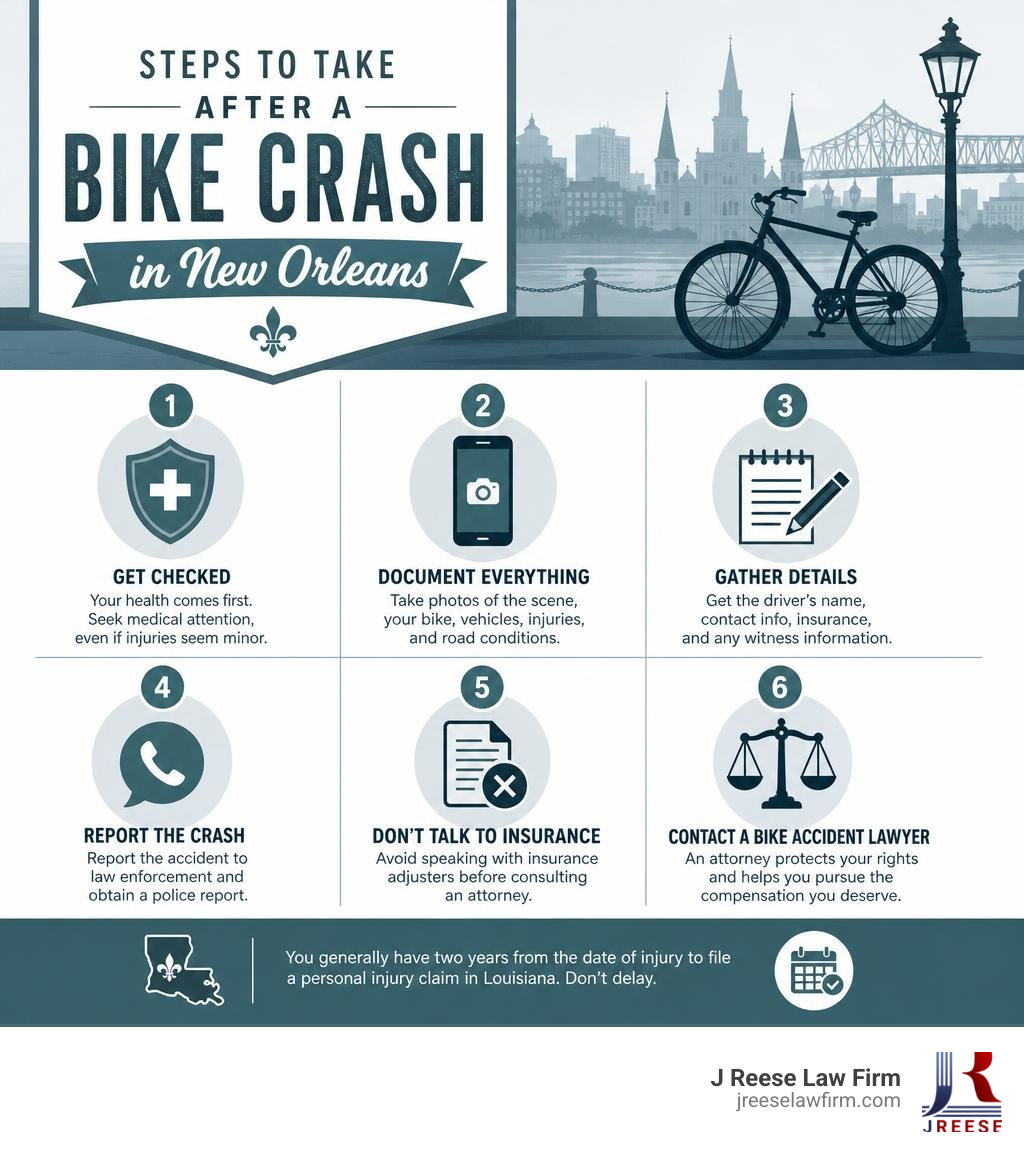
What you do in the moments and days following an accident can heavily influence the outcome of your legal claim. To protect your health and your rights, follow these steps:
- Seek Medical Attention Immediately: Even if you feel fine, adrenaline can mask serious internal injuries or concussions. Go to an emergency room or urgent care right away.
- Report the Crash: Call the police to the scene so they can file an official report.
- Document the Scene: If you are physically able, take photos of your bike, the driver’s vehicle, road conditions, and your visible injuries.
- Gather Witness Info: Collect names and phone numbers of anyone who saw the crash.
- Do Not Admit Fault: Avoid saying “I’m sorry” or making statements that suggest you were to blame.
- Contact a Lawyer: Before speaking with any insurance adjusters, contact our firm. For a comprehensive guide on navigating the immediate aftermath of a collision, read What to Do After a Car Accident in Louisiana.
Frequently Asked Questions About New Orleans Bicycle Accidents
Do I have to wear a helmet while riding a bike in New Orleans?
Under Louisiana state law, bicycle helmets are only legally required for children under the age of 12. There is no statewide helmet mandate for adult cyclists.
From a legal standpoint, if you were not wearing a helmet as an adult, the defense cannot use this fact to automatically bar you from recovering compensation. Louisiana law states that not wearing a helmet does not constitute negligence. However, to protect your physical safety and prevent severe head trauma, we always strongly encourage wearing a high-quality helmet on every ride.
Can I still recover compensation if I was partially at fault for the crash?
Yes, but with strict limitations under Louisiana’s modified comparative fault system. As long as your share of the blame is 50 percent or less, you can recover compensation.
Your final financial recovery will be reduced by your exact percentage of fault. However, if the insurance company or a court determines that you were 51 percent or more at fault, you will be completely barred from recovering any damages. This makes it vital to work with a skilled lawyer who can present clear evidence of the driver’s primary negligence.
What if I was injured by a commercial vehicle or public bus?
If you were struck by a commercial delivery truck, a rideshare vehicle, or a New Orleans regional transit authority (RTA) bus, your case will involve additional complexities. Commercial vehicle accidents often involve larger corporate insurance policies, but they also bring aggressive corporate defense lawyers.
If a public bus was involved, claims against government agencies have much shorter notification deadlines and unique sovereign immunity rules. If you find yourself in this situation, you will need specialized legal representation. Visit our dedicated pages for support from a New Orleans Bus Accident Lawyer or a New Orleans Truck Accident Attorney.
Conclusion
Navigating the physical, emotional, and financial aftermath of a bicycle accident can feel overwhelming. Between dealing with pushy insurance adjusters, managing mounting medical bills, and focusing on your physical rehabilitation, you shouldn’t have to carry the legal burden alone.
At J Reese Law Firm, we are committed to standing up for the rights of cyclists in New Orleans. We understand the local streets, we know the state’s complex traffic laws, and we have a proven track record of holding negligent drivers accountable. We work on a contingency fee basis, meaning you pay us nothing upfront, and we only collect a fee if we successfully recover compensation for you.
Let us handle the legal battle while you focus on your healing. To learn more about our firm and how we serve the local community, please visit our About Us page, review our past success on our Results page, or get in touch with us directly through our Contact page.
Take the first step toward reclaiming your peace of mind. Seek Justice with J Reese Law Firm today by scheduling your free, no-obligation case evaluation.