What Determines Brain Injury Compensation in Gretna?
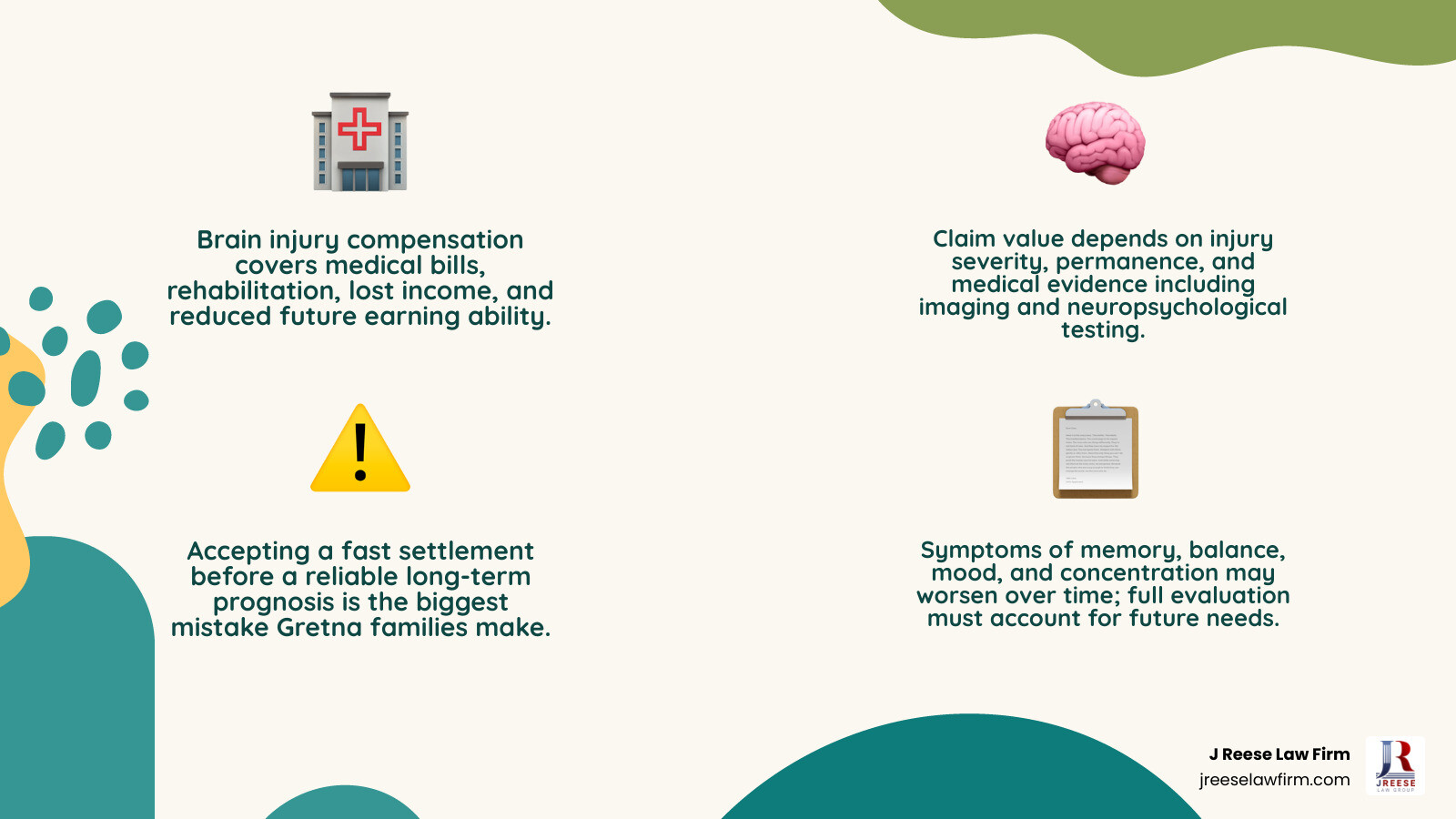
Brain injury compensation is based on the real, documented impact of the injury – not a one-size-fits-all number. A claim may include payment for medical bills, rehabilitation, lost income, reduced future earning ability, home or vehicle changes, and the personal effects of pain, cognitive limits, and loss of enjoyment of life.
The value often turns on a few key facts:
- The severity and expected permanence of the brain injury.
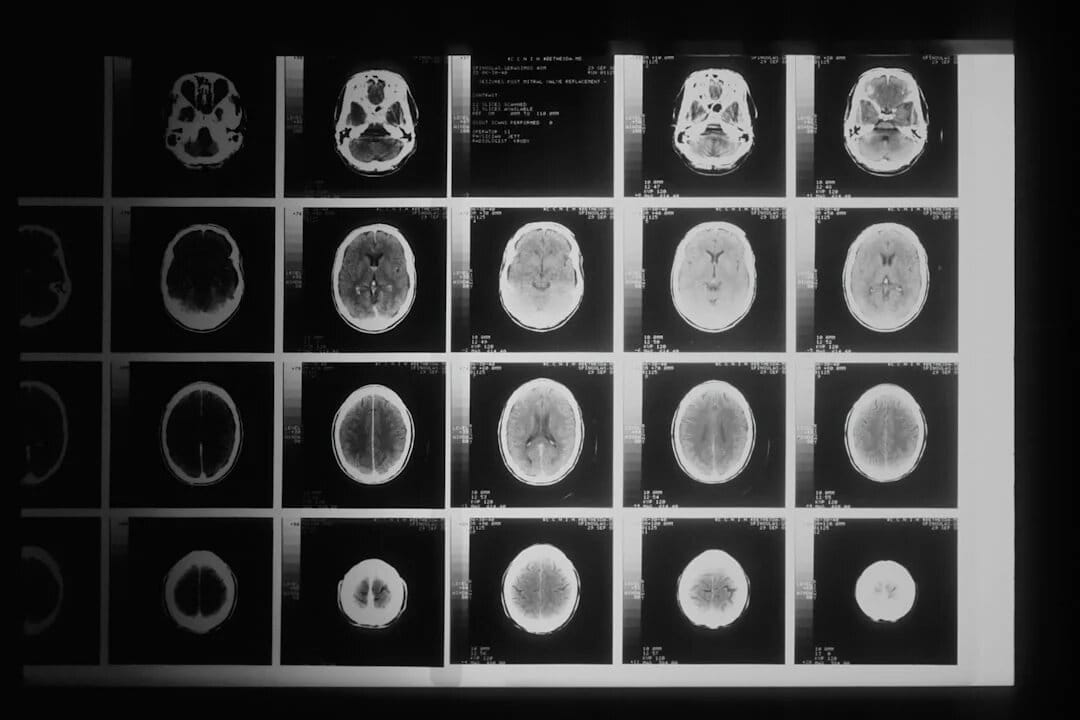
- Medical evidence, including imaging, neurology records, therapy notes, and neuropsychological testing.
- The cost of future care and support.
- How symptoms affect work, family life, and daily independence.
- Whether another person, business, or insurer is legally responsible.
For Gretna families, the biggest mistake is often accepting a fast settlement before doctors can give a reliable long-term prognosis. Symptoms involving memory, balance, sleep, vision, mood, or concentration can continue or become clearer over time. A full evaluation should account for both current losses and reasonable future needs before any final release is signed.
I am Justin Reese, a civil litigation and personal injury attorney who has represented people and families facing catastrophic injuries, wrongful death, and complex accident claims since 2011. My work with brain injury compensation focuses on documenting the full financial and human cost of an injury so clients can make informed decisions about their legal options.
Brain injury compensation terms to know:
Key Factors That Determine Brain Injury Compensation Amounts

Every head injury carries unique physical, mental, and financial consequences. When we evaluate a case for a family on the Westbank or throughout Jefferson Parish, we do not rely on rough estimates. Calculating an appropriate recovery demands a complete assessment of the injury’s severity, permanence, and financial impact. Understanding how to estimate your head injury settlement value starts with looking at the whole person, not just immediate emergency room invoices.
Several primary factors dictate the value of a legal claim:
- Injury Severity: A mild concussion that resolves in six weeks carries a very different legal value than moderate or severe traumatic brain damage that leaves permanent neurological deficits.
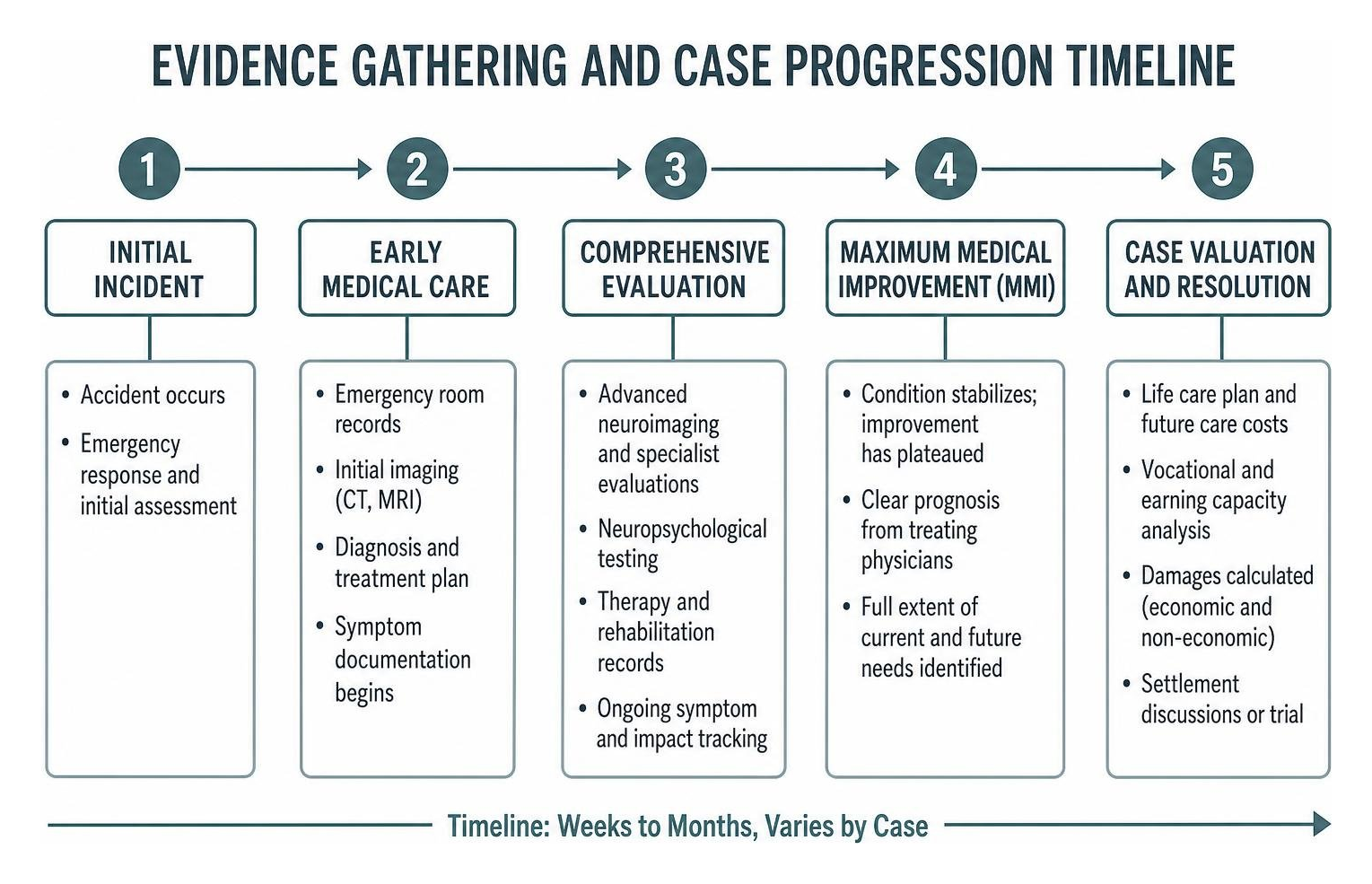
- Maximum Medical Improvement (MMI): The point at which a survivor’s condition has stabilized and further significant recovery is unlikely. Valuing a claim before reaching MMI risks missing lifelong care costs.
- Liability and Insurance Limits: The clarity of fault and the available commercial or personal insurance coverage caps directly dictate recovery options.
- Impact on Daily Life: How substantially the damage disrupts an individual’s ability to work, parent, maintain relationships, and live independently.
Calculating Economic Damages in Brain Injury Compensation
Economic damages represent concrete, out-of-pocket financial losses resulting from the incident. Because head injuries often require months of intensive care followed by years of supportive therapy, these tangible damages can quickly rise into seven-figure territory.
When navigating brain damage claims in New Orleans and beyond, we account for every financial loss, including:
- Past and Current Medical Bills: Emergency transportation, acute trauma surgeries, intensive care stays, diagnostic imaging, and pharmaceutical prescriptions.
- Future Medical and Supportive Care: In-home care attendants, physical therapy, speech therapy, vestibular rehabilitation, and ongoing neurology visits.
- Lost Wages and Diminished Earning Capacity: Income lost during recovery, as well as the difference between what a person earned before the accident and what they can earn moving forward.
- Home and Vehicle Modifications: Wheelchair ramps, bathroom safety modifications, and adapted vehicles needed for physical or cognitive limitations.
To establish these numbers in court or during settlement talks, we work with life care planners and forensic economists. These professionals calculate inflation and life expectancy to create an accurate projection of what lifelong care will genuinely cost.
Non-Economic Damages and Subjective Loss
While economic damages replace lost dollars, non-economic damages address the human toll of head trauma. A traumatic brain injury (TBI) can alter a person’s mood, memory, patience, and personality, straining marriages and family bonds.
Non-economic damages compensate survivors for:
- Physical Pain and Suffering: Chronic post-traumatic headaches, dizziness, photosensitivity, and physical discomfort.
- Mental Anguish and Emotional Distress: Anxiety, clinical depression, post-traumatic stress, and the frustration of losing cognitive abilities.
- Loss of Enjoyment of Life: Inability to participate in favorite hobbies, sports, social outings, or community activities.
- Loss of Consortium: The negative impact on companionship, intimacy, and support within a marriage.
In settlement discussions, attorneys and insurance adjusters often calculate non-economic damages using either the multiplier method (multiplying total economic damages by a number typically between 1.5 and 5, depending on severity) or the per diem method (assigning a daily dollar rate for every day the survivor lives with the condition). In severe cases with permanent impairment, these subjective losses represent a major share of the total recovery.
The Danger of Settling Brain Injury Claims Too Early

Following a crash on the Crescent City Connection or an industrial accident in Harvey, insurance adjusters often reach out quickly. They may offer a fast cash settlement within weeks of the incident. Accepting this initial offer is almost always a serious financial mistake.
Insurance companies are profit-driven businesses. Their goal is to close claims quickly for the lowest possible amount before the injured person understands the true extent of their condition. Once you sign a liability release, you forfeit all rights to demand further funds—even if you discover six months later that you cannot return to your job or require daily in-home assistance. Reviewing current settlement benchmarks and valuation guides confirms that early settlement offers represent only a small fraction of a claim’s true value.
| Factor | Quick Early Settlement | Comprehensive Post-MMI Valuation |
|---|---|---|
| Medical Evidence | Initial emergency room records only | Full neuroimaging, neuropsychological evaluations, and therapy logs |
| Future Care Costs | Uncalculated and excluded | Formally projected via a Life Care Plan |
| Earning Capacity | Basic past lost wages only | Comprehensive vocational and economic loss modeling |
| Risk of Uncovered Costs | High (survivor pays future care out of pocket) | Low (settlement accounts for long-term complications) |
| Overall Value | Minimal payout favoring the insurer | Full recovery reflecting true lifelong impact |
Medical Stability and Maximum Medical Improvement (MMI)
Reaching Maximum Medical Improvement does not mean a person is 100% cured; it simply means their medical condition has plateaued and further clinical improvement is unexpected.
Brain tissue heals slowly. Symptoms like memory lapses, balance issues, executive dysfunction, and sleep disturbances can evolve over 12 to 24 months. Settling before reaching MMI forces a family to guess about future medical needs. By waiting until treating physicians provide a clear prognosis, our team can ensure every ongoing medical need is documented and demanded in your legal claim.
Building an Undeniable Claim: Medical Evidence and Causation
Insurance adjusters frequently argue that concussions and mild TBIs are temporary, or they claim cognitive issues stem from pre-existing conditions or stress. Defeating these arguments requires presenting objective, undeniable medical proof. Knowing what evidence do you need to win a brain damage claim makes the difference between an undervalued claim and full financial recovery.
The Critical Role of Advanced Neuroimaging and Medical Teams
Standard emergency room CT scans and routine MRI scans are designed to detect skull fractures and active, life-threatening hemorrhages. They often miss microscopic tears in nerve fibers, known as diffuse axonal injury.
To build an airtight legal case, we guide clients toward advanced diagnostic testing and multidisciplinary care:
- Diffusion Tensor Imaging (DTI) and 3T MRI: Advanced imaging modalities that reveal damage to white matter tracts that standard scans overlook.
- Neuropsychological Testing: Multi-hour diagnostic evaluations assessing memory retention, processing speed, focus, and problem-solving abilities.
- Vestibular and Ocular Testing: Documentation of inner ear and visual tracking disruptions causing dizziness and balance loss.
- Coordinated Medical Care: Working closely with neurologists who oversee physical, occupational, and speech therapists to maintain continuous documentation.
Following established guidance on claimant medical assessments, objective clinical testing links your symptoms directly to the traumatic incident, preventing insurance companies from minimizing your condition.
How Long-Term Care and Neurodegenerative Risks Impact Brain Injury Compensation
Modern medical research shows that a traumatic brain injury is not a single, isolated event; it can trigger ongoing cellular changes. Studies indicate that a history of traumatic brain injury is linked to a 56% greater risk of developing Parkinson’s disease later in life. Parkinson’s disease already affects more than 10 million people worldwide, and its economic cost in the United States alone is projected to reach $79.1 billion by 2037.
When trauma causes chronic neuroinflammation and oxidative damage, it can accelerate long-term neurodegeneration. In severe acute cases, careful intensive care management is also required to avoid secondary ischemic trauma. Clinical research demonstrates that maintaining balanced arterial carbon dioxide levels (PaCO2 between 35–45 mmHg) is critical, as each 1 mmHg change alters cerebral blood flow by up to 6%, significantly impacting patient survival and recovery.
Medical studies also highlight the importance of evaluating chemical impacts on cognitive health. Research examining how substances affect neural structures reinforces the need to distinguish between pre-existing lifestyle factors and direct trauma (Burggren et al., 2019). Understanding these biological complications is central to 5 ways a New Orleans brain injury lawyer protects your long-term care, ensuring future care settlements reflect the genuine risk of long-term cognitive decline.
Legal Routes for Workplace and Severe Accident Injuries in Louisiana
Determining who to sue and what compensation is available depends on how and where the trauma occurred. Under Louisiana law, distinct legal frameworks apply depending on the setting of the injury.
Understanding Louisiana brain injury litigation 101: what you need to know helps injured individuals identify all available paths to financial recovery.
Navigating Complex Liability and Catastrophic Damages
Under Louisiana’s Workers’ Compensation Act, direct employers are generally immune from personal injury lawsuits under the “exclusive remedy” rule. Workers’ comp pays medical bills and basic disability benefits, but it does not provide compensation for pain, suffering, or loss of enjoyment of life.
However, many workplace head injuries involve negligent third parties. In these situations, you can file a separate personal injury lawsuit against:
- Negligent Subcontractors: Third-party workers on a job site who dropped tools or operated machinery unsafely.
- Equipment Manufacturers: Companies that produced defective safety gear, scaffolding, or vehicle components.
- Property Owners: Commercial property owners who failed to fix or warn of dangerous conditions.
In premises liability cases—such as slip and falls leading to severe head trauma—gathering prompt evidence is vital. You must document the hazardous condition immediately by taking clear photographs of the substance or liquid on the floor, capturing the absence of “Wet Floor” warning signs, and securing surveillance camera footage before it is overwritten.
For highway collisions involving 18-wheelers or delivery trucks, we hold commercial carriers accountable for driver fatigue, improper maintenance, and safety violations. As a dedicated New Orleans catastrophic injuries attorney, J Reese Law Firm handles the legal and procedural demands of complex liability claims to maximize client recoveries.
Frequently Asked Questions About Brain Injury Claims in Gretna
How is future lost earning capacity calculated after a traumatic brain injury?
Calculating diminished earning capacity requires comparing what you reasonably would have earned over your working life with what you can earn after the injury.
Forensic economists and vocational consultants review your pre-injury work history, educational background, promotions, and average industry wage growth. They combine these factors with your post-injury functional capacity evaluations to calculate your total lifetime wage loss in present-day dollars.
Can I seek compensation if my brain injury occurred at work?
Yes. While workers’ compensation covers medical costs and a portion of lost income regardless of fault, you cannot sue your direct employer for pain and suffering.
However, if an outside vendor, general contractor, negligent equipment maker, or reckless driver contributed to your injury, you can pursue a third-party personal injury lawsuit to recover full damages, including all lost earnings and pain and suffering.
How long does a traumatic brain injury settlement take to resolve?
Most catastrophic head injury cases take between 18 and 36 months to resolve.
Complex claims require time for the survivor to reach Maximum Medical Improvement, for medical providers to complete detailed assessments, and for our firm to gather liability evidence and negotiate with insurers. Rushing the timeline risks leaving substantial future medical expenses uncovered.
Protecting Your Family’s Future After a Brain Injury
A brain injury disrupts an entire family’s stability. When medical bills mount and an injured loved one cannot return to work, securing fair financial recovery is essential to safeguarding your long-term quality of life.
At J Reese Law Firm, we represent injured individuals and their families across Gretna, Metairie, and Greater New Orleans. We step in to manage aggressive insurance adjusters, coordinate thorough medical evaluations, and build compelling claims that demand every dollar you are owed.
If you or a loved one is dealing with the aftermath of head trauma, speak with a dedicated New Orleans traumatic brain injury attorney at our firm today. We will evaluate your claim, explain your legal options, and help your family pursue the full compensation you deserve.
Scientific References
Burggren AC, Shirazi A, Ginder N, London ED. “Cannabis effects on brain structure, function, and cognition: considerations for medical uses of cannabis and its derivatives..” The American journal of drug and alcohol abuse, 2019. PMCID PMC7027431.