When Life Changes in an Instant: Finding Your Way to a Brain Injury Resource Center
A brain injury resource center can be one of the most important connections a survivor — or their family — ever makes after a life-altering diagnosis.
Here is a quick overview of what these centers do and who they help:
| What | Details |
|---|---|
| What it is | A non-medical support hub connecting survivors and families to services, information, and community |
| Who it serves | TBI survivors, caregivers, family members, healthcare professionals, and employers |
| Core services | Resource referrals, support groups, life skills training, hospital-to-home transitions, and financial/legal navigation |
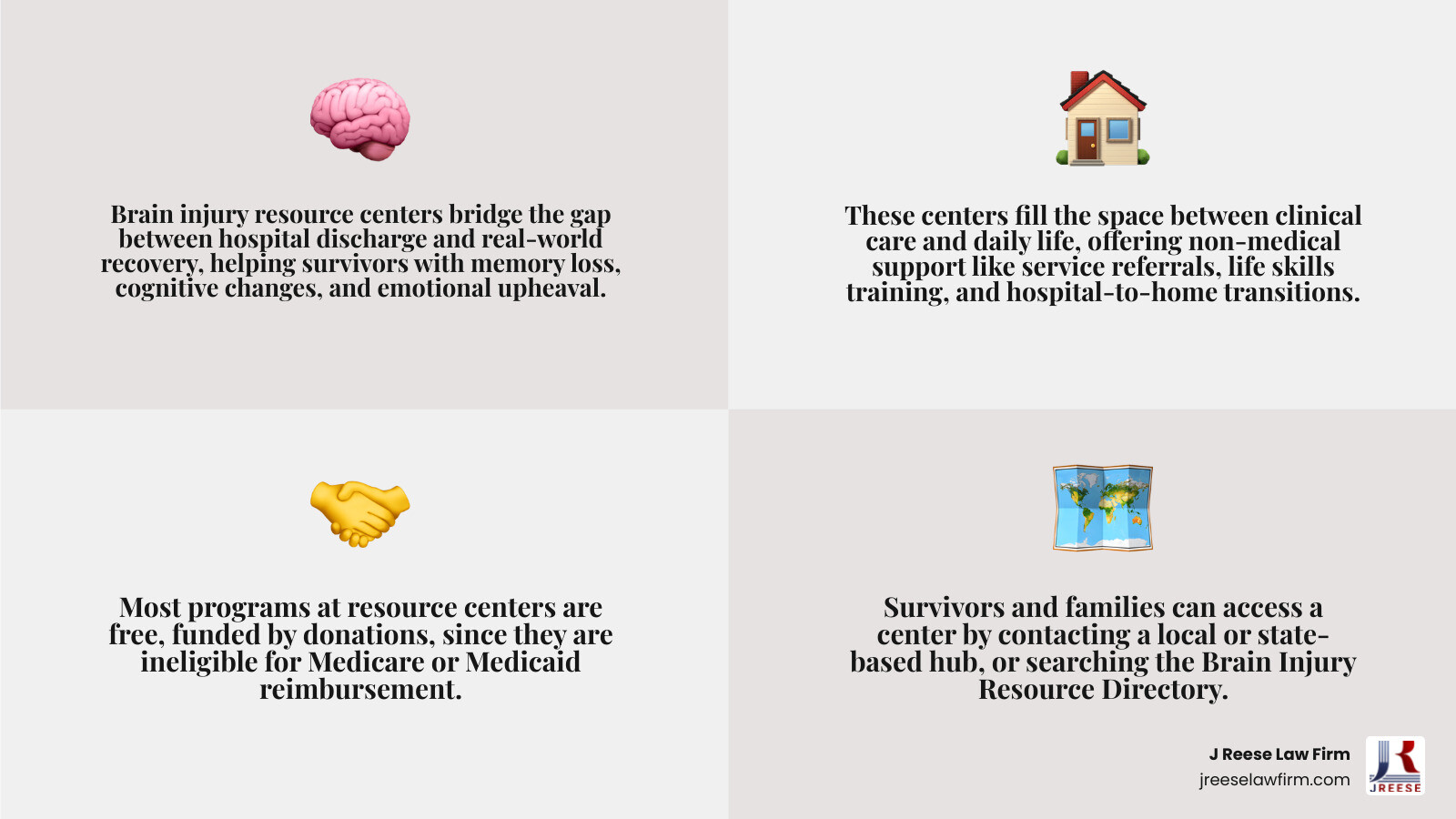
| Cost | Most programs are free, funded by donations since they are ineligible for Medicare or Medicaid reimbursement |
| How to access | Contact a local or state-based center directly, or search a community directory like the Brain Injury Resource Directory |
Brain injury does not end when you leave the hospital. In many ways, that is when the hardest part begins.
Survivors often face memory loss, cognitive changes, physical challenges, and emotional upheaval — all at once. Families are thrust into caregiving roles they never prepared for. And the healthcare system, as good as it can be in the acute phase, rarely follows you home.
That gap — between clinical discharge and real recovery — is exactly where brain injury resource centers step in.
These centers do not replace doctors or therapists. Instead, they fill the space in between: helping survivors find services, build skills, connect with others who truly understand, and reclaim a sense of purpose and identity.
As one brain injury support organization puts it: “Life after brain injury happens all day, every day.” The challenges do not pause between appointments — and neither should the support.
I’m Justin Reese, a personal injury attorney with Alexander Shunnarah Trial Attorneys and a native of New Orleans, where I have spent my career fighting for people affected by catastrophic injuries, including traumatic brain injuries. Understanding what a brain injury resource center offers is something I believe every survivor and family in Louisiana deserves to know, because access to the right support — both community-based and legal — can make all the difference in what comes next.
What is a Brain Injury Resource Center and Who Does It Serve?
A brain injury resource center is a specialized community-based organization designed to help individuals navigate the complex, often overwhelming world of brain injury recovery. Unlike a clinical rehabilitation facility or a hospital ward, a resource center focuses on the practical, emotional, and social aspects of living with a brain injury.
These centers serve as a vital bridge between clinical care and community reintegration. They are designed to support a wide range of individuals, including:
- Survivors: Individuals recovering from traumatic brain injuries (TBIs) caused by car crashes, falls, or assaults, as well as acquired brain injuries (ABIs) from strokes, aneurysms, or lack of oxygen.
- Family Members and Caregivers: Loved ones who suddenly find themselves in intensive caregiving roles, needing guidance on how to support the survivor while managing their own stress.
- Healthcare Professionals: Doctors, therapists, and social workers looking for community programs, support groups, and educational resources to recommend to their patients upon discharge.
- Employers and Educators: Individuals who need strategies to help a survivor return to work or school with appropriate accommodations.
By offering a centralized hub of information, these centers ensure that no survivor has to figure out their recovery alone. They provide a safe space where lived experience is valued, and practical solutions are shared. Research and toolkits developed by national entities like the National Resource Center for Traumatic Brain Injury help these local centers implement peer-led programs that make a measurable difference in daily life.
The Core Mission of a Brain Injury Resource Center
At its heart, the primary mission of any brain injury resource center is advocacy, education, and community integration. These centers operate on the belief that while a brain injury permanently changes a person’s life, it does not have to diminish their value, purpose, or connection to the world.
Because they focus on non-medical support, these organizations prioritize the long-term well-being of the individual. They offer resource facilitation — helping families identify and apply for state aid, find housing, or access specialized therapies. They also advocate at the local and state levels to raise public awareness and secure funding for brain injury survivors. For Louisiana residents, connecting with local advocacy networks through resources like the Louisiana – Brain Injury Association of America is a crucial step in finding peer support and statewide care directories.
Tailored Programs for Diverse Populations
Brain injuries do not discriminate, affecting people of all ages, backgrounds, and walks of life. Recognizing this, many centers design specialized programs to meet the unique needs of different populations:
- Veterans and Active Duty Military: Military personnel face high rates of TBI due to combat-related blast exposures or training accidents. Specialized programs focus on military-to-civilian transitions, PTSD integration, and coordinating care with the VA.
- Children and Youth: Pediatric brain injury recovery looks very different from adult recovery, as a child’s brain is still developing. Centers provide resources for parents navigating Special Education programs, Individualized Education Programs (IEPs), and return-to-play protocols after sports concussions.
- Bicultural and Bilingual Communities: Language and cultural barriers can make accessing healthcare incredibly difficult. Innovative programs, such as the Trabajadora de Salud (health worker) model, adapt care transition services specifically for Latino families. This approach respects cultural values like personalismo (building close personal relationships) and familismo (valuing family involvement) to ensure families fully understand recovery steps and feel supported.
For families looking for age-appropriate materials, the Home Page – Resource Center of the Brain and Spinal Cord Injury Program offers structured guides segmented by both diagnosis and age group, ensuring that pediatric and adult survivors receive tailored assistance.
The 3 Pillars of Healing: Recovery, Rehabilitation, and Restoration
When navigating life after a traumatic brain injury, it is helpful to understand that healing is not a single event—it is a continuous journey. In the field of neuroscience and advanced brain care, this journey is often divided into three distinct phases: recovery, rehabilitation, and restoration.
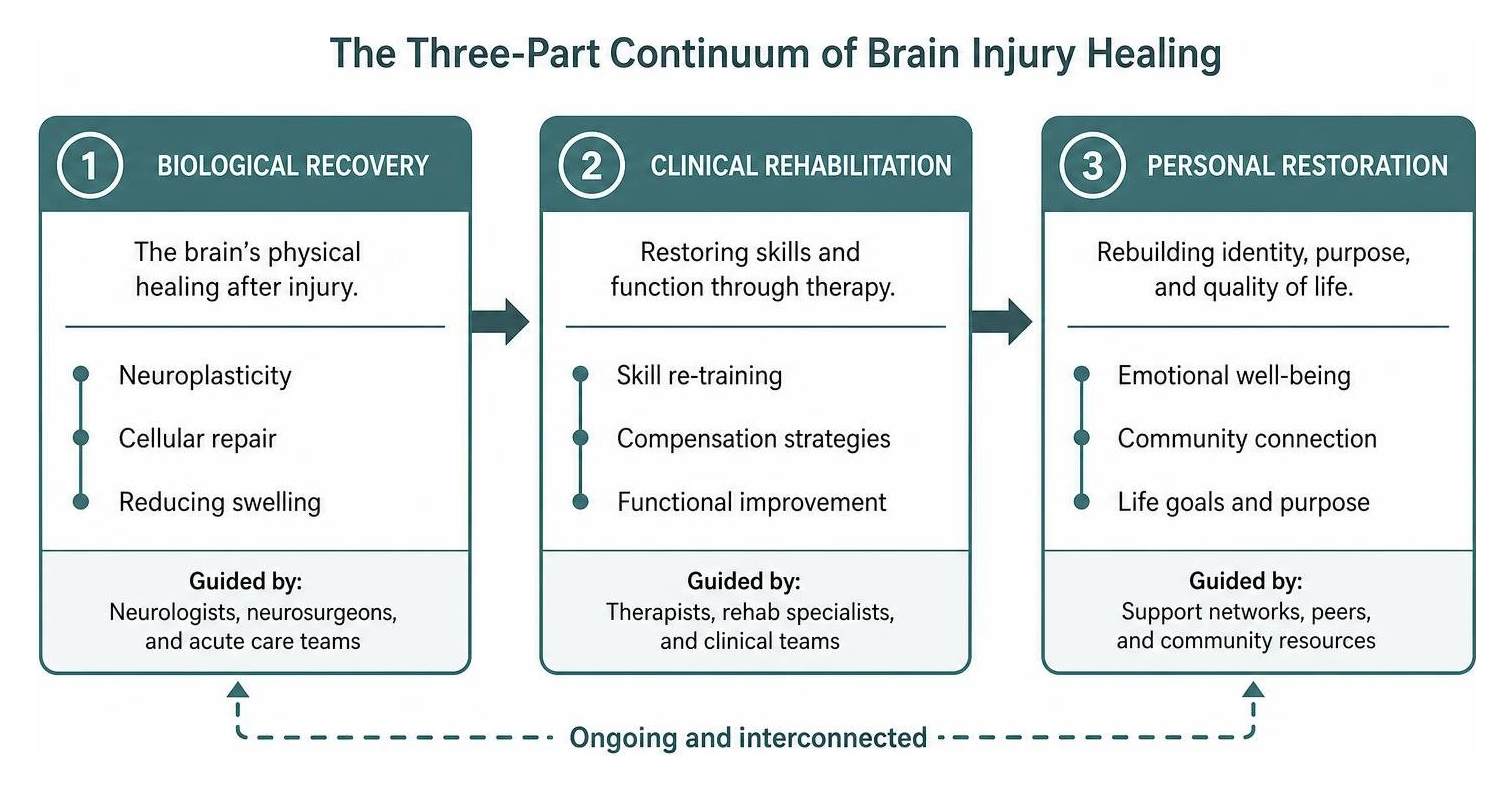
To help you understand how these phases fit together, we have broken down their biological and practical differences below:
| Phase | What It Focuses On | Key Mechanisms | Who Guides It |
|---|---|---|---|
| Recovery | The physical and biological healing of the brain tissue itself immediately following an injury. | Neuroplasticity, neurogenesis, reducing swelling, and cellular repair. | Neurologists, neurosurgeons, and acute care medical teams. |
| Rehabilitation | Relearning physical, cognitive, and communicative skills through structured, repetitive exercises. | Functional therapy, physical therapy, occupational therapy, and speech-language pathology. | Physiatrists, clinical therapists, and rehabilitation facilities. |
| Restoration | Reclaiming one’s identity, sense of self, relationships, and place in the community. | Peer support, creative therapies, life skills coaching, and emotional adjustment. | The survivor, family, peer mentors, and community resource centers. |
Understanding these distinctions helps survivors and their families set realistic expectations. While medical teams focus heavily on biological recovery and clinical rehabilitation, a brain injury resource center is uniquely equipped to assist with the crucial third pillar: restoration.
As highlighted by the pioneering work of the Stanford Center for Brain Injury, Recovery, Rehabilitation, and Restoration, true healing means going beyond functional clinical training. It is about helping a survivor reclaim their identity, discover new passions, and find wholeness in their post-injury life.
Essential Services Offered by a Brain Injury Resource Center
While clinical rehabilitation teaches you how to walk, talk, or swallow again, a brain injury resource center teaches you how to live again. The services offered by these centers are designed to address the everyday challenges of community reintegration.
By offering a combination of educational workshops, life skills classes, and peer support networks, these centers give survivors the tools they need to build an independent life. Let’s look at some of the most impactful programs typically provided, as highlighted by the Brain Injury Center | Services model.
Transitioning Safely from Hospital to Home
One of the most vulnerable moments in a survivor’s journey occurs on the day of hospital discharge. Moving from a highly structured medical environment to a quiet home can feel like stepping off a cliff.
Without immediate guidance, families often struggle to manage medications, set up safe home environments, and handle cognitive changes. This sudden, overwhelming stress on family members can lead to “secondary patient syndrome,” where the primary caregiver experiences severe clinical depression, anxiety, and physical exhaustion from neglecting their own health.
To prevent this, many resource centers offer specialized Care Transitions programs. These initiatives provide immediate intervention upon discharge, which may include:
- Conducting in-home safety evaluations within the first 72 hours of discharge.
- Reviewing discharge summaries and medication lists to prevent errors.
- Helping families establish structured daily routines and visual reminders (like dry-erase boards or signs on the bed) to support memory-impaired survivors.
- Providing immediate caregiver training to prevent burnout and secondary patient syndrome.
For families in our local community, accessing reliable Brain Injury Support Resources in the Greater New Orleans area can help bridge this gap, ensuring that professional home-based assistance is in place to keep survivors safe and prevent avoidable hospital readmissions.
Connecting to Financial, Medical, and Legal Resources through a Brain Injury Resource Center
A brain injury is incredibly expensive. Between intensive care bills, ongoing physical therapies, and lost wages, families quickly find themselves in financial distress. Navigating programs like Medicaid, Medicare, and Social Security Disability Insurance (SSDI) is notoriously difficult, especially for someone dealing with cognitive fatigue.
A resource center helps by acting as a guide through this complex system. Staff members can help families understand eligibility requirements, complete applications, and connect with state-funded programs.
In addition to medical and financial navigation, understanding your legal rights is essential if the brain injury was caused by someone else’s negligence, such as a truck collision, car wreck, or a slip-and-fall accident. When we evaluate a case, we look at the long-term cost of care, liability, and the immediate need for compensation to cover rehabilitation.
If you or a loved one is dealing with the legal aftermath of a head injury in Louisiana, it is vital to understand the state’s strict deadlines and evidentiary requirements. Exploring Louisiana Brain Injury Litigation 101: What You Need to Know and learning How a Traumatic Brain Injury Lawyer Evaluates Your Case and Fights can help you protect your family’s future. For more general legal information, you can browse our Category: Personal Injury and Category: Louisiana Law sections to learn about your rights in local courts.
Support Groups, Social Opportunities, and Skill-Building
Isolation is one of the most common complaints among brain injury survivors. Friends often drift away, and public places can feel overwhelming due to sensory overload.
Resource centers combat this isolation by offering structured social opportunities and peer mentoring. Survivors can connect with others who truly understand the “invisible” challenges of a brain injury—like chronic fatigue, word-finding difficulties, and emotional changes.
Additionally, many centers offer cutting-edge skill-building programs, including:
- Cooking and Life Skills Classes: Rebuilding confidence in the kitchen while practicing planning, sequencing, and fine motor skills.
- Virtual Reality (VR) Therapy: Using specialized VR scenarios to practice prospective memory (remembering to perform a task in the future) and eye-tracking in a safe, controlled digital environment.
- Creative Arts Projects: Programs like the Unmasking Brain Injury Project, where survivors paint masks that express their personal recovery journeys, helping to raise public awareness while acting as a form of creative therapy.
If you are looking for a safe, welcoming space to connect with other survivors, check out our guide on No Survivor Is an Island: Finding the Best Brain Injury Support Groups to find local meetings that fit your needs.
How Community Support and Funding Keep These Centers Open
Because brain injury resource centers focus on non-medical, community-based support rather than clinical treatment, they are generally not eligible for reimbursement by Medicare, Medicaid, or private health insurance.
This means that almost all of their programming—from support groups to life skills classes—must be funded through other means. Many centers, such as the Welcome to the Brain Injury Resource Center of Wisconsin – The Brain Injury Resource Center of Wisconsin, operate as 100% volunteer-run, 501(c)(3) registered charities. They rely entirely on:
- Individual Donations: Generous contributions from community members, families of survivors, and local businesses.
- Grants: Funding from private foundations, corporate giving programs, and state-level grants.
- Fundraising Events: Annual walks, charity runs, dinners, and auctions that raise critical operating funds.
- Volunteer Networks: Dedicated individuals—often survivors and caregivers themselves—who donate their time to keep the doors open and the phone lines staffed.
Without the generosity of the community, these vital lifelines would cease to exist. Supporting your local resource center through donations or volunteer hours directly helps survivors in your area access free, life-changing programs.
Frequently Asked Questions About Brain Injury Support
How do I find a brain injury resource center near me?
You can start by searching the Brain Injury Resource Directory, which is a free, community-built database that allows you to filter resources by age group, insurance type, and location. You can also contact local hospital social workers or state-level brain injury associations to find vetted community programs in your area.
Are the services at these resource centers free?
Yes, the vast majority of community-based brain injury resource centers offer their programs, support groups, and workshops completely free of charge. Because they rely on donor generosity and community fundraising rather than insurance billing, they are able to provide support to anyone who needs it, regardless of their financial situation.
What is a Brain Injury Identification Card?
A Brain Injury Identification Card is a small, wallet-sized card that survivors can carry to help them communicate in public or emergency situations. Because brain injuries are often “invisible,” survivors may struggle with speech, memory, or balance, which can sometimes be misunderstood by law enforcement or transit workers. The card briefly explains the survivor’s condition and lists emergency contact information to ensure safety and clear communication.
Reclaiming Your Life: Taking the Next Step in Your Recovery Journey
Recovering from a brain injury is a long, challenging road, but you do not have to walk it alone. Connecting with a local brain injury resource center can provide the community, resources, and practical skills you need to reclaim your life, your independence, and your sense of self.
If your brain injury was caused by a car crash, commercial truck accident, or a slip-and-fall on dangerous property, securing the financial resources you need for long-term care is just as critical as finding community support. The medical bills, lost wages, and rehabilitation costs associated with a TBI can quickly overwhelm any family.
At J Reese Law Firm, we understand the heavy physical, emotional, and financial toll a brain injury takes on a family. As an experienced New Orleans traumatic brain injury attorney, we are here to handle the legal fight so you can focus entirely on your healing. We will help you gather critical evidence, establish liability, navigate Louisiana’s strict filing deadlines, and fight for the maximum legal compensation you deserve.
Do not let the insurance companies dictate your recovery. Contact us today to schedule a free, compassionate consultation, and let us help you take the next step on your journey toward healing.