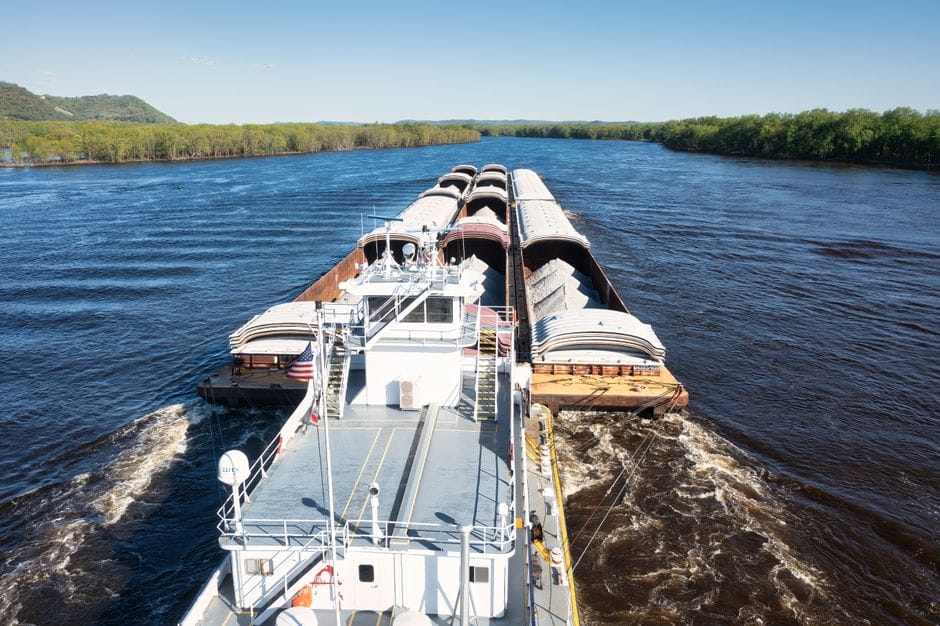
Can I Sue Under the Jones Act if I Was Hurt on a Boat near Gretna?
An injured crew member near Gretna may pursue a Jones Act negligence claim when employer fault contributed to the accident. Eligibility usually turns on seaman status, a meaningful connection to a vessel or fleet, and work-related circumstances. Job titles do not decide the issue; records and witness evidence do.
The Jones Act, 46 U.S.C. § 30104, lets qualifying seamen bring a negligence action against an employer. A worker does not need to prove that negligence was the only cause of an injury. Evidence may include unsafe equipment, poor training, inadequate staffing, or a hazardous deck condition.
That rule can apply on the Mississippi River, the Harvey Canal, and other working waterways near Gretna. It generally does not apply to a recreational passenger or a guest on a private boat. Those claims may fall under different maritime or personal-injury rules.
The first step is to identify the vessel, your job duties, who controlled the work, and what happened before the injury. A prompt legal review can help preserve vessel logs, incident reports, photos, and witness information.
A careful review can also identify whether another company supplied equipment, controlled a worksite, or shared responsibility for safety. That information can shape the investigation and determine which records should be requested before they are lost.
Attorney profile: Justin Reese, Esq. is licensed in Louisiana and Texas and is listed by the firm as handling maritime accident litigation. The firm reports that his verdict and settlement recoveries total tens of millions of dollars, including maritime-accident matters.
Do I Qualify as a Seaman for a Jones Act Claim?
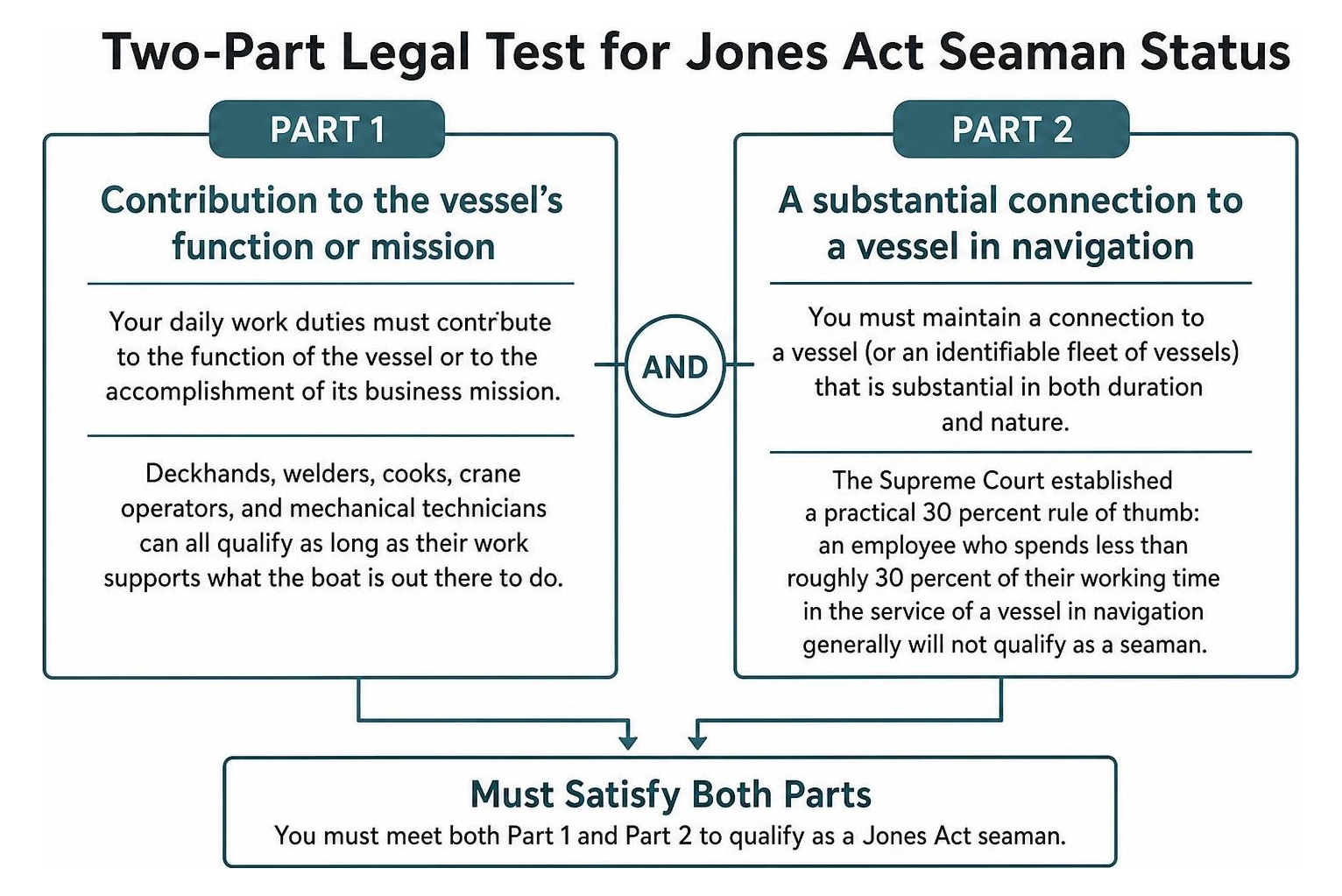
Under the Jones Act, you may qualify as a seaman when your work contributes to a vessel’s purpose and you have a meaningful connection to a vessel or identifiable fleet in navigation. Job title alone does not decide the issue. Courts look at your actual duties, vessel assignments, and working relationship.
Deckhands, tugboat crew members, cooks, engineers, welders, and other crew can qualify when their work supports a vessel’s mission. A worker assigned mainly to a fixed platform, a shoreside facility, or unrelated vessels may fall outside the Jones Act.
The connection must be substantial in both its duration and nature. Time records, crew logs, pay records, work orders, and vessel assignments can help establish the facts. If you rotated among vessels, common ownership or operational control may also matter.
A Maritime accident lawyer can review whether your assignment, employer relationship, and injury circumstances support a Jones Act negligence claim. This review is especially important when an employer labels a worker as a contractor or directs work from shore.
Questions often arise when a worker splits time between a vessel and a dock, yard, or platform. Keep a simple timeline of shifts, vessel names, supervisors, and tasks. That timeline can help clarify the connection between the injury and vessel service.
Can a Jones Act Claim Cover a Dockside or Commuting Injury Near Gretna?

Yes, it can. A qualifying seaman may have a Jones Act claim for an injury away from open water when the injury occurred during work tied closely to vessel service. The key question is not only where the accident happened, but whether the worker was acting in the course of employment.
Examples can include boarding by gangway, loading cargo at a Gretna dock, moving equipment at a Jefferson Parish marine terminal, or traveling in employer-arranged transportation. Each situation requires a fact-specific review of the assignment, route, and employer’s role.
Report the incident quickly and preserve the details. Keep photos, names of witnesses, dispatch records, vehicle information, and any written instructions that placed you at the location. Do not assume a land-based accident automatically prevents a maritime claim.
Prompt action matters because video footage, logs, and witness memories can disappear. If a vehicle or transport crew was involved, note the vehicle number, driver, pickup point, planned destination, and the employer representative who arranged the trip.
For related guidance on documentation and early case decisions, see ways a maritime injury attorney protects injured seamen.
What Evidence, Deadlines, and Other Laws Can Affect My Claim?
Jones Act cases turn on evidence and timing. An injured worker should document the hazard, get medical care, report the incident, and avoid signing a statement that is inaccurate or incomplete. A claim may involve negligence damages as well as separate maritime maintenance-and-cure rights.
Louisiana workers’ compensation law can matter when a worker does not qualify for a federal maritime remedy. Louisiana Revised Statutes § 23:1021 defines terms used in the state’s compensation system, including injury and average weekly wage. For an hourly worker, its wage calculation can use the prior four full weeks of work, subject to the statute’s terms. The U.S. Department of Labor’s guidance on maritime and state acts explains why choosing the correct remedy matters.
Louisiana Revised Statutes § 23:1032 generally makes workers’ compensation the exclusive remedy against a covered employer, subject to stated exceptions. That is why classifying the job correctly matters before accepting a settlement or allowing a deadline to pass.
Save medical records, pay stubs, crew schedules, training records, and communications about the assignment. A lawyer can assess which remedy may apply and what evidence should be preserved.
Do not wait to organize the file until a claim is denied. A dated timeline, copies of reports, treatment records, and wage information can make it easier to evaluate the case and respond when an insurer disputes how the injury occurred.
What Are Common Questions About Jones Act Claims Near Gretna?

Can I sue if my employer says I am not a seaman?
Possibly. An employer’s label is not conclusive. Your actual duties, connection to a vessel or fleet, and the circumstances of the injury are more important. Records showing regular vessel-based work can help establish whether the Jones Act applies.
Do I need to prove the employer caused the entire injury?
No. A Jones Act negligence claim can be available when employer negligence played a part in causing the injury. The facts still matter, so preserve evidence of unsafe equipment, missing safety procedures, inadequate training, or pressure to work in unsafe conditions.
What should I do after a boating or maritime work injury?
Get medical care, report the injury, photograph the scene if it is safe, and keep copies of every record. Write down what happened before conditions change. Avoid signing anything you believe is inaccurate, and seek legal advice before agreeing to a final settlement.
Can I contact J Reese Law Firm, use the contact page, or read ways a maritime injury attorney protects injured seamen?
Yes. Early legal guidance can help identify the vessel, employer, witnesses, records, and deadlines that may affect your options. It can also help determine whether the Jones Act, another maritime remedy, or Louisiana workers’ compensation may apply. Review ways a maritime injury attorney protects injured seamen or use the firm’s contact page to request a case review.
Every claim has its own facts, and a quick review can prevent important records from disappearing. Bring the incident report, photographs, medical paperwork, vessel or job details, and any messages from a supervisor so the legal options can be assessed accurately.
Keep the original photos and files in more than one location. Do not edit the original incident report after signing it; add a separate written correction if needed.
Contact Justin Reese, Esq. at J Reese Law Firm to discuss a Gretna-area maritime injury and request a case review.