What to Do After a Delivery Truck Accident in Gretna
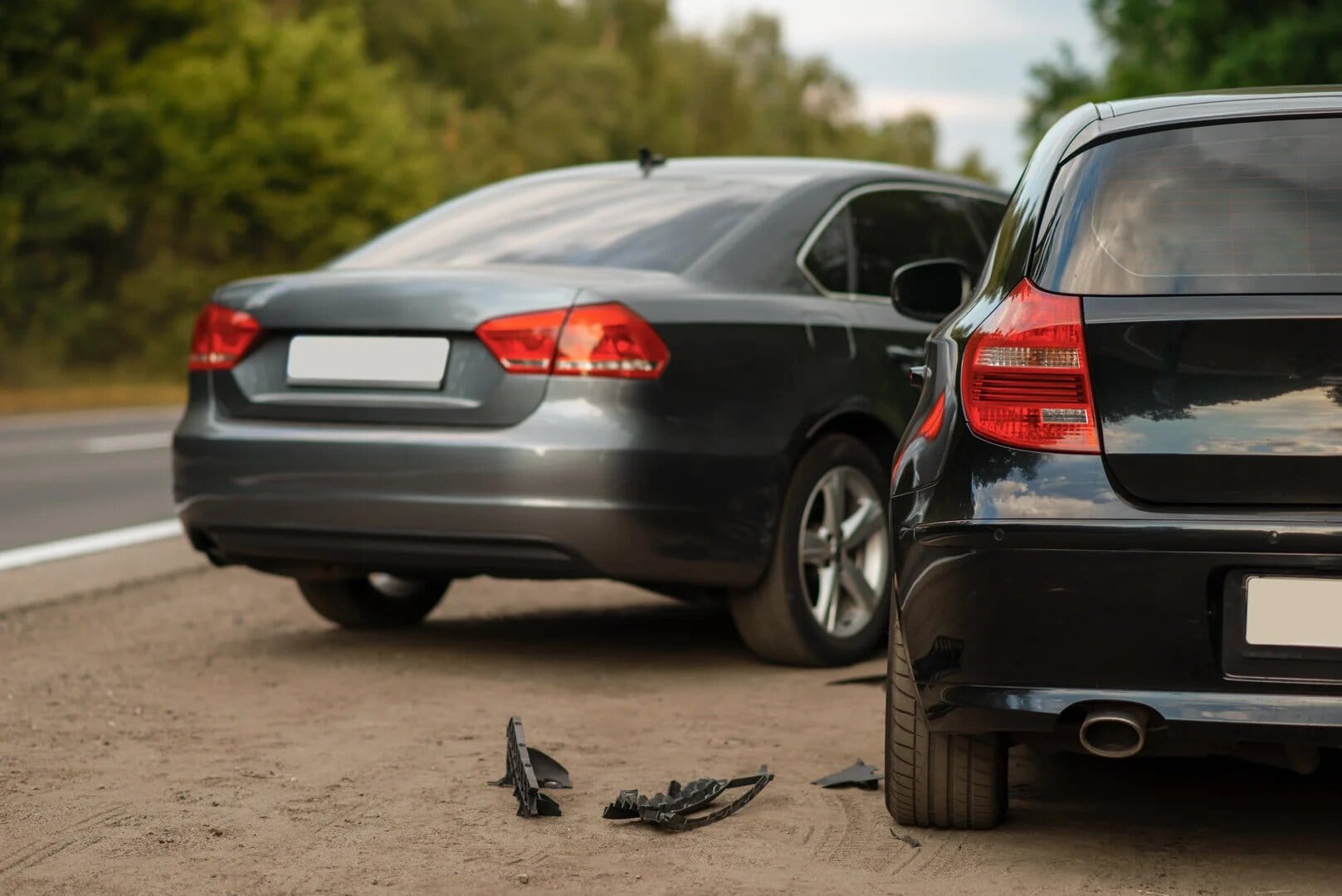
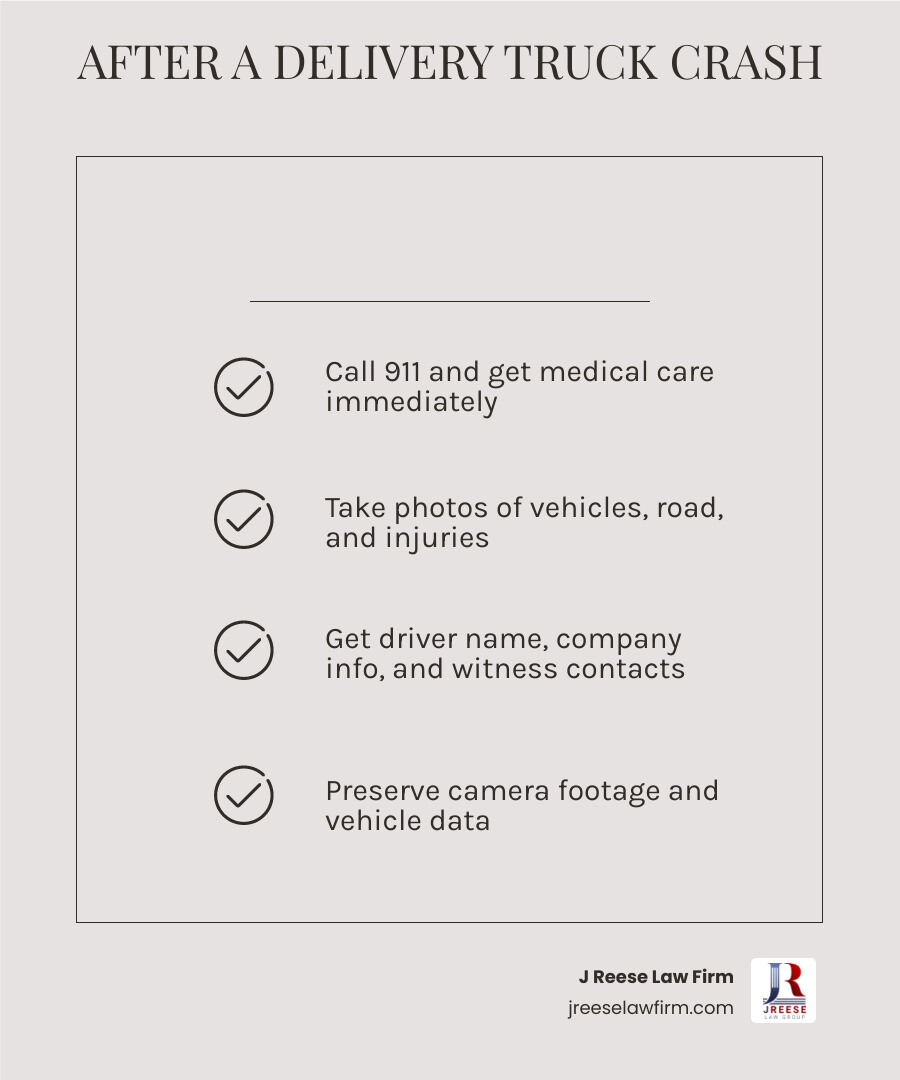
After a delivery truck accident, call 911, get medical care, and take photos of the vehicles, road, and any visible injuries if you can do so safely. Get the driver’s name, company information, and witness contact details. Keep your medical records and avoid accepting a quick insurance settlement before you understand the full cost of your injuries.
A claim may involve the driver, the delivery company, or another party, depending on what caused the crash. Records such as camera footage and vehicle data can help show who was at fault, so it is important to preserve evidence promptly.
I’m Justin Reese. I have handled personal injury and auto collision cases since 2011, and this guide explains the key steps to protect a delivery truck accident claim.
Easy delivery truck accident word list:
Proving Fault and Negligence After a Delivery Truck Accident
Proving liability after a collision with a commercial delivery vehicle involves distinct legal principles that go far beyond standard passenger vehicle wrecks. In a typical crash between two private cars, you generally look solely at the behavior of the individual drivers. However, commercial operations introduce multiple layers of legal responsibility. When you are injured, seeking dedicated legal support for injured truck crash victims is critical to holding every negligent party accountable.
Under the legal doctrine of respondeat superior, an employer is held vicariously liable for the wrongful acts, negligence, or omissions of its employees, provided those acts occur within the course and scope of their employment. If a delivery driver causes a wreck while actively running a delivery route, their corporate employer can be held financially responsible for the resulting damages—even if the company did not directly command the specific careless act.
In addition to vicarious liability, parent corporations and carrier companies can face direct negligence claims. Direct liability arises when the company’s own operational failures, cost-cutting measures, or safety lapses contribute to the incident.
| Liability Category | Legal Basis | Common Examples | Impact on Your Claim |
|---|---|---|---|
| Direct Driver Negligence | Individual duty of care | Speeding, texting while driving, failing to signal, abrupt turns | Establishes the initial proximate cause of the crash |
| Employer Vicarious Liability | Respondeat superior doctrine | Driver causes an accident while running assigned delivery routes | Extends liability to corporate commercial insurance policies |
| Direct Corporate Negligence | Independent carrier duties | Negligent hiring, inadequate training, enforcing unreasonable delivery quotas | Opens paths to corporate accountability and comprehensive damages |
Driver Inattention and Route Navigation Errors
Delivery personnel face immense pressure to meet strict parcel quotas, leading many drivers to operate under high stress while navigating unfamiliar residential neighborhoods and congested commercial corridors. This operational pressure often causes severe inattention and reckless maneuvers, such as making sudden stops to find missed house numbers, making illegal U-turns across traffic lanes, or reversing without checking blind spots.
These navigation errors regularly cause catastrophic wrecks. For instance, in a notable delivery truck intersection collision in Surprise, an intersection crash between a commercial delivery vehicle and an SUV sent multiple people to the hospital and caused significant roadway shutdowns. Drivers looking at handheld routing devices or dash-mounted manifest screens take their eyes off the road, resulting in severe rear-end impacts and intersection T-bone collisions.
Regulatory Violations and Negligence Per Se
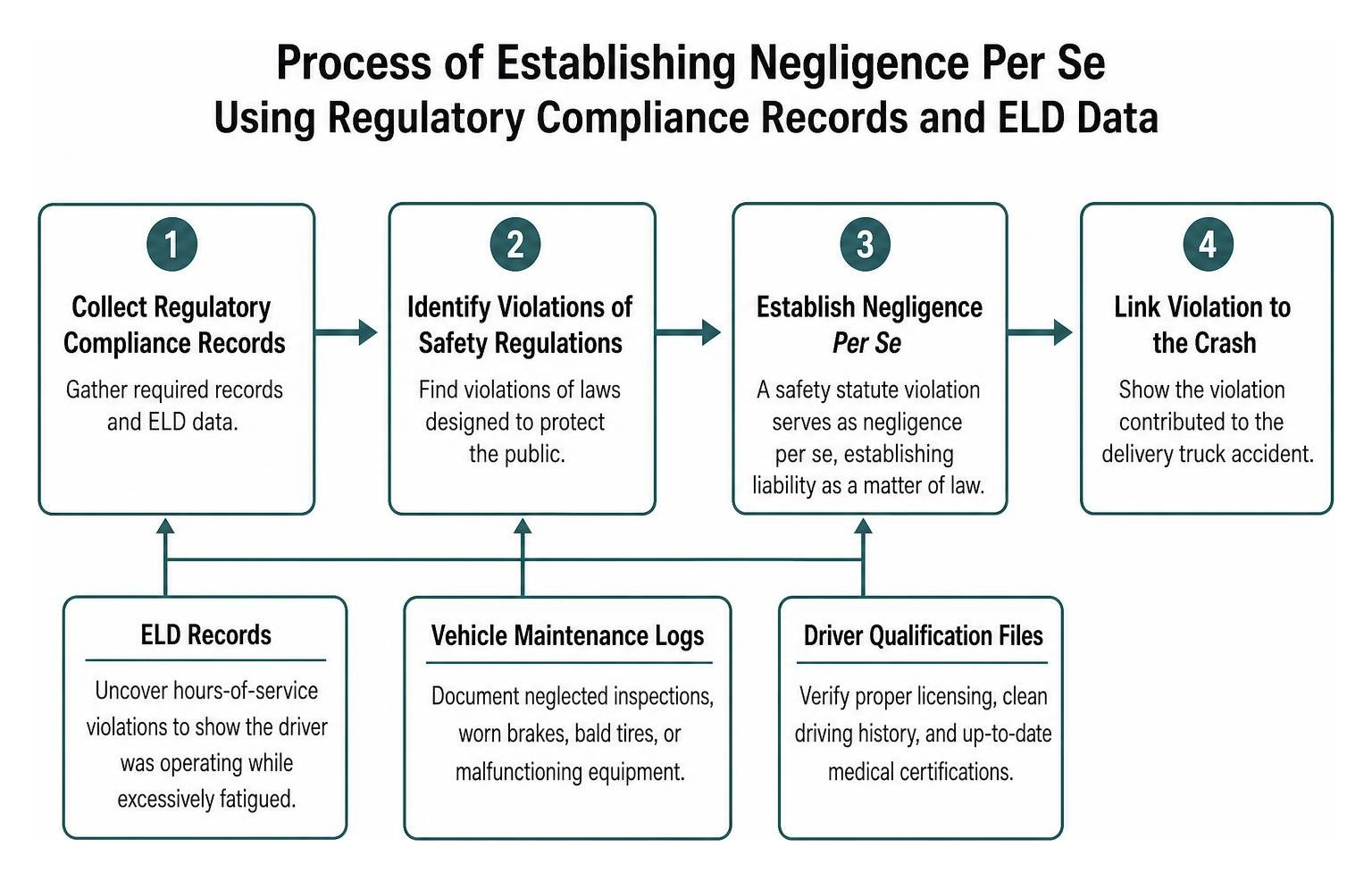
Commercial fleet operators and delivery carriers are strictly governed by state traffic codes and the Federal Motor Carrier Safety Administration (FMCSA) safety regulations. When a driver or motor carrier violates a safety statute designed to protect the public, that violation can serve as negligence per se, establishing liability as a matter of law.
Key regulatory compliance areas include:
- Electronic Logging Device (ELD) Records: Uncovering severe hours-of-service violations in local crashes to prove that a delivery driver was operating while excessively fatigued.
- Vehicle Maintenance Logs: Documenting whether the fleet neglected required inspections, operating with worn brake pads, bald tires, or malfunctioning turn signals.
- Driver Qualification Files: Ensuring the commercial driver possessed the appropriate licensing, clean driving history, and up-to-date medical certifications required by law.
Corporate Negligence and Independent Contractor Classifications
Many modern delivery giants attempt to shield themselves from legal liability by classifying their delivery workforce as independent contractors or utilizing third-party Delivery Service Partners (DSPs). Despite these corporate structures, an injured victim can often pierce these corporate defenses by demonstrating that the parent company exercised direct operational control over the driver’s daily routes, schedules, vehicle maintenance standards, and working conditions.
When pursuing claims against major regional or national delivery fleets, injured motorists may need to take legal action beyond local borders. Knowing the protocols for suing out-of-state motor carriers in Gretna ensures that jurisdiction is properly established, allowing victims to access substantial commercial fleet insurance policies that often reach millions of dollars in coverage.
Operational Hazards and Third-Party Liability in Commercial Fleets

Commercial delivery operations present hazards that extend beyond ordinary driver carelessness. The physical design of delivery vans, step vans, and medium-duty box trucks creates unique road risks, particularly when cargo loading procedures or mechanical maintenance schedules are compromised.
Improperly secured freight poses an immediate danger to other motorists. When cargo shifts during transit, it can dramatically alter the vehicle’s center of gravity, causing sudden rollovers or jackknifing. Furthermore, unsecured packages can spill across active traffic lanes. In one major incident, an expressway cargo spill in Gary scattered parcels across multiple highway lanes, shutting down traffic for hours and triggering secondary collisions. When freight loaders or third-party logistics warehouses fail to balance and secure cargo, they can be held directly liable for the resulting carnage.
Rollaway Hazards and Parking Brake Failures
Due to the repetitive nature of package drop-offs, delivery couriers stop and exit their vehicles hundreds of times per shift. In an effort to shave seconds off delivery times, drivers sometimes neglect to engage the parking brake or leave the engine idling on steep inclines.
This dangerous shortcut leads to unattended vehicle rollaways, where multi-ton delivery vans roll down streets into oncoming traffic, parked vehicles, or unsuspecting pedestrians. Because delivery trucks have extensive blind spots, rapid backing maneuvers in driveways and suburban cul-de-sacs also create fatal hazards for pedestrians, cyclists, and micromobility users.
Roadside Shoulder Drift and Vulnerable Road Users
Delivery truck operators who suffer from chronic fatigue, highway hypnosis, or digital dispatch distraction present severe hazards when drifting across highway shoulders and designated work zones. State Move Over laws require all motorists—especially commercial operators—to change lanes or substantially reduce their speed when approaching stationary emergency, utility, or maintenance vehicles displaying warning lights.
Tragic consequences follow when these rules are ignored. In one severe example, a fatal shoulder drift crash on I-95 resulted in the loss of two roadside workers when an inattentive commercial driver drifted out of travel lanes and struck their stationary vehicle. Holding commercial carriers accountable for lane departure crashes enforces statutory work-zone safety standards and protects vulnerable road users.
Third-Party Claims for Vehicle and Component Defects
Not every delivery collision is caused by driver behavior or carrier management. In certain instances, catastrophic failures result from defective automotive components designed or manufactured by third-party automotive companies.
Common manufacturing and component defects include:
- Defective air brake and hydraulic braking systems prone to sudden pressure loss.
- Defective steering linkage and tie-rod assemblies that cause sudden loss of steering control.
- Defective tire tread design leading to premature blowouts and tread separation under heavy loads.
- Defective reverse cameras and blind-spot warning sensors that fail to detect nearby motorists or pedestrians.
When a mechanical defect contributes to a wreck, our legal team initiates product liability claims against the equipment manufacturer, opening additional avenues of financial recovery for injured victims.
Navigating Compensation and Legal Defenses in Gretna

A serious commercial vehicle collision can disrupt your physical health, emotional well-being, and financial stability. Victims of delivery vehicle crashes are entitled to seek both economic and non-economic damages to make them whole. Understanding the financial scope of commercial truck claims in New Orleans and Gretna ensures that no category of loss is overlooked during settlement negotiations or trial litigation.
Recoverable damages typically include:
- Medical Expenses: All emergency room visits, surgeries, hospital stays, physical therapy, prescription medications, and projected future medical care.
- Lost Earnings and Diminished Earning Capacity: Compensation for lost paychecks while recovering, along with damages for long-term disability that limits your future earning potential.
- Property Damage: Full repair costs or total loss replacement value for your damaged passenger vehicle, personal belongings, and aftermarket equipment.
- Non-Economic Damages: Financial recovery for physical pain, mental anguish, loss of enjoyment of life, physical impairment, and emotional distress.
How Comparative Fault Affects a Delivery Truck Accident Claim
Insurance defense attorneys representing delivery fleets frequently attempt to minimize corporate payouts by shifting blame onto the injured motorist. How this defense impacts your compensation depends on the state’s comparative fault statutes:
- Pure Comparative Fault: Under pure comparative fault rules (such as in Louisiana), an injured plaintiff can recover damages regardless of their percentage of fault, but their total recovery is reduced proportionally by their assigned percentage of blame. For example, if your total damages equal $100,000 and you are found to be 30 percent at fault, you would still recover $70,000.
- Modified Comparative Fault: In modified comparative negligence jurisdictions, a victim is entirely barred from financial recovery if their assigned fault meets or exceeds a statutory threshold—typically 50 or 51 percent.
Commercial insurers will scrutinize every detail of the accident to exaggerate your level of fault. We deploy rigorous investigative techniques to disprove these bad-faith defenses and protect your full financial compensation.
Dealing with Commercial Insurance Adjusters
Commercial delivery fleets carry multi-million-dollar insurance policies backed by corporate legal teams and aggressive claims adjusters. Immediately following a wreck, these adjusters work to protect corporate profits by:
- Contacting you while you are injured and vulnerable to solicit recorded statements that can be twisted against you.
- Offering quick, lowball settlement offers before the true extent of your long-term medical injuries is diagnosed.
- Demanding unrestricted access to your complete medical history to claim your injuries stem from preexisting conditions.
You are under no legal obligation to give recorded statements to the delivery company’s insurance representatives. Securing seasoned representation for Gretna commercial collision claims shields you from adjuster harassment and ensures all settlement negotiations reflect the true value of your damages.
Essential Protocols to Protect Your Rights After a Crash
The actions you take in the hours and days following a delivery vehicle collision directly impact your physical recovery and legal standing. Following the proven steps for a big rig accident claim in Gretna helps protect critical evidence before it can be lost or destroyed.
- Call 911 Immediately: Ensure law enforcement officers and emergency medical personnel are dispatched to secure the roadway and treat injured parties.
- Seek Immediate Medical Attention: Even if adrenaline masks your symptoms, undergo a comprehensive medical exam at an emergency room or urgent care clinic to document any latent trauma.
- Document the Scene Thoroughly: Capture detailed photographs and video footage of all vehicle damage, skid marks, road conditions, debris, package scatter, and visible injuries.
- Exchange Information: Collect the delivery driver’s full name, commercial driver’s license (CDL) number, employer details, motor carrier USDOT number, and fleet insurance information.
- Secure Eyewitness Contact Details: Record the names, phone numbers, and statements of any unbiased bystanders who witnessed the sequence of events.
- Consult Legal Counsel Before Speaking to Insurers: Direct all communications from insurance adjusters to your legal representative to safeguard your claim.
Crucial Evidence to Collect After a Delivery Truck Accident
Commercial carriers possess sophisticated electronic data systems that can clearly prove how a collision occurred. Knowing who investigates an 18 wheeler crash on Westbank Expressway or local Gretna thoroughfares ensures that official police crash reports, state commercial motor vehicle inspections, and physical scene measurements are integrated into your case file.
Critical electronic and documentary evidence includes:
- Event Data Recorders (Black Boxes): Data detailing the truck’s speed, braking application, throttle position, and steering input in the seconds before impact.
- Onboard Telematics and GPS Logs: Records showing delivery schedules, stop frequencies, vehicle speed, and route deviations.
- Driver Dispatch Communications: Text messages or dispatch logs revealing whether the carrier was pressuring the driver to speed or meet unrealistic delivery windows.
- In-Cab and Exterior Dashcam Footage: Video recordings capturing driver behavior, distraction, and roadway conditions leading up to the crash.
Filing Deadlines and Time Constraints
Every state imposes strict statutes of limitations governing the timeframe within which you must file a personal injury lawsuit. In Louisiana, personal injury and property damage claims are subject to strict prescriptive periods. Failing to initiate formal legal action before this deadline permanently forfeits your right to seek financial recovery in court.
Furthermore, commercial carriers operate on internal data retention schedules where electronic logging data, black box records, and dashcam videos may be routinely overwritten or erased within 30 to 90 days. Our firm immediately issues formal spoliation of evidence demand letters to the carrier and its insurers, legally obligating them to preserve all digital, mechanical, and paper records relevant to your crash.
Frequently Asked Questions about Delivery Vehicle Claims
Who is liable if a package delivery driver causes a crash while working?
Liability depends on the driver’s employment status and the operational facts of the crash. If the driver is a direct employee acting within the scope of their employment duties, the parent delivery company is held vicariously liable under the doctrine of respondeat superior. If the driver operates as an independent contractor or works for a third-party delivery service partner, liability may rest with the driver’s personal commercial policy, the third-party logistics company, or the parent carrier if direct operational control can be proven.
Can I still receive compensation if I was partially at fault for the crash?
Yes. Under pure comparative fault rules, your partial fault does not bar you from recovering financial compensation. Your final settlement or court verdict will simply be reduced by the percentage of fault assigned to you. For instance, if you are awarded $200,000 but were found to be 20 percent at fault, you will receive $160,000. In modified comparative fault states, you can recover compensation as long as your fault does not exceed 50 or 51 percent.
How quickly must evidence be preserved after a delivery truck crash?
Critical evidence must be preserved immediately. While physical scene evidence can disappear within hours due to weather and traffic flow, digital evidence—such as black box data, onboard GPS telematics, and in-cab camera footage—can be legally erased or overwritten by the trucking company within weeks. Contacting legal counsel promptly allows formal spoliation letters to be served on the carrier, legally freezing all evidence.
Take Decisive Action to Secure Your Financial Recovery
A collision with a commercial delivery vehicle can leave you facing mounting medical bills, lost income, and intense personal stress. You do not have to fight major delivery corporations and aggressive insurance carriers on your own. Holding negligent drivers and corporate carriers accountable demands rigorous investigation, comprehensive evidence preservation, and aggressive legal advocacy.
If you or a family member has been injured in a collision, reviewing our practical New Orleans truck wreck attorney guide will help you understand your legal options. Contact J Reese Law Firm today to schedule a comprehensive, free consultation. Our dedicated team is prepared to protect your rights, challenge corporate insurers, and pursue the full compensation you deserve. You can also consult an experienced New Orleans car accident injury lawyer to begin building your claim today.