When You Need a Head-On Crash Attorney in New Orleans: What to Do First
If you were injured in a front-impact collision, finding the right head on crash attorney is the single most important step you can take to protect your financial recovery. Here is what matters most, fast:
Quick answers for head-on crash victims in Louisiana:
- Call 911 immediately — get medical help and an official police report on record
- See a doctor right away — even if you feel fine; documentation is critical
- Do not give recorded statements to any insurance adjuster before speaking to a lawyer
- Preserve all evidence — photos, witness contacts, insurance cards
- Contact a head-on crash attorney — Louisiana’s statute of limitations is only one year, far shorter than most states
- File your claim on time — missing the deadline means losing your right to compensation entirely
Head-on collisions are among the deadliest crashes on any road. In Michigan alone, they made up just 1.1% of all crashes in 2024 — yet caused 11.9% of all fatal crashes. Nationally, approximately 75% of fatal head-on impacts happen on rural, two-lane undivided roads, the kind that run through Louisiana communities every day.
The injuries are catastrophic. The medical bills are overwhelming. And insurance companies move fast to minimize what they pay you.
Most people do not realize that in Louisiana, you have only one year to file a personal injury claim — far less time than nearly every other state. That deadline does not pause while you recover.
I am Justin Reese, a civil litigation and personal injury attorney at J Reese Law Firm, and I have spent my career recovering tens of millions of dollars for victims of catastrophic crashes, including head-on collisions, right here in New Orleans. As your head on crash attorney, my job is to handle the legal fight so you can focus on healing.

Critical Steps to Take Right After a Head-On Collision
The moments immediately following a head-on wreck are terrifying. Pain, confusion, and panic can quickly overcome anyone. However, what you do or say in the first hours and days after an impact will directly impact your legal claim.
If you are physically able to take action at the crash scene, taking specific, methodical steps will lay the foundation for your insurance settlement or personal injury lawsuit. Knowing What to Do After a Car Accident in Louisiana keeps you safe and prevents insurance representatives from taking advantage of your vulnerable situation.
Immediate Safety and Medical Actions
Your physical wellbeing is always the single highest priority. Head-on collisions generate tremendous impact forces, often pushing steering columns, dashboards, and engines straight into the passenger cabin.
- Call 911 immediately: Request emergency medical services and law enforcement. Tell the 911 dispatcher if anyone is trapped, unconscious, or experiencing neck and back pain so they send appropriate medical personnel.
- Remain in your vehicle if safe: Unless your car is on fire or in immediate danger of being hit again, stay inside with your seatbelt buckled until emergency responders arrive. Moving with an undiagnosed spinal injury can cause permanent harm.
- Accept emergency medical triage: Let paramedics examine you at the scene. If emergency room transport is recommended, go straight to the hospital.
- Obtain full hospital documentation: Diagnostic imaging like CT scans, MRIs, and X-rays performed immediately after a crash provide undeniable proof that your injuries were directly caused by the collision.
- Ensure a formal police report is filed: Never settle for a informal agreement or cash offer at the scene. Ensure the investigating officer files an official crash report detailing vehicle positions, road conditions, and any citations issued.
Securing Evidence and Protecting Legal Rights
Insurance adjusters begin investigating high-stakes head-on crashes almost immediately. To protect your financial future, you must build your own body of evidence before physical clues wash away or vehicles are scrapped.
- Take comprehensive scene photographs: Capture close-ups and wide shots showing vehicle impact points, debris fields, gouge marks in the asphalt, skid marks, road signage, traffic lights, and weather conditions.
- Photograph visible physical injuries: Take clear pictures of cuts, severe bruising, lacerations, surgical scars, and medical braces throughout your initial treatment and recovery.
- Exchange required driver details: Collect names, addresses, driver’s license numbers, phone numbers, vehicle registrations, and insurance policy details from every driver involved.
- Gather eyewitness contact info: Neutral third-party witnesses who saw the opposing vehicle drift across the center line are priceless assets in head-on crash litigation. Obtain their full names and phone numbers.
- Avoid giving recorded statements: Insurance adjusters sound friendly, but their goal is to get you to admit partial fault or minimize your pain on tape. Refuse recorded interviews until you consult a head on crash attorney.
Understanding Causes, Catastrophic Injuries, and Liability in Head-On Collisions
Head-on collisions involve unique physical dynamics compared to rear-end or side-impact crashes. When two vehicles moving toward each other collide head-on, their velocities combine. If two sedans traveling at 45 mph hit each other head-on, the resulting crash force is equivalent to striking a concrete wall at 90 mph. This rapid change in velocity (known in crash mechanics as delta-V) subjects human bodies to extraordinary g-forces, making head-on crashes disproportionately violent and destructive.
National traffic safety data reveals that front-end impacts account for nearly 20% of all non-intersection fatal crashes across the United States. Recognizing why these wrecks occur and understanding the resulting injuries helps us establish legal liability.
Primary Causes and Mechanics of Frontal Crashes
A vehicle rarely crosses into oncoming traffic without a clear act of driver negligence. When investigating these claims, we routinely discover one of several root causes:
- Distracted Driving: Texting, adjusting navigation, or looking down at a mobile device for just 5 seconds at 55 mph means traveling the entire length of a football field blindfolded. A driver who loses focus for a few seconds can easily drift over a center line into oncoming traffic.
- Driving Under the Influence: Intoxication severely impairs depth perception, lane discipline, and reaction speeds. Impaired drivers frequently enter highway exit ramps in the wrong direction or fail to recognize undivided lane boundaries.
- Driver Fatigue: Night-shift workers and long-haul drivers operating while exhausted can suffer microsleeps, causing their vehicles to veer across opposing lanes without braking.
- Improper Passing and Aggressive Driving: Attempting to pass a slower vehicle on a two-lane road without adequate visibility or clearance is a leading trigger of devastating frontal impacts.
- Poor Roadway Maintenance and Defects: Missing median barriers, faded lane markings, lack of warning signs, or dangerous drop-offs on rural roads can cause drivers to lose control and cross over into traffic.
Severe Injury Types and Long-Term Impacts
Because the physical trauma in a frontal collision is so severe, survivors frequently suffer life-altering, permanent physical harm. We work closely with medical professionals to document all physical damage, including:
- Traumatic Brain Injuries (TBIs): Violent forward motion causes the brain to slam against the inside of the skull, leading to concussions, brain bleeding, or permanent cognitive impairments. If you or a loved one is dealing with brain trauma, our specialized Traumatic Brain Injury Attorney team can help navigate these complex medical claims.
- Spinal Cord Damage and Paralysis: Crushed vertebrae can disrupt spinal signals, leaving victims with partial or complete paralysis (paraplegia or quadriplegia).
- Catastrophic Internal Organ Harm: Seatbelt restraints and collapsing steering wheels can rupture internal organs, fracture ribs, or cause life-threatening internal bleeding. Victims facing permanent disability require a dedicated Catastrophic Injuries Attorney to fight for lifelong medical funding.
- Complex Fractures and Amputations: Legs, arms, and pelvic bones are easily crushed by intruding engine blocks, often requiring multi-stage reconstructive surgeries or limb amputations.
- Wrongful Death: Tragically, many frontal collisions result in fatal injuries. When a family member is taken prematurely, a Wrongful Death Attorney can file a claim to seek financial support for funeral expenses and loss of emotional guidance.
Determining Fault and Comparative Negligence
Establishing liability in a head-on collision seems simple on the surface — the car in the wrong lane is at fault. However, insurance companies routinely try to shift blame by claiming you were speeding, distracted, or failed to take evasive action.
Proving fault requires clear, verifiable physical evidence. We review:
- Event Data Recorder (“Black Box”) Data: Modern cars store speed, braking inputs, steering angles, and throttle positions in the seconds leading up to a crash.
- Accident Reconstruction Analysis: Forensic engineers evaluate skid marks, crush patterns, and vehicle trajectories to map the exact point of impact.
- Cellular and Toxicology Records: Subpoenaed phone logs can prove driver distraction, while toxicology reports show alcohol or drug impairment.
Understanding state-specific fault standards is critical. If you want to know how regional legal systems evaluate crash claims, read our analysis on Why Louisiana Personal Injury Cases Are Different.
Why Hiring a Head On Crash Attorney Is Essential for Full Compensation
Insurance companies handle high-value motor vehicle claims every day, and their main priority is protecting their bottom line. When a head-on collision causes severe injuries, insurance claims adjusters will try to minimize payouts or force early, lowball settlement offers before you know the full cost of your future medical care.
Hiring an experienced head on crash attorney puts a dedicated advocate in your corner. We handle complex insurance policies, shield you from high-pressure adjuster tactics, and build a strong legal case focused on securing every dollar you are owed under the law.
How a Head On Crash Attorney Investigates and Proves Fault
Proving negligence in a high-impact frontal collision requires deep legal resources and quick action. When our legal firm takes on your claim, we handle every detail of the investigation:
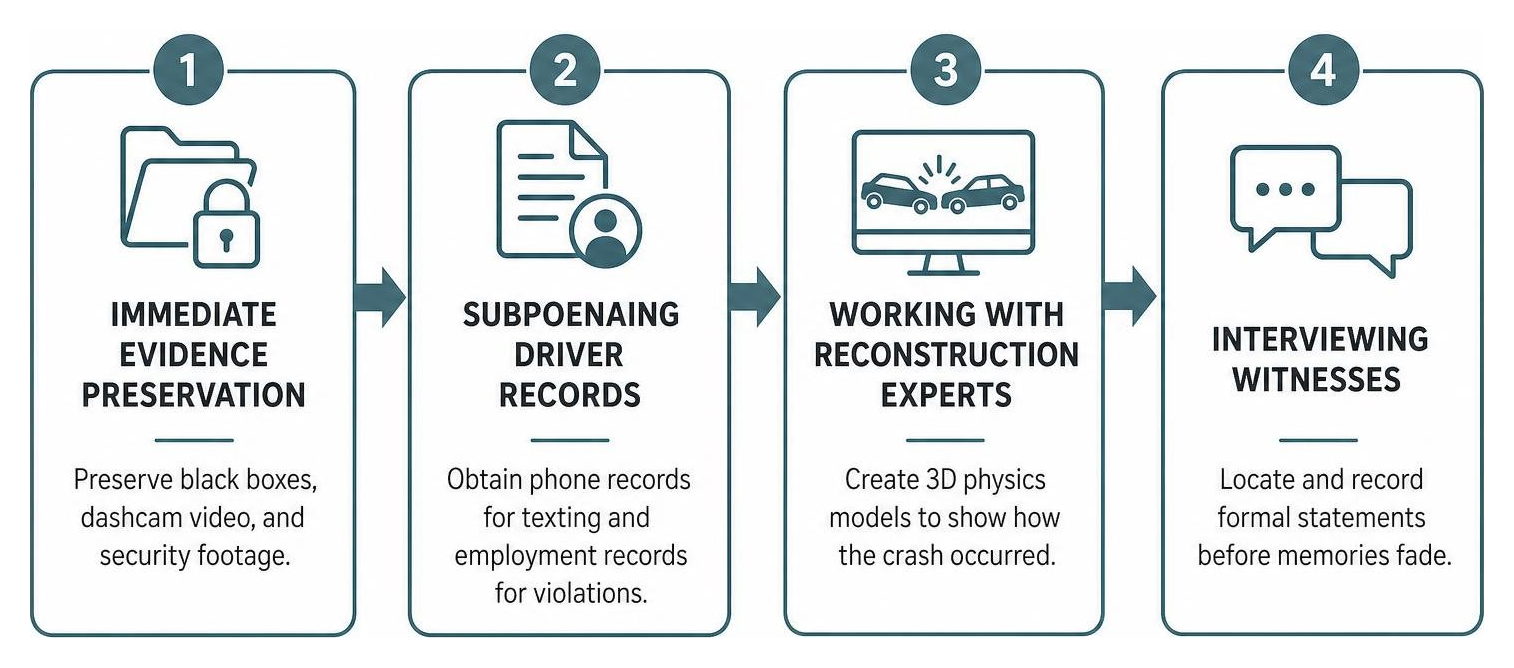
- Immediate Evidence Preservation: We send spoliation letters to preserve commercial truck black boxes, dashboard video recordings, and nearby commercial security footage before it is overwritten.
- Subpoenaing Driver Records: We obtain phone records to confirm if the driver was texting, as well as employment records to check for commercial driving hour violations.
- Working with Reconstruction Analysts: We retain top accident reconstruction analysts to build 3D physics models showing exactly how the crash happened.
- Interviewing Witnesses: We locate and record formal statements from scene witnesses before their memories fade.
Calculating Total Damages and Maximizing Insurance Payouts
To secure full compensation, your claim must account for both immediate expenses and long-term financial impacts. We partner with medical planners and economic analysts to calculate:
- Past and Future Medical Expenses: Hospital bills, emergency surgeries, intensive care stays, prescription medications, home physical therapy, and long-term nursing care.
- Lost Income and Loss of Earning Capacity: Unpaid time off work during initial recovery, plus compensation for reduced earning potential if permanent disabilities prevent you from returning to your trade.
- Vehicle Repair or Replacement Costs: The fair market value of your totaled vehicle and any damaged personal property inside.
- Pain and Suffering: Non-economic damages for physical pain, chronic discomfort, emotional trauma, PTSD, anxiety, and loss of enjoyment of life.
- Loss of Consortium: Compensation for the negative impacts your injuries have on your marriage and family relationships.
What to Look for When Choosing a Head On Crash Attorney
Not every legal practice has the experience or financial backing to fight major auto insurers in court. When choosing representation for a head-on collision claim, evaluate these key criteria:
- Proven Trial Experience: Pick a firm with an established track record of winning courtroom verdicts, not just settling quickly out of court. Insurers pay top dollar when they know your lawyer is ready for trial.
- A Contingency Fee Model: You should never have to pay out-of-pocket costs up front. We work on a contingency fee basis, meaning we absorb all investigation costs and collect legal fees only when we secure money for you.
- Direct Attorney Communication: You deserve a lawyer who answers your calls, provides regular updates, and treats you like family — not an agency that passes your case off to paralegals.
- Focus on Motor Vehicle Injury Claims: Choose a law firm that focuses specifically on motor vehicle injury cases rather than general practice law.
Learn how our team approaches client advocacy by visiting our page on how to choose a New Orleans Car Accident Lawyer.
Frequently Asked Questions About Head-On Crash Claims
How long do I have to file a lawsuit after a head-on collision?
In Louisiana, the deadline to file a personal injury lawsuit — known as the prescription period — is only one year from the date of the crash. This is one of the shortest deadlines in the United States. If you miss this one-year cutoff, Louisiana courts will permanently dismiss your case, and you will lose your right to recover compensation, no matter how severe your injuries are. Read our detailed guide on Louisiana’s One Year Statute of Limitations to protect your rights.
Can I recover compensation if I was partially at fault for the crash?
Yes. Louisiana follows a pure comparative fault rule. Under this law, you can still recover compensation even if you contributed to the accident. However, your financial recovery will be reduced by your percentage of fault. For example, if a judge or jury determines your total losses equal $500,000, but finds you were 10% at fault for speeding, your final compensation award will be reduced by 10% ($50,000), leaving you with $450,000.
How much does it cost to hire an attorney for a head-on collision claim?
Hiring our law firm costs nothing out of pocket. We handle all personal injury and head-on crash cases on a contingency fee agreement. We cover all upfront costs, including hiring accident reconstruction analysts, securing medical records, filing court documents, and taking depositions. You only pay legal fees if we successfully resolve your case through a negotiated settlement or courtroom verdict. If we do not win compensation for you, you owe us nothing.
Don’t Fight the Insurance Companies Alone
Surviving a violent head-on collision is a traumatizing experience. Dealing with severe pain, medical appointments, and lost paychecks is hard enough on its own. You should not have to fight aggressive insurance companies by yourself.
At J Reese Law Firm, we fight hard for injury victims across New Orleans and Louisiana. We know how insurance companies try to minimize payouts, and we use proven strategies to hold negligent drivers accountable.
If you or a loved one was injured in a head-on collision, do not wait until deadlines pass. Contact our experienced New Orleans Car Accident Injury Lawyer team today to schedule your free, no-obligation case evaluation. Let us handle the legal battle so you can focus on making a full recovery.