Why an Accident Injury Lawyer in Louisiana Matters
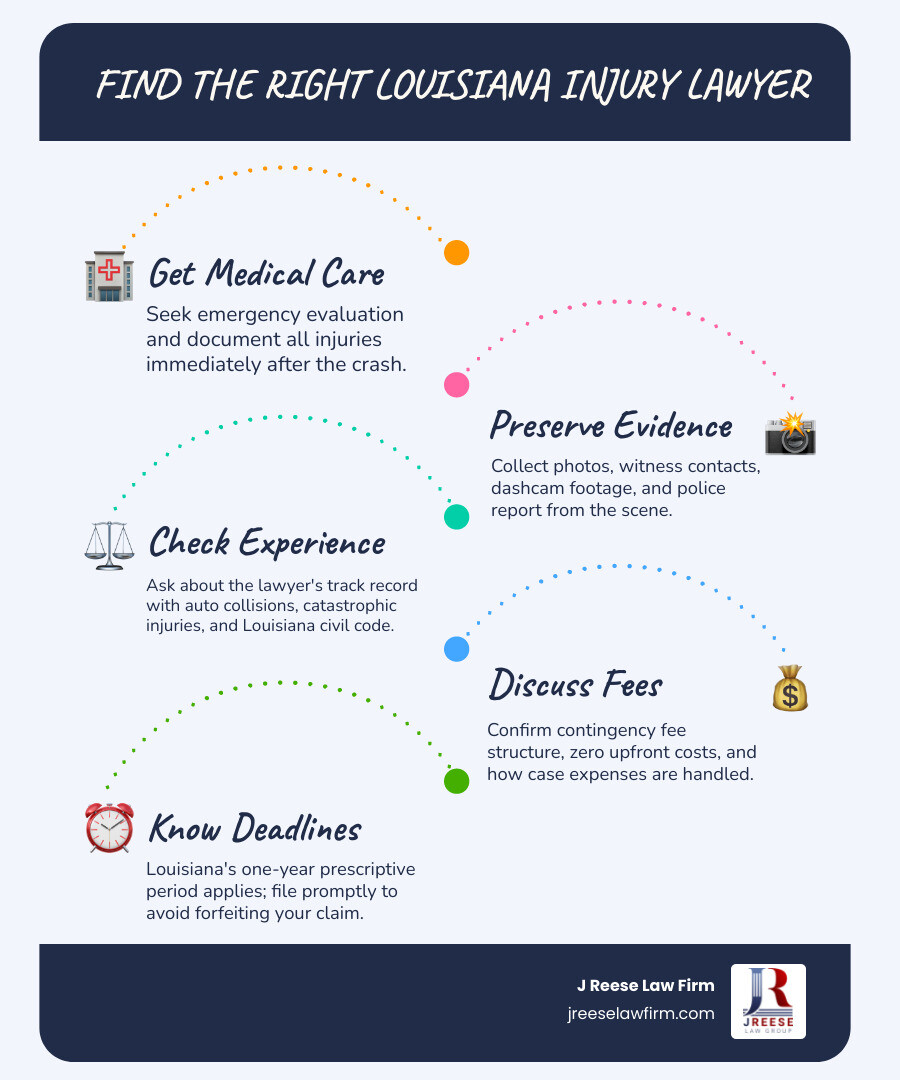
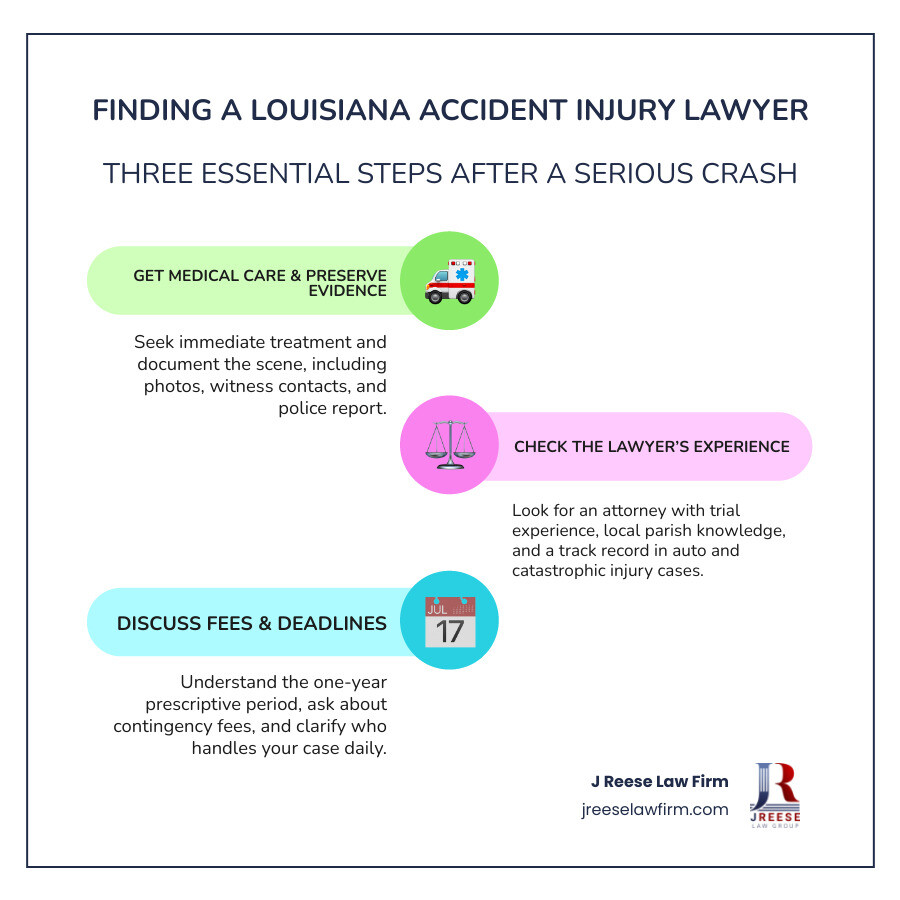
An accident injury lawyer in Louisiana can help you preserve evidence, assess what your claim may be worth, and respond when an insurer disputes fault or offers too little. To find the right lawyer, ask about their experience with your type of accident, who will handle your case, and how fees and case costs work. Get medical care and legal advice promptly: your filing deadline can depend on when the injury happened.
I’m Justin Reese. I’ve handled civil litigation and personal injury cases since 2011, including auto collisions and catastrophic injuries, and I’ll use this guide to explain what to look for in an accident injury lawyer in Louisiana. You can also review J Reese Law Firm to see our client reviews and office details, or find our office hours and directions on our J Reese Law Firm Google Business Profile.
Important accident injury lawyer in louisiana terms:
Introduction
Louisiana’s roadways present unique hazards. The state has the highest rate of fatal car crashes per capita in the nation, with roughly 18.5 deaths per 100,000 people. In 2022 alone, more than 900 traffic fatalities occurred across the state, many involving alcohol impairment or a lack of seatbelt use.
Because motor vehicle crashes account for approximately 40% of all personal injury lawsuits statewide, Louisiana drivers face some of the highest auto insurance premiums in the country—averaging over $2,300 per year. Navigating the aftermath of a serious crash requires understanding local laws, handling aggressive insurance adjusters, and meeting strict legal deadlines.
Understanding Louisiana Injury Laws and Civil Code Protections
Louisiana does not follow the traditional common law system used by the other 49 states. Instead, our legal framework is built on the Louisiana Civil Code, rooted in civil law traditions. These unique civil code and legal nuances change how liability, tort claims, and insurance obligations are evaluated.
One defining feature of our legal system is the Direct Action Statute. Under specific conditions, this rule allows injured victims to name an at-fault party’s liability insurance provider directly as a defendant in a lawsuit. Staying informed on how recent legal updates impact tort claims is crucial for protecting your right to full financial recovery.
Louisiana’s Strict Statute of Limitations and Prescriptive Periods
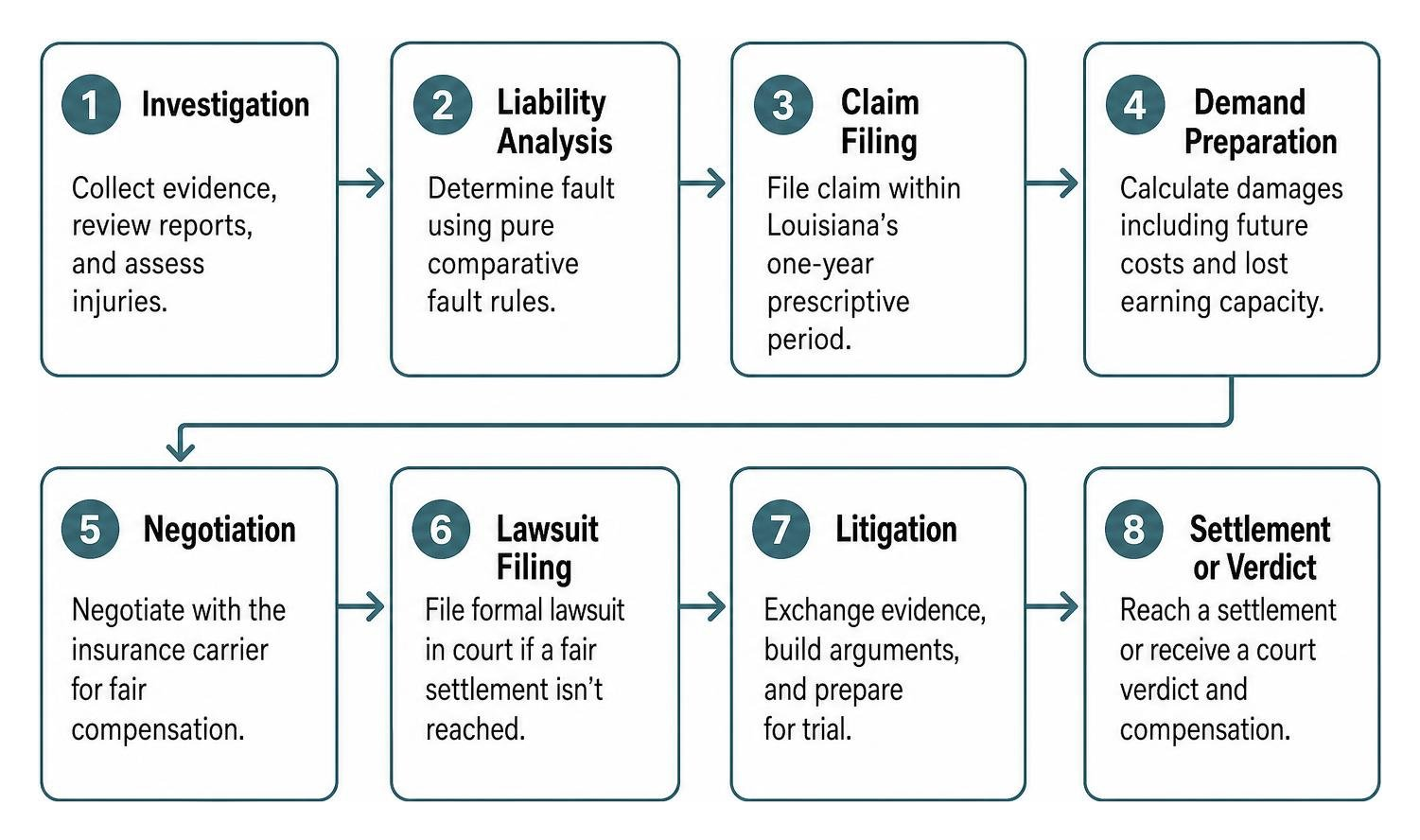
In Louisiana, the legal deadline to bring a personal injury claim is known as the “prescriptive period.” Our state enforces a strict one-year prescriptive period for most personal injury matters.
This one-year window is one of the shortest in the country. If you fail to file a formal lawsuit in the appropriate court within 365 days of your accident, you will almost certainly forfeit your right to seek financial recovery. While very rare exceptions exist, relying on them is risky.
Pure Comparative Fault and Shared Liability Rules
Louisiana operates under a system of pure comparative fault. Under this rule, each party involved in an incident is assigned a percentage of responsibility. Your total compensation is reduced by your proportion of fault.
For example, if your total damages equal $100,000 but the court finds you were 20% responsible for the collision, your final payout is reduced to $80,000. Even if an injured party is found to be 90% at fault, they can technically recover 10% of their total losses from the other negligent party. Because insurance adjusters frequently attempt to assign unfair blame to victims to lower payout figures, having strong legal representation to dispute fault allocation is critical.
When to Hire an Accident Injury Lawyer in Louisiana
Minor property-only fender benders can occasionally be settled without legal counsel, but serious injury claims require experienced legal guidance. You should immediately involve an attorney if:
- You suffered catastrophic injuries requiring emergency surgery, hospitalization, or ongoing therapy.
- The insurance company disputes who caused the accident.
- The collision involves commercial vehicles, rideshare drivers, or multiple passenger cars.
- The insurer makes an immediate settlement offer before you have finished your medical care.
Working with an attorney allows you to use proven tactics to maximize financial compensation and prevents insurance carriers from undervaluing your physical and financial harm.
How an Accident Injury Lawyer in Louisiana Evaluates Your Case
When we evaluate a personal injury claim at the J Reese Law Firm, we conduct an exhaustive investigation of the incident. This includes analyzing police crash reports, obtaining traffic camera footage, interviewing eyewitnesses, and consulting medical professionals to establish the full scope of your injuries.
An effective lawyer applies proven ways attorneys maximize settlement payouts, including calculating future medical costs, home modification requirements, and lifelong earning capacity losses.
Countering Insurance Adjuster Defenses and Lowball Offers
Insurance adjusters work to protect their company’s bottom line. Common tactics include:
- Requesting Recorded Statements: Adjusters may ask leading questions designed to get you to inadvertently admit partial fault or minimize your physical pain.
- Blaming Pre-Existing Conditions: Insurers often argue that your current pain is linked to an old injury rather than the recent crash.
- Unreasonable Delay Tactics: Adjusters may drag out communications hoping that the one-year prescriptive deadline approaches, leaving you with less leverage.
We manage all communications with insurance representatives, preventing them from using bad faith tactics to devalue your claim.
Types of Damages Recoverable in Louisiana Accident Claims
Under Louisiana law, accident victims can pursue financial recovery for economic and non-economic losses. In limited cases involving gross negligence—such as accidents caused by intoxicated drivers—exemplary (punitive) damages may also be awarded.
| Damage Category | Description | Common Examples |
|---|---|---|
| Economic Damages | Measurable financial losses directly resulting from the accident | Emergency room bills, future surgeries, lost wages, vehicle repair costs |
| Non-Economic Damages | Non-monetary, subjective losses affecting your quality of life | Physical pain, emotional trauma, loss of consortium, physical impairment |
| Exemplary Damages | Additional damages awarded to punish extreme or wanton misconduct | Intoxicated or impaired driving collisions |
Economic Damages: Medical Expenses and Lost Income
Economic damages cover the tangible, out-of-pocket expenses caused by your injury:
- Past and Future Medical Bills: Includes ambulance transport, surgeries, prescription drugs, physical therapy, and assistive medical devices.
- Lost Income: Covers income lost while you recover from your injuries.
- Diminished Earning Capacity: If your injury prevents you from returning to your prior occupation, you can recover the difference in your future earning potential.
Non-Economic Damages: Pain, Suffering, and Mental Anguish
Non-economic damages compensate you for the intangible impact of an injury:
- Physical Pain and Suffering: Compensation for ongoing physical discomfort and daily limitations.
- Mental Anguish: Recovery for post-traumatic stress, anxiety, depression, and sleep disruptions after a traumatic collision.
- Loss of Enjoyment of Life: Damages awarded when an injury prevents you from participating in hobbies, family activities, and daily routines.
Critical Steps to Take Immediately After an Accident in Louisiana
The actions you take immediately following a collision significantly impact your health and your legal claim. Following a clear set of essential steps to take after a crash protects your safety and preserves crucial evidence.

Gathering and Preserving Crucial Evidence at the Scene
If you are physically able and it is safe to do so:
- Call Law Enforcement: Ensure an officer responds and files an official accident report.
- Photograph the Scene: Take photos of vehicle damage, road skid marks, traffic signals, and weather conditions.
- Capture Premises Hazards: For slip and fall incidents, take clear pictures of the substance or liquid on the floor and document the absence of wet floor signs or warning cones.
- Collect Information: Exchange insurance details and obtain names and phone numbers from all eyewitnesses.
- Secure Video: Identify any nearby traffic or business security cameras that may have recorded the incident.
Seeking Immediate Medical Attention and Ongoing Care Documentation
Never delay seeking medical treatment. Symptoms of concussions, internal bleeding, and soft-tissue trauma often appear hours or days after an impact.
Adhere strictly to your treatment plan, attend all follow-up appointments, and maintain records of physical therapy visits and out-of-pocket medication expenses. Consistent treatment creates an unbroken medical record linking your injuries directly to the incident.
How to Select the Right Legal Representation for Your Claim
Selecting the right lawyer can make a substantial difference in the outcome of your recovery. You need an attorney who routinely litigates claims in local parish courts, understands defense strategies, and maintains open communication throughout the entire process.
Checklist for Choosing the Best Accident Injury Lawyer in Louisiana
When evaluating attorneys, use this hiring checklist for accident representation:
- Dedicated Trial Experience: Does the attorney regularly take cases to trial if an insurer refuses to settle fairly?
- Local Parish Knowledge: Is the attorney familiar with local court procedures, judges, and jury tendencies?
- Transparent Communication: Will you have direct access to your attorney to discuss major case milestones?
- Resource Depth: Does the firm have the resources needed to hire medical reconstructionists, accident analysts, and economic professionals?
Understanding Contingency Fee Structures and Legal Costs
Most personal injury attorneys handle cases on a contingency fee basis. Under this arrangement:
- You pay no upfront fees or retainer costs.
- The attorney covers the initial costs of filing fees, medical record requests, and professional evaluations.
- Attorney fees are calculated as an agreed-upon percentage of the final settlement or court verdict.
- If your attorney does not recover compensation for your case, you owe nothing in legal fees.
Frequently Asked Questions about Louisiana Accident Injury Claims
What is the deadline to file an accident injury lawsuit in Louisiana?
In Louisiana, you generally have one year from the date of the incident to file a personal injury lawsuit. Failing to file within this prescriptive period bars your claim permanently.
How does comparative fault affect my payout if I am partially responsible?
Under Louisiana’s pure comparative fault rule, your compensation is reduced by your percentage of fault. If you are awarded $50,000 but found 10% responsible, your final recovery will be $45,000.
How much does it cost to hire an injury attorney in Louisiana?
Personal injury lawyers work on a contingency fee basis. You pay nothing out of pocket, and legal fees are paid only as a percentage of the financial compensation recovered on your behalf.
Take Action to Protect Your Right to Full Financial Recovery
Recovering from an accident is physically, emotionally, and financially exhausting. With Louisiana’s strict one-year prescriptive period, delay can permanently harm your legal rights.
If you or a loved one has suffered an injury due to someone else’s negligence, schedule a consultation with the J Reese Law Firm today to secure your rights, preserve critical evidence, and pursue the compensation you deserve.