What to do immediately after a spinal injury accident
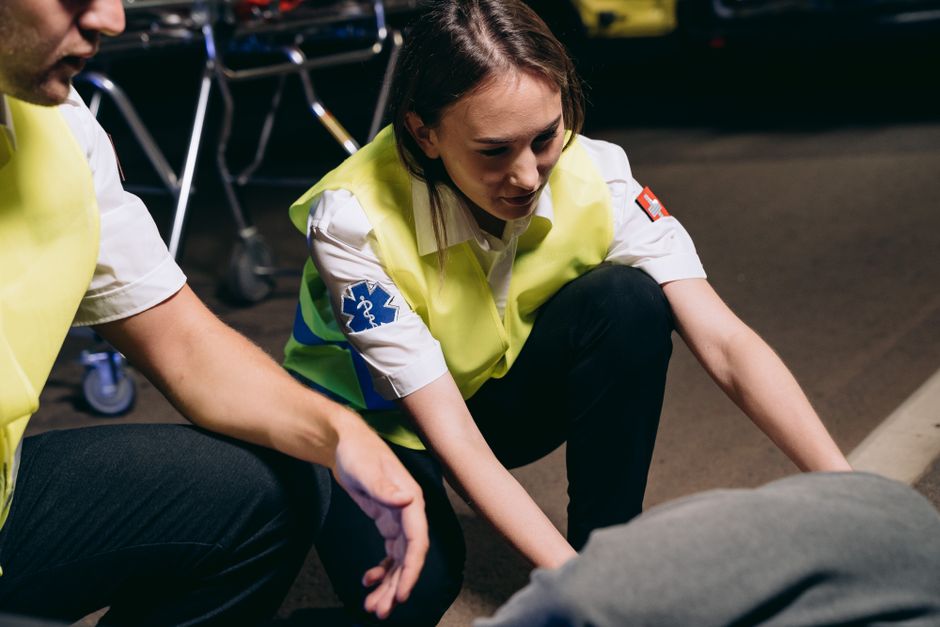
If you or a loved one suffered a spinal injury from an accident in Gretna, the critical legal options are to seek immediate medical care, preserve evidence at the scene, and contact a personal injury attorney before speaking with insurance adjusters. Louisiana law allows you to pursue compensation for medical bills, lost wages, and long-term care when another party’s negligence caused the trauma, but the steps you take in the first hours and days directly affect both your recovery and your claim. When an accident happens, the first priority is protecting the spine from further trauma. An unstable spinal fracture or disc herniation can easily turn into permanent nerve damage if the spine shifts during movement. In a severe vehicle collision or fall, secondary damage often develops over hours or days because of swelling, bleeding, and pressure on the spinal cord. Taking the correct actions at the scene protects both physical recovery and future legal claims. Reviewing medical first-aid guidance for a suspected spinal injury can help you understand the standard protocols emergency teams follow.
Protect the injured person and get emergency care
If you suspect someone sustained trauma to their neck or back, follow these essential first-aid steps:
- Keep the person still: Do not move the person unless they are in immediate, life-threatening danger (such as a fire). Place heavy towels, rolled jackets, or hands on both sides of the neck to prevent any twisting or bending.
- Check for warning symptoms: Watch for numbness, tingling in the hands or feet, muscle weakness, severe localized pain along the spine, difficulty breathing, or loss of bowel or bladder control.
- Leave protective gear in place: If the injured person is wearing a helmet (such as a motorcycle or bicycle helmet), keep it on. Removing it can twist the cervical spine and worsen an underlying fracture. Only remove a football face mask if airway access is urgently needed.
- Perform modified CPR if necessary: If the person stops breathing and has no pulse, begin chest compressions immediately. Do not tilt the head back to open the airway; use a gentle jaw-thrust maneuver without bending the neck. Following standard MedlinePlus spinal injury guidance ensures you do not inadvertently compromise the nerve pathways.
Preserve evidence and avoid common claim mistakes
Once emergency medical responders take over, preserving the accident scene becomes vital for establishing liability. Insurance carriers routinely attempt to minimize payouts by arguing injuries were pre-existing or that the victim was primarily at fault.
- Document the scene: Take comprehensive photos and videos showing vehicle positioning, property damage, skid marks, road conditions, or tripping hazards. If you slipped and fell, capture clear photographs of the substance or liquid on the floor and document the absence of wet floor warning signs.
- Gather witness information: Collect names, phone numbers, and statements from anyone who saw the crash or incident.
- Obtain official reports: Ensure the police or property manager files an official incident report and request the report number.
- Protect medical documentation: Follow every treatment instruction given by emergency physicians and retain all diagnostic imaging reports, hospital discharge summaries, and therapy plans.
- Avoid early statements to insurance adjusters: Do not give recorded statements, sign liability releases, or guess about fault. Insurance adjusters are trained to use offhand remarks to deny coverage or diminish your damages.
How a spinal injury accident claim works in Gretna
Recovering damages after a spine injury requires demonstrating that another party’s negligence directly caused the trauma. In Gretna and throughout Jefferson Parish, these claims involve evaluating complex liability questions, multiple insurance policies, and extensive medical records. Working with an experienced New Orleans car accident injury lawyer ensures your damages are accurately calculated and presented.
When to call a lawyer after a spinal injury accident
Spinal trauma is fundamentally different from a minor sprain or strain. You should seek legal counsel immediately when:
- You experience lasting weakness, numbness, chronic nerve pain, or mobility loss.
- The insurance company disputes who caused the accident or claims you were at fault.
- Initial settlement offers fail to cover your projected lifetime rehabilitation or lost earnings.
- Multiple parties share fault, such as a commercial trucking employer, a parts manufacturer, or a negligent driver.
Retaining dedicated legal support early allows our team to secure surveillance footage, preserve commercial vehicle black box data, and retain accident reconstruction professionals before evidence disappears. You can review our guidance on hiring a spinal injury attorney in Gretna to understand how local laws protect injured individuals.
How a spinal injury accident claim proves fault
To secure fair compensation, your claim must establish four core elements of negligence: duty of care, breach of duty, causation, and quantifiable damages.
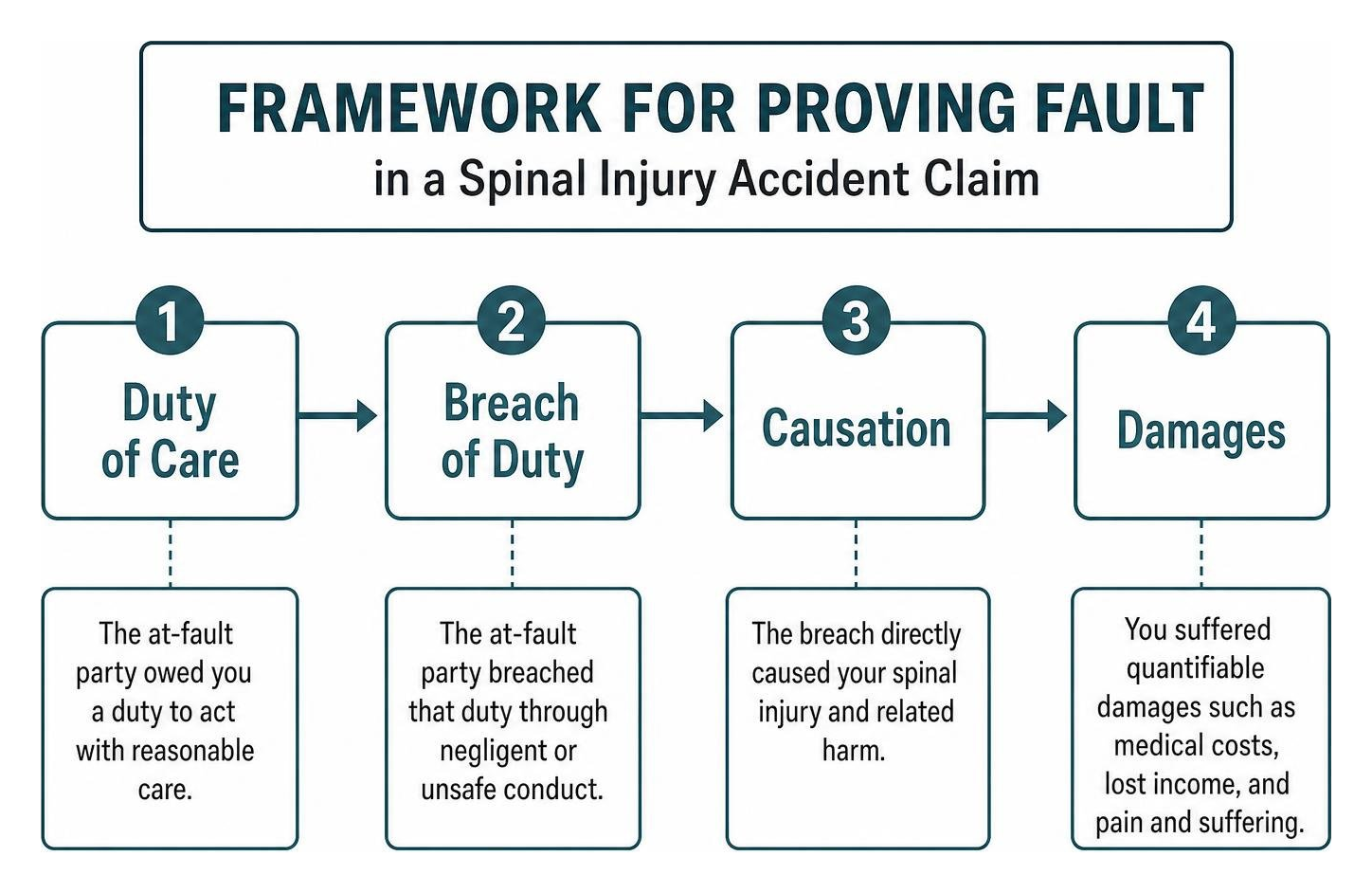
We evaluate driver conduct, traffic violations, vehicle maintenance records, and premises safety logs to prove how the at-fault party breached their duty of care. Louisiana applies a pure comparative fault system, meaning that even if an insurer claims you shared partial responsibility for the collision, you can still recover compensation reduced by your percentage of fault. Understanding why Louisiana personal injury cases are different helps prevent insurers from unfairly shifting blame onto you.
How injury severity and medical evidence shape compensation
The financial recovery available in a personal injury claim is closely tied to the anatomical level of the spinal damage and whether the injury is complete or incomplete. Authoritative medical overviews, such as the NINDS spinal cord injury overview, explain how trauma alters the central nervous system’s ability to transmit motor and sensory signals between the brain and the body.
Diagnosis, injury levels, and symptoms that matter to a claim
A thorough diagnosis requires objective imaging tests—including high-resolution CT scans, X-rays, and MRIs—to identify vertebral fractures, herniated discs, torn ligaments, and spinal cord swelling. Physicians classify injuries using the American Spinal Injury Association (ASIA) Impairment Scale, which grades function from Grade A (complete loss of motor and sensory function below the injury) to Grade E (normal motor and sensory function).
- Cervical spine injuries (C1–C8): Trauma to the neck can result in tetraplegia (quadriplegia), affecting the arms, hands, trunk, and legs. High cervical injuries (C1–C4) frequently impair the diaphragm, requiring long-term ventilator assistance.
- Thoracic spine injuries (T1–T12): Injuries to the mid-back typically cause paraplegia, impacting leg movement and trunk stability while preserving full arm and hand function.
- Lumbar and sacral spine injuries (L1–S5): Trauma to the lower spine affects the hips, legs, bowel, and bladder. While some individuals retain the ability to walk using braces, they often face permanent nerve pain and pelvic dysfunction.
Recovery, complications, and long-term losses
A spinal cord contusion or transection triggers secondary medical complications that extend far beyond initial emergency room care. These long-term conditions significantly increase the overall value of a personal injury claim:
- Autonomic dysreflexia: A dangerous, sudden spike in blood pressure triggered by sensory irritation below the injury level, common in injuries at or above T6.
- Respiratory infections: Impaired chest and abdominal muscles increase the risk of pneumonia, which remains a leading cause of hospital readmission.
- Chronic neuropathic pain and spasticity: Nerve damage causes burning, shooting pain, and involuntary muscle spasms that require specialized medication or nerve stimulators.
- Secondary skin and circulatory risks: Immobility elevates the risk of deep vein thrombosis (blood clots) and severe pressure ulcers requiring surgical intervention.
- Psychological impact: Coping with sudden loss of independence often leads to severe depression and anxiety, necessitating ongoing psychological counseling.
Compensation, deadlines, and practical next steps
Recovering from catastrophic trauma requires substantial financial resources. Our role is to build a detailed accounting of your current and future needs so you are not left paying out-of-pocket for accident-related care years down the road.
What compensation may account for
A comprehensive legal demand accounts for both economic and non-economic losses:
- Past and future medical expenses: Emergency transport, surgical procedures, ICU stays, inpatient rehabilitation, and ongoing physician visits.
- Home and vehicle modifications: Ramps, widened doorways, roll-in showers, and wheelchair-accessible vans.
- Assistive technology and durable equipment: Power wheelchairs, customized beds, transfer lifts, and neural prosthetics.
- Lost income and reduced earning capacity: Wages lost while out of work, alongside the loss of future career advancement and benefits.
- Pain, suffering, and emotional distress: Compensation for physical agony, lost independence, and reduced quality of life.
- In-home caregiving: Professional nursing care or compensation for family members who provide daily physical assistance.
Developing a comprehensive life care plan is central to this process. For deeper insights on how we structure these demands, read our catastrophic injury claim guidance.
Why deadlines and documentation need prompt attention
In Louisiana, personal injury claims are governed by strict statutes of limitation (prescriptive periods). For accidents occurring in Louisiana, you generally have a limited window from the date of the accident to file a formal lawsuit in civil court. Failing to file within this legal timeframe permanently bars your right to recover compensation, regardless of how severe your injuries are.
To protect your rights, keep an organized file containing:
- All medical records, diagnostic scans, and physical therapy notes.
- Invoices for prescriptions, adaptive devices, and mobility aids.
- Pay stubs and tax returns showing your pre-accident earnings.
- All correspondence from auto or property insurance adjusters.
To review current filing rules and exceptions, consult our detailed Louisiana injury filing deadline information.
Frequently asked questions about spinal injury accident claims
Can a spinal injury be present even if symptoms are not immediate?
Yes. Adrenaline, shock, and subtle internal swelling can mask severe spinal trauma immediately after an accident. Micro-tears in ligaments, disc herniations, or slow hemorrhages around the spinal cord may take hours or days to produce noticeable weakness, numbness, radiating pain, or loss of coordination. Always seek emergency medical evaluation after any violent collision, even if you feel you can walk away.
How is a spinal cord injury different from a spinal fracture?
A spinal fracture involves a broken or cracked vertebral bone in the spinal column. An individual can sustain a spinal fracture without suffering any nerve damage if the bone fragments do not compress or lacerate the spinal cord. Conversely, a spinal cord injury involves bruising, tearing, or compression of the central nerve bundle itself, resulting in sensory and motor loss below the level of the trauma. Both conditions require immediate diagnostic imaging.
What if I am partly at fault or the insurance company disputes my claim?
Under Louisiana’s comparative fault rules, you are not barred from recovering damages simply because an insurer argues you contributed to the accident. Your final financial award is reduced by your allocated percentage of responsibility. For example, if your total damages equal $1,000,000 and you are determined to be 10% at fault, you can still recover $900,000. Our legal team investigates physical evidence, traffic camera footage, and black box data to challenge improper allegations of fault made by insurance carriers.
Take Decisive Action to Protect Your Future

A spinal injury brings immense physical, emotional, and financial challenges, but you do not have to carry the burden alone. Securing prompt medical treatment, documenting every phase of your rehabilitation, and engaging dedicated legal advocacy are the most effective ways to protect your long-term well-being.
If you or a loved one suffered trauma in a collision, contact J Reese Law Firm today. We will review your accident reports, coordinate with your treating medical providers, and fight to recover the full compensation you deserve under Louisiana law. Learn more about our approach to New Orleans car accident injury claim support and let our team protect your rights from day one.