When a Nursing Home Fails Its Residents: Understanding Wrongful Death Claims
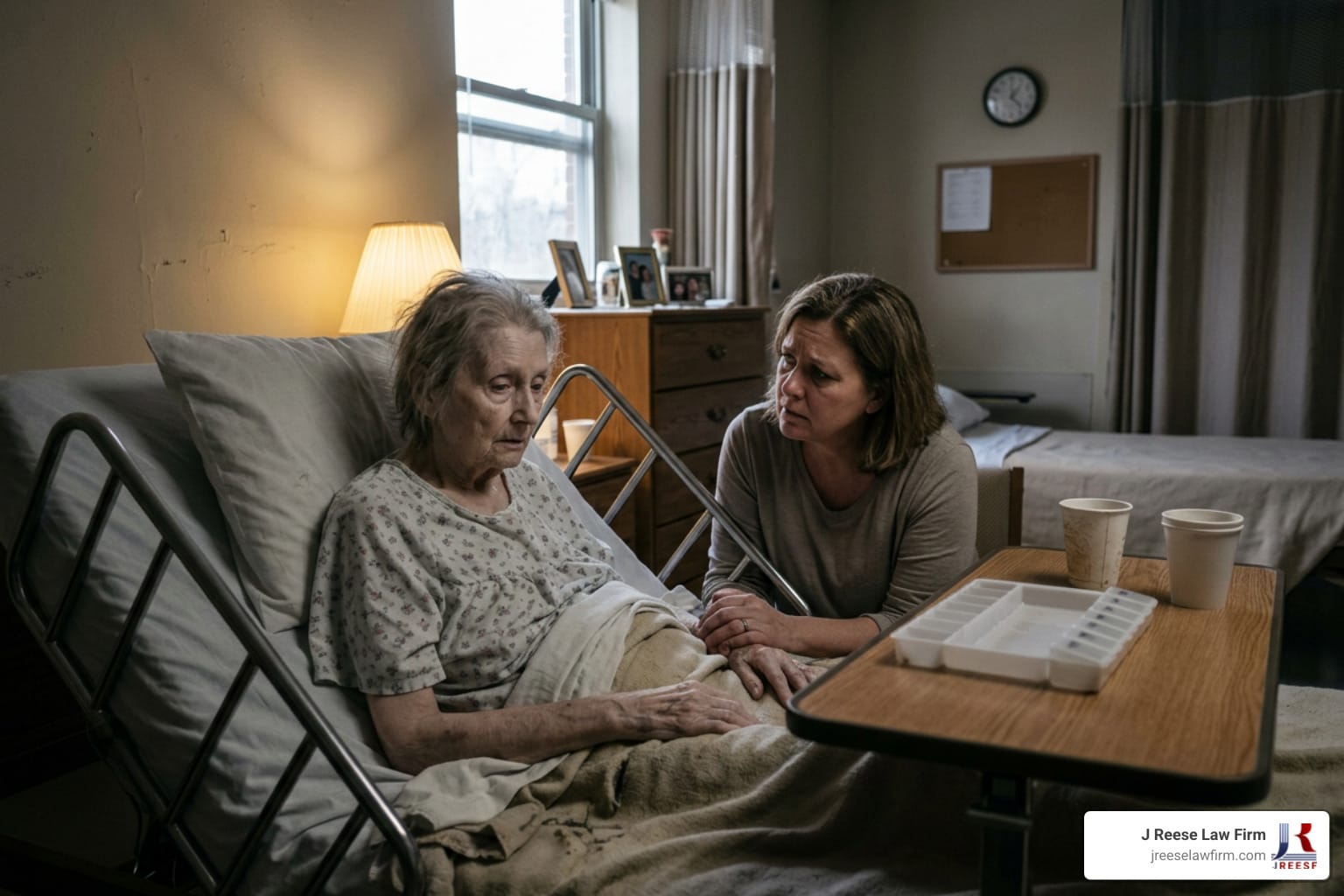
Nursing home neglect resulting in death is one of the most devastating outcomes a family can face — especially when the death was preventable.
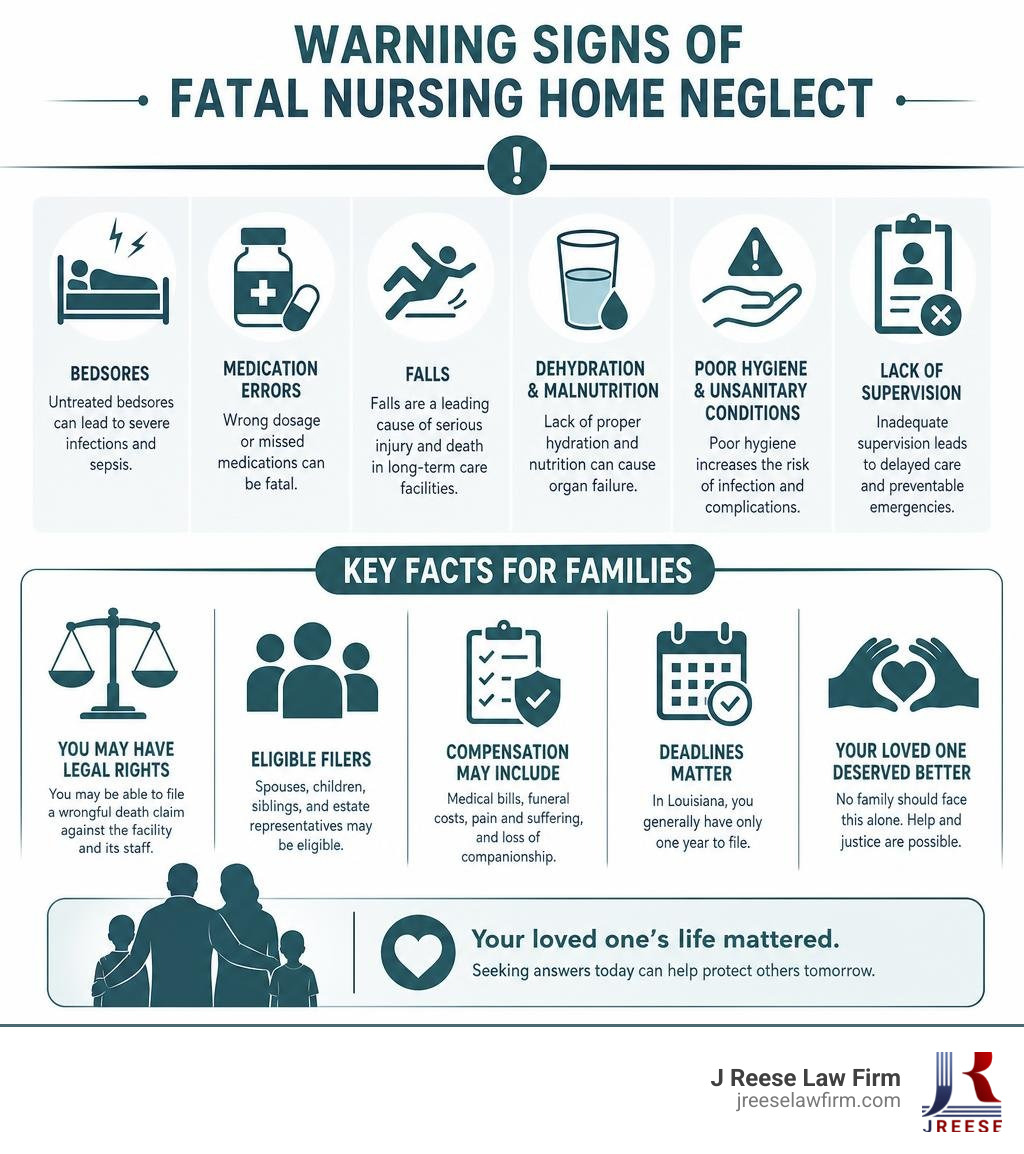
If your loved one died in a nursing home and you suspect neglect or abuse played a role, here is what you need to know:
- You may have the right to file a wrongful death lawsuit against the facility and its staff
- Eligible filers typically include spouses, children, siblings, and estate representatives
- Common causes include untreated bedsores, medication errors, falls, dehydration, and sepsis
- Compensation can cover medical bills, funeral costs, pain and suffering, and loss of companionship
- Deadlines matter — in Louisiana, you generally have only one year to file
The problem is more widespread than most people realize. Approximately 1 in 10 nursing home residents experience abuse or neglect each year. Pressure ulcers alone affect up to 11% of residents and frequently lead to life-threatening infections like MRSA and sepsis. Falls cause over 1,800 deaths annually in U.S. long-term care facilities. These are not unavoidable tragedies — in many cases, they are the direct result of understaffing, poor training, and negligent management.
I’m Justin Reese, a civil litigation attorney with Alexander Shunnarah Trial Attorneys and founder of J Reese Law Firm, and I have spent over a decade recovering tens of millions of dollars for families affected by catastrophic injury and nursing home neglect resulting in death. In the sections below, I’ll walk you through exactly how these cases work and what your family’s legal options are.
What Constitutes Nursing Home Neglect Resulting in Death?
When we place our elderly parents or relatives into long-term care facilities, we expect them to receive attentive, dignified, and professional care. Sadly, corporate greed, chronic understaffing, and a lack of proper employee training often lead to systemic failures. When these failures result in a resident’s passing, it constitutes a wrongful death.
Unlike active physical abuse, neglect is often a quiet threat. It is defined by omission — the failure to provide the basic care, medical attention, nutrition, and safety measures that a reasonable caregiver would provide. Over time, these omissions compound, leading to catastrophic medical emergencies.
Some of the most common forms of fatal neglect include:
- Untreated Pressure Ulcers (Bedsores): Bedridden or mobility-impaired residents must be repositioned regularly (typically every two hours for bed-bound residents). When staff fail to do this, pressure cuts off blood flow, causing tissue death. Left untreated, these wounds can grow to shocking sizes. For example, a lawsuit involving a Walmart greeter bedsore lawsuit details revealed that a resident developed bedsores the size of iPhones within just 11 days of admission, eventually dying from MRSA and sepsis due to total neglect.
- Sepsis and Untreated Infections: Minor infections, urinary tract infections (UTIs), or neglected wounds can quickly spiral into sepsis — a life-threatening systemic inflammatory response.
- Medication Errors: Elderly residents are frequently prescribed complex pharmaceutical regimens. Failing to administer medication, giving the wrong dosage, or ignoring dangerous drug interactions can cause fatal toxicity, heart failure, or severe cognitive decline.
- Dehydration and Malnutrition: Inadequate staffing levels mean there are often not enough aides to help residents eat or drink. Dehydration and malnutrition can weaken a resident’s immune system, making them highly susceptible to organ failure and fatal infections.
- Falls and Lack of Mobility Assistance: Falls are the leading cause of injury-related deaths in nursing homes. Facilities must assess each resident’s fall risk and provide assistive devices, low beds, or physical assistance. When these protocols are ignored, residents suffer fatal brain bleeds or fractures that lead to rapid physical decline.
If you believe your loved one suffered from any of these conditions prior to their passing, it is highly likely that actionable Nursing Home Abuse or neglect occurred.
Legal Elements Required to Prove a Wrongful Death Claim
Filing a lawsuit is not just about expressing grief; it is a structured legal process. To hold a facility accountable for nursing home neglect resulting in death, we must establish four specific legal elements in court:
- Duty of Care: We must prove that the nursing home had a legal obligation to provide a safe, professional standard of care to your loved one. This is easily established by presenting the admission agreement and medical records showing they were a resident.
- Breach of Duty: We must show that the facility breached this duty by failing to meet the accepted standard of care. This means proving that staff acted negligently, recklessly, or failed to act entirely (such as ignoring high-risk fall protocols or failing to treat a developing wound).
- Causation: This is often the most contested element. We must directly link the facility’s breach of duty to the resident’s death. The defense will often argue that the resident died of “natural causes” or pre-existing conditions. We must prove that the neglect was a substantial factor in accelerating or causing the death.
- Damages: Finally, we must demonstrate that the surviving family members or the estate suffered quantifiable economic and non-economic losses as a result of the death.
In Louisiana, when a resident dies due to negligence, the family actually has two distinct legal pathways for recovery: a Wrongful Death Action and a Survival Action. Understanding the difference is crucial when working with a New Orleans Wrongful Death Attorney.
| Legal Claim Type | Who Receives the Compensation? | What Damages Are Covered? |
|---|---|---|
| Wrongful Death Action (La. C.C. art. 2315.2) | Surviving family members | The survivors’ own losses, including grief, emotional pain, loss of companionship, and lost financial support. |
| Survival Action (La. C.C. art. 2315.1) | Surviving family members / Estate | The deceased resident’s damages incurred prior to death, such as conscious pain and suffering, fear of impending death, and medical bills. |
Proving Nursing Home Neglect Resulting in Death in Court
To successfully prove these elements, we cannot rely on suspicion alone. We must build an airtight case using a variety of critical evidence.
Our investigation begins by gathering complete medical charts, nursing notes, and care plans. For instance, the standard Braden Scale is used by medical professionals to predict pressure sore risks. In a recent Jefferson City nursing home lawsuit, a family successfully argued that despite Braden Scale documentation identifying the resident as “high-risk,” the facility failed to implement a basic prevention plan, allowing a sacral pressure injury to progress to a fatal Stage IV.
Other invaluable pieces of evidence include:
- Internal Facility Records: Shift logs, staffing ratios, and employee training files that reveal if the facility was dangerously understaffed.
- Witness Statements: Testimony from other residents, visiting family members, or even whistleblowing staff members who witnessed poor care.
- State Regulatory Citations: Reports and fines issued by the Louisiana Department of Health or federal investigators showing a history of safety violations.
- Expert Testimony: Retaining independent geriatricians, wound care specialists, and nursing experts to testify that the facility’s care fell below acceptable medical standards.
Working with an experienced Wrongful Death Claims Attorney ensures that this evidence is legally preserved before the facility can alter or destroy records.
Who Can File a Lawsuit and the Timeline for Legal Action
Not everyone is legally permitted to file a lawsuit after a resident passes away. Louisiana has very strict, specific rules regarding who can bring a claim and how quickly they must act.

Under Louisiana Civil Code, there is a strict hierarchy of survivors who are eligible to file a wrongful death or survival action:
- The surviving spouse and/or children of the deceased.
- If there is no spouse or child, the surviving parents.
- If there are no surviving parents, the surviving siblings.
- If there are no surviving siblings, the surviving grandparents.
- If none of these relatives exist, the succession representative of the estate may file.
Additionally, Louisiana law enforces a highly restrictive timeline. The statute of limitations (referred to in Louisiana as a prescriptive period) is only one year from the exact date of your loved one’s death. If you do not file a lawsuit in civil court within this one-year window, you lose your legal right to seek justice forever.
Because of this short timeline, exploring our Category: Wrongful Death resources and consulting an attorney immediately is vital to protecting your rights.
Seeking Justice for Nursing Home Neglect Resulting in Death
The emotional trauma of losing a parent or spouse to neglect is profound. Surviving spouses and adult children are often left with immense guilt, wondering if they could have done more.
Consider a recent Bronx nursing home neglect lawsuit where an 85-year-old resident was admitted for temporary rehabilitation but developed untreated pneumonia, a severe bacterial infection, and a Stage IV bedsore within weeks. The family visited twice daily and repeatedly raised alarms, but their concerns were ignored by overworked staff.
When a facility ignores a family’s pleas, a lawsuit is often the only way to get answers, force systemic change, and recover fair Wrongful Death Settlement Amounts to cover the unexpected financial burdens left behind.
Stages of a Wrongful Death Lawsuit and Potential Compensation
While every case is unique, a nursing home neglect lawsuit generally moves through a series of structured legal stages.

- Investigation and Case Review: We gather all medical records, autopsy reports, and witness statements to determine if there is a viable claim.
- Filing the Pleadings: We draft and file a formal petition for damages in civil court, detailing the nursing home’s negligence and its direct connection to the death.
- The Discovery Process: Both sides exchange evidence. We take depositions (sworn out-of-court testimony) of the nursing home administrators, nurses, and aides.
- Settlement Negotiations and Mediation: Most cases resolve before going to trial. Both parties may meet with a neutral third-party mediator to negotiate a fair payout.
- Trial: If the nursing home’s insurance company refuses to offer a fair settlement, we present our evidence to a judge or jury to secure a binding verdict.
During this process, we pursue comprehensive compensation to address the full scope of your family’s losses. To understand what your case might be worth, you can review our guides on Average Nursing Home Neglect Settlement and utilize our Wrongful Death Settlement Calculator Typical Payouts Explained to see how damages are calculated.
Frequently Asked Questions About Nursing Home Negligence
Grieving families often have many urgent questions about their legal rights and how to hold negligent facilities accountable.
What is the average settlement for a nursing home wrongful death case?
While average settlements typically range between $300,000 and $600,000, egregious cases involving severe suffering or corporate cover-ups can result in much higher payouts.
For example, a high-profile case resulted in a massive Chesterwood Village $12.5M verdict after an 83-year-old blind resident was dropped by staff, suffered a brain bleed, and died. As detailed in the AOL report on the trial, the jury awarded $1.5 million in punitive damages because the facility attempted to cover up the incident and failed to document the fall, proving that extreme negligence can result in historic, multi-million-dollar verdicts.
How long do you have to file a wrongful death claim in Louisiana?
In Louisiana, you have exactly one year from the date of the resident’s death to file a lawsuit. This is one of the shortest deadlines in the United States, making immediate legal consultation critical.
What are the most common warning signs of fatal neglect?
If your loved one is still in a facility, watch closely for these critical warning signs:
- Unexplained cuts, bruises, or frequent “undocumented” falls.
- Rapid, unexplained weight loss or signs of severe dehydration (dry mouth, sunken eyes).
- Poor personal hygiene, soiled bedding, or a strong odor of urine in their room.
- The development of red, broken, or dark skin patches on their lower back, hips, or heels (early-stage bedsores).
- Staff members who refuse to let you see your loved one alone or seem evasive when asked direct questions about their medical care.
Protect Your Family’s Rights with Dedicated Legal Advocacy
No amount of financial compensation can ever replace a beloved family member. However, filing a wrongful death lawsuit serves a vital purpose: it forces negligent corporations to face real consequences, covers outstanding medical and funeral expenses, and prevents other vulnerable seniors from suffering the same fate.
At the J Reese Law Firm, we represent grieving families in New Orleans with compassion, determination, and unmatched legal experience. We operate on a contingency fee basis, meaning you pay absolutely nothing upfront, and we only get paid if we successfully recover compensation for you.
If you suspect your loved one passed away due to nursing home neglect resulting in death, do not let the one-year legal deadline slip away. Contact an experienced New Orleans Personal Injury Lawyer at our firm today for a free, no-obligation case evaluation. Let us carry the legal burden so you can focus on healing.