
How to Choose the Right Wrongful Death Attorney Near Me
When you are coping with the tragic loss of a family member, searching for legal help can feel daunting. You want someone who offers both deep trial experience and sincere empathy for what you are going through. Finding a wrongful death attorney near me who understands the nuances of local courts, community dynamics, and state-specific procedural rules is essential to protecting your family’s future.
Here are the primary qualities to look for when evaluating potential legal counsel:
- Local Reputation and Community Standing: Local knowledge matters immensely. An attorney who frequently handles cases in New Orleans courts understands local judges, legal procedures, and defense counsel tactics.
- Demonstrated Trial Experience: Many personal injury cases resolve through settlement, but wrongful death cases often involve high financial stakes and stubborn insurance companies. You need trial-tested lawyers who are fully prepared to take your case before a jury if the insurance carrier refuses to offer a fair payout.
- Compassionate Guidance: A fatal loss brings profound grief. You deserve a legal team that listens closely, treats your family with dignity, answers every question patience, and keeps you updated throughout the process.
- A Proven Track Record of Results: Look for documented success in resolving fatal accident and complex injury claims. While past success cannot guarantee future results, a history of substantial recoveries demonstrates that a law firm has the resources to stand up to major corporations and insurance providers.
- Contingency Fee Agreements: Rebuilding your life after a sudden death creates immense economic stress. A reputable law firm should operate on a contingency fee model, meaning you pay no legal fees upfront and owe nothing unless financial recovery is secured for your family.
When selecting legal representation, learning how to choose the best personal injury attorneys in New Orleans LA will help ensure you partner with an advocate who is equipped to handle complex death claims.
Questions to Ask a Wrongful Death Attorney Near Me
During your initial consultation, asking targeted questions will help you determine whether a firm is the right fit for your family. You should feel completely comfortable with how your attorney intends to manage your case.
Consider asking these key questions during your meeting:
- How many wrongful death and fatal injury claims have you handled locally?
- Will you personally handle my case, or will it be passed off to a junior clerk or paralegal?
- What is your approach to communicating updates with clients?
- How do you handle upfront litigation costs, expert witness fees, and evidence collection?
- What unique legal challenges do you anticipate in my case under local state law?
Understanding why Louisiana personal injury cases are different is crucial. Louisiana operates under a civil law system derived from the Napoleonic Code, which creates distinct procedural rules, strict filing timelines, and specific beneficiary hierarchies that do not exist in standard common-law states. Direct access to your lead lawyer ensures these distinct legal rules are navigated seamlessly.
Fee Structures and What it Costs to Hire a Wrongful Death Attorney Near Me
A major worry for grieving families is how much hiring a lawyer will cost. Rest assured, reputable personal injury and wrongful death firms represent families on a contingency fee basis.
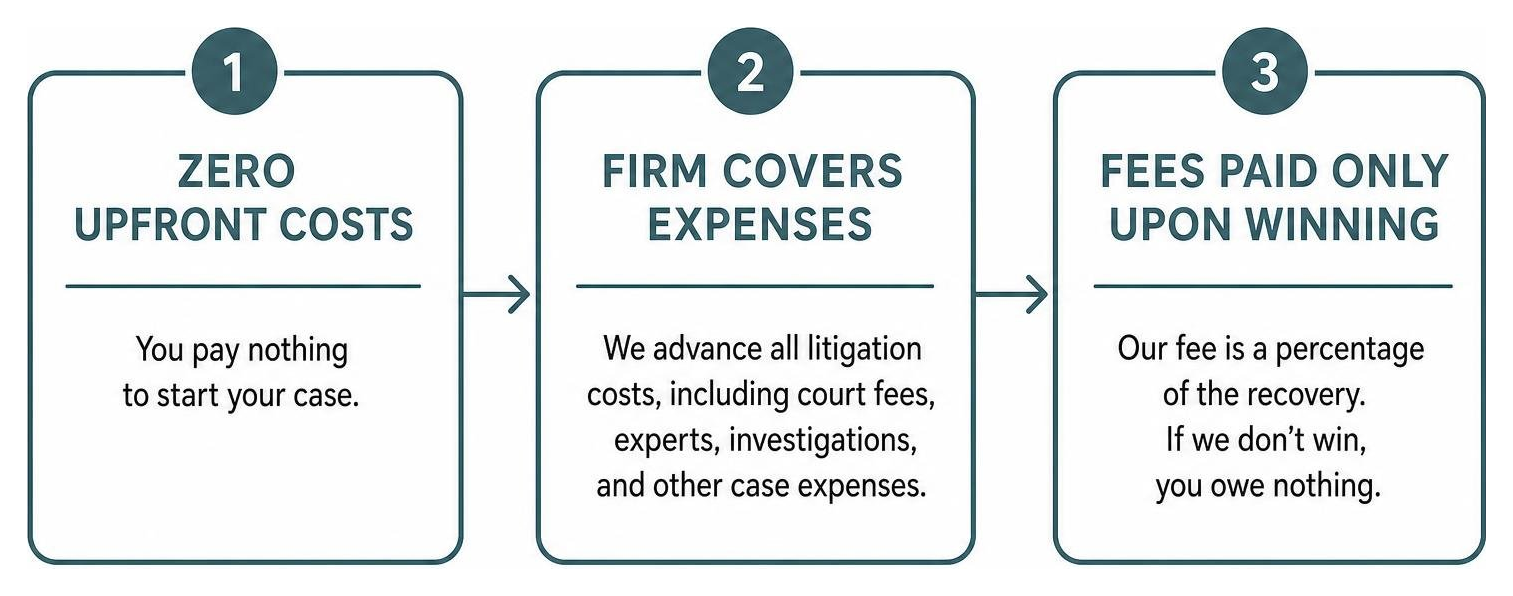
Under a contingency fee arrangement:
- Zero Upfront Fees: You do not pay any retainer fees or out-of-pocket costs to start your case.
- Firm Covers Litigation Expenses: Investigating a fatal crash or medical error requires resources. Our firm advances all expenses related to court filing fees, accident reconstructionists, medical expert reviews, and deposition transcripts.
- No Payout Unless We Win: Attorney fees and advanced case expenses are deducted solely as an agreed-upon percentage of the final settlement award or trial verdict. If we do not recover financial compensation for you, you owe us nothing.
This structure allows families to access top-tier legal advocacy without incurring financial risk during an already overwhelming time.
What Is a Wrongful Death Claim and Who Has Legal Standing to File?
A wrongful death claim is a civil lawsuit filed when a person dies as a result of another party’s negligent, reckless, or intentional conduct. Unlike criminal prosecutions, which focus on punishing an offender through fines or imprisonment, a civil wrongful death action focuses entirely on securing financial compensation and civil justice for the surviving family members left behind.
Because a civil suit is separate from any criminal proceedings, a civil wrongful death claim can move forward even if criminal charges were never brought or resulted in an acquittal.
Legal Standing Under Louisiana Law
State laws establish strict rules regarding who holds legal standing to bring a wrongful death lawsuit. In Louisiana, under Civil Code Article 2315.2, legal standing follows a rigid hierarchy of statutory categories. Higher-ranking primary categories bar lower-ranking relatives from bringing a claim:
- Category 1: The surviving spouse and/or surviving children of the deceased.
- Category 2: If no surviving spouse or children exist, the surviving parents of the deceased.
- Category 3: If no spouse, children, or parents survive, the surviving brothers and sisters of the deceased.
- Category 4: If no spouse, children, parents, or siblings survive, the surviving grandparents of the deceased.
If none of these family members exist, the personal representative or executor of the estate may file the claim on behalf of the deceased person’s succession. You can review more details through our resource on wrongful death claims attorneys to see how legal standing applies to your specific situation.
Common Causes of Fatal Accidents
Preventable deaths occur in a wide variety of tragic settings across the metro area. Identifying the underlying cause is the first step toward proving liability.
- Motor Vehicle Collisions: Distracted driving, drunk driving, speeding, and aggressive maneuvers lead to severe multi-vehicle crashes on major corridors like I-10, I-610, and US-90.
- Commercial Truck Crashes: Due to the massive size and weight of 18-wheelers, collisions with commercial trucks frequently result in fatal injuries for passenger vehicle occupants.
- Workplace Fatalities: Industrial sites, maritime operations along the Mississippi River, chemical plants, and construction sites carry severe hazards. When safety protocols are ignored, catastrophic incidents occur.
- Medical Malpractice: Fatal surgical errors, misdiagnoses, medication overdoses, and failure to monitor patients can turn a routine medical visit into a tragedy.
- Nursing Home Neglect: Vulnerable residents may suffer fatal bedsores, severe falls, dehydration, malnutrition, or delayed medical treatment due to understaffed elder care facilities. Learn how to take action in our guide on how to hold facilities accountable for nursing home wrongful death.
- Premises Liability & Slip and Falls: Hazardous property conditions, inadequate security, structural collapses, and dangerous walkways can cause fatal falls or fatal injury. When investigating a slip and fall or hazardous property incident, gathering immediate evidence is crucial—including taking clear photographs of liquid on the floor, documenting structural defects, and verifying that no warning or “wet floor” signs were present at the scene.
Proving Negligence and Liability
To successfully resolve a wrongful death case, four key legal elements of negligence must be established by a preponderance of the evidence:
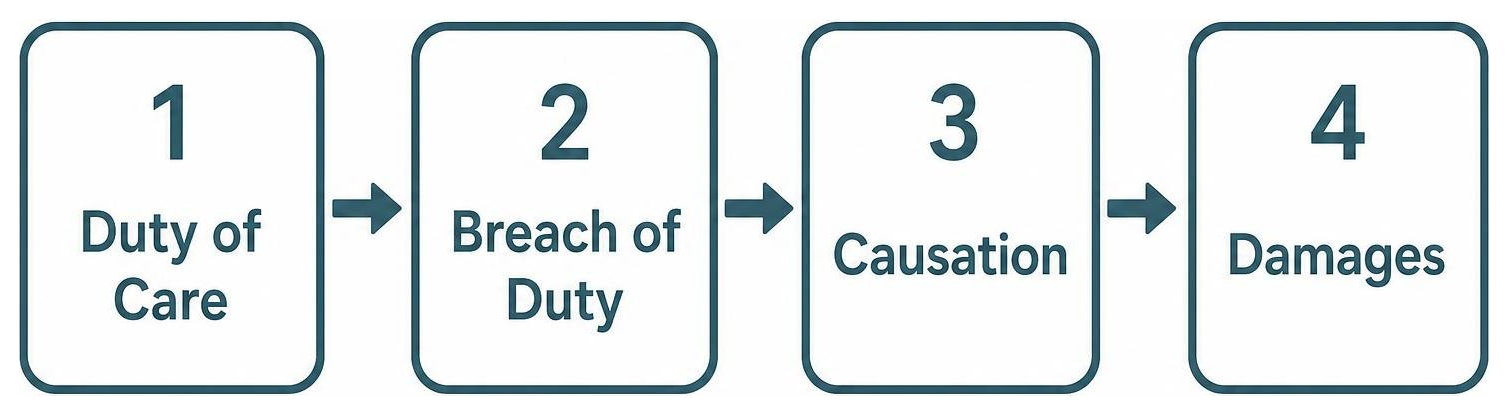
- Duty of Care: Proving that the defendant owed a legal obligation to act safely toward the victim (e.g., a driver’s duty to obey traffic signals, or a doctor’s duty to adhere to medical standards).
- Breach of Duty: Demonstrating that the defendant failed to uphold that legal obligation through careless, reckless, or illegal actions.
- Causation: Linking the defendant’s breach directly to the fatal event. We must show that the death would not have occurred without the defendant’s specific misconduct.
- Damages: Documenting the financial, emotional, and physical harm suffered by the surviving family members and the estate.

Building a compelling case requires a swift, thorough investigation. Our firm works with accident reconstructionists, physical evidence technicians, medical analysts, and financial economists to preserve physical evidence, collect video surveillance, obtain police reports, and record crucial witness testimony before it disappears.
Recoverable Damages and Survival Actions in Death Claims
When a family loses a loved one, the financial and personal toll can feel overwhelming. Civil actions allow surviving family members to seek monetary compensation for both financial losses and severe emotional loss.
Recoverable compensation is generally divided into economic and non-economic damages:
Economic Damages (Quantifiable Financial Losses):
- Loss of the victim’s future earning capacity and income support.
- Loss of household benefits, insurance coverage, and pension contributions.
- Medical expenses incurred prior to the victim’s death.
- Funeral, burial, and memorial service expenses.
Non-Economic Damages (Subjective Personal Losses):
- Profound mental anguish, grief, and sorrow endured by surviving family.
- Loss of love, affection, companionship, and emotional guidance.
- Loss of consortium and marital intimacy.
Wrongful Death Claims vs. Survival Actions
In Louisiana, state law draws a sharp distinction between a wrongful death claim and a survival action under Civil Code Article 2315.1. While both claims often arise from the same tragic event, they compensate completely different losses and belong to distinct recovery categories.
| Legal Claim | What It Compensates | Who Receives the Payout |
|---|---|---|
| Wrongful Death Action (La. Civ. Code art. 2315.2) | Compensates the surviving family members for their own personal losses caused by the loved one’s passing (loss of love, companionship, financial support, mental anguish). | Directly to the qualified surviving family members (spouse, children, parents, or siblings in order of statutory priority). |
| Survival Action (La. Civ. Code art. 2315.1) | Continues the victim’s personal injury claim that existed prior to passing. Compensates for the physical pain, conscious suffering, mental terror, and medical bills the victim experienced from the moment of injury until death. | To the statutory beneficiaries or estate, passing down as part of the decedent’s succession. |
By filing both actions simultaneously, your legal team can ensure every dollar of harm—both the victim’s pre-death suffering and the family’s ongoing grief—is fully accounted for.
To estimate potential financial values in these complex claims, explore our detailed wrongful death settlement calculator: typical payouts explained.
Average Settlement Factors and Valuations
Every fatal claim carries a unique valuation based on the specific facts of the case. While no two cases are identical, several critical factors influence total recovery amounts:
- Available Insurance Policy Limits: The defendant’s commercial auto liability policy, general corporate insurance limits, or umbrella coverage often establish the maximum available insurance coverage.
- The Victim’s Age and Earning Potential: A deceased wage earner with young dependents and decades of high income potential generally commands a higher economic damage valuation.
- Degree of Liability and Fault: Clear-cut liability on the part of the defendant creates stronger settlement leverage compared to disputed fault scenarios.
- Conscious Pain and Suffering: In survival claims, the length of time the victim endured conscious physical pain or emotional terror before passing significantly impacts non-economic damages.
Families seeking further insights into historical case values can read our overview on wrongful death settlement amounts and consult with our firm for a personalized evaluation.
Crucial Steps and Legal Deadlines After a Fatal Loss
When a family member passes away unexpectedly, taking prompt administrative and legal action is vital to safeguard your family’s rights and prevent valuable physical evidence from being lost or destroyed.
What to Do Immediately After a Fatal Incident
- Request Official Documentation: Secure certified copies of the official police crash report, incident reports, death certificates, and emergency medical service (EMS) records.
- Preserve Physical Evidence: Retain all physical property associated with the accident, including damaged clothing, personal effects, vehicle components, and photos of the scene.
- Do Not Speak With Insurance Adjusters: Insurance adjusters representing negligent parties are trained to minimize company payouts. Avoid providing recorded statements, signing release waivers, or accepting early settlement offers without consulting an attorney.
- Open an Estate/Succession: Coordinating with local probate proceedings allows the family to handle financial matters and establish legal standing smoothly.
- Consult a Local Attorney Promptly: Engaging a wrongful death attorney near me early on ensures that legal preservation letters are sent immediately to prevent negligent entities from wiping surveillance footage or altering safety logs.
Understanding Louisiana Statute of Limitations and Key Deadlines
Timing is critical. In Louisiana, the statute of limitations—statutorily known as the prescriptive period—is extraordinarily short.
Under Louisiana Civil Code Article 2315.2, families generally have only one year from the exact date of their loved one’s death to file a wrongful death lawsuit in court.
If you miss this one-year prescriptive deadline, the court will almost certainly dismiss your case permanently, forfeiting your family’s right to seek financial recovery regardless of how obvious the defendant’s negligence was.
Special rules and even tighter notification windows apply when a government vehicle, public agency, or municipality is involved in the fatal incident. For a comprehensive breakdown of these strict time limits, review our resource on Louisiana’s one year statute of limitations.
Frequently Asked Questions About Local Death Claims
How long does a wrongful death case typically take to resolve?
The timeline for resolving a fatal accident claim varies significantly based on case complexity and the willingness of insurance companies to negotiate fairly.
- Direct Settlement Negotiations: Cases with clear liability, unambiguous insurance policies, and straightforward loss calculations may settle within 6 to 12 months.
- Complex Litigation and Trial: Claims involving disputed fault, multi-vehicle commercial trucking accidents, complex medical malpractice, or corporate defendants often require full formal litigation. These cases typically take 18 months to 3 years or longer to go through discovery, expert depositions, and trial.
Our goal is always to work efficiently while pushing aggressively for the full compensation your family deserves.
What happens if the deceased was partially at fault for the accident?
Louisiana operates under a pure comparative fault legal doctrine (Civil Code Article 2323). This means that even if your loved one was partially at fault for the fatal event, your family is not barred from recovering compensation.
Instead, any financial award is reduced in direct proportion to the percentage of fault assigned to the deceased. For example:
- If a jury calculates total damages at $2,000,000;
- And finds the deceased was 20% at fault for the crash;
- The final recovery award would be reduced by 20% ($400,000), resulting in a net recovery of $1,600,000.
Because defense teams routinely attempt to shift blame onto the victim to reduce their financial exposure, having skilled legal counsel is essential to defeat unfair comparative fault allegations.
Are wrongful death settlement payouts taxable?
Under federal law (Internal Revenue Code Section 104(a)(2)), compensatory damages received on account of personal physical injuries or physical sickness are excluded from gross income. This means that compensatory payouts for wrongful death—including economic damages for lost income and non-economic damages for mental anguish and loss of companionship—are generally not subject to federal or state income tax.
However, there are minor exceptions:
- Punitive Damages: If punitive damages are awarded to punish egregious misconduct, that portion of the recovery is taxable under federal tax law.
- Accrued Pre-Judgment Interest: Any interest earned on a court judgment or delayed settlement payout may be taxable as ordinary income.
We recommend consulting with a qualified tax accountant or CPA when structuring major settlement distributions.
Demand Justice with Proven Local Legal Advocacy
No amount of money can ever replace a beloved family member or ease the pain of a sudden loss. But securing civil justice and full financial recovery holds accountable parties responsible, relieves heavy economic strain, and provides long-term stability for the surviving family members left behind.
At J Reese Law Firm, we stand side-by-side with families during their most challenging times. We combine deep knowledge of local courts with relentless dedication to advocate for every dollar our clients deserve.
If you are searching for a wrongful death attorney near me, we invite you to connect with us today. We provide free, completely confidential, no-obligation case evaluations to answer your questions, outline your legal options, and help you determine the best path forward.
Contact a New Orleans wrongful death attorney at our firm today to schedule your free consultation and take the first step toward getting the justice your family deserves. Explore our wrongful death category for additional legal guides and resources.