Why a Gretna T-Bone Accident Lawyer Can Help
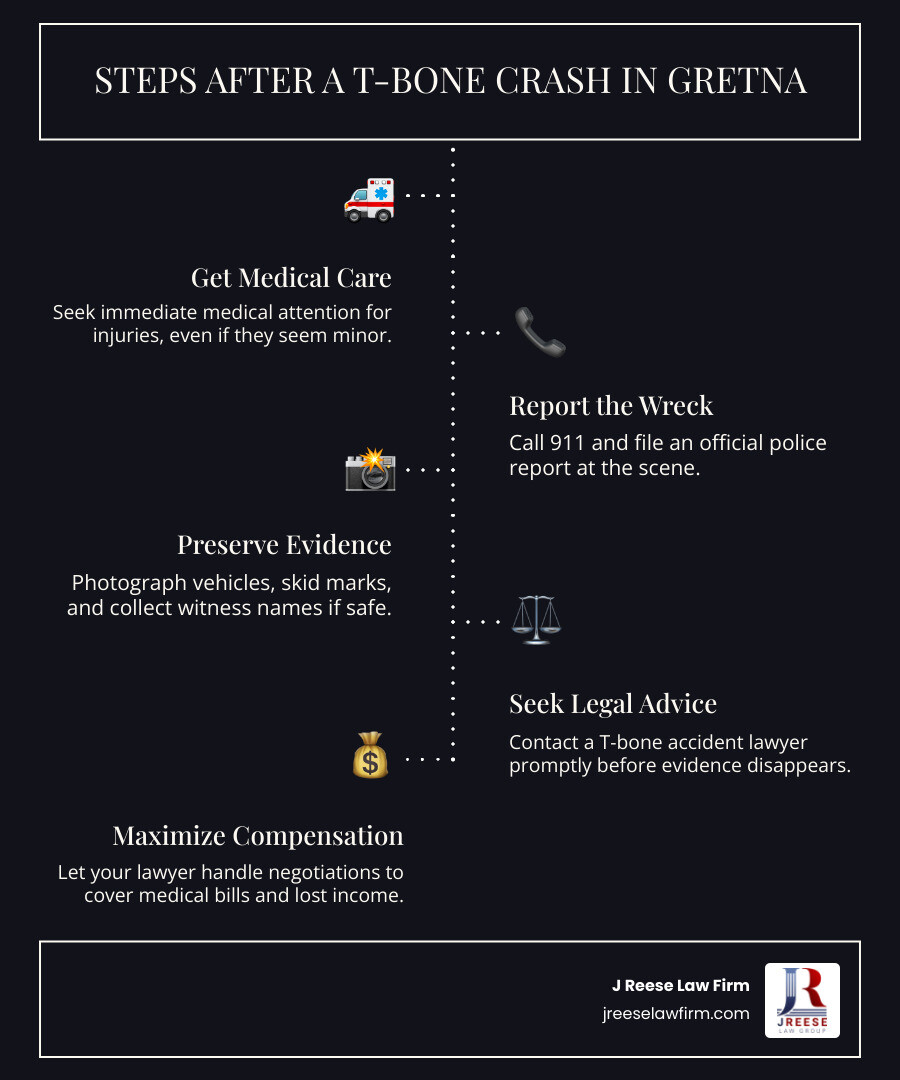
A t bone accident lawyer can help you prove who caused the crash and seek compensation for your injuries. After a collision, get medical care, report the wreck, and, if it is safe, photograph the vehicles and collect witness names. Contact a lawyer promptly: camera footage and other evidence may not be available for long.
In a T-bone crash, one vehicle strikes the side of another, where there is less space to absorb the impact. Even when the damage is clear, the drivers may disagree about who had the right of way.
I’m Justin Reese, a civil litigation and personal injury attorney who has represented people hurt in auto collisions since 2011. As a t bone accident lawyer, I know how important it is to examine the evidence and understand the full cost of an injury before resolving a claim.
T bone accident lawyer terms made easy:
Why Side-Impact Collisions Require a T Bone Accident Lawyer
Broadside crashes are among the most violent wrecks on the road. When the front of an oncoming vehicle slams directly into the side of your car, there is remarkably little material standing between you and thousands of pounds of moving steel. Data underscores how perilous these wrecks are: according to NHTSA records, side-impact collisions account for roughly 23.6 percent of all traffic crashes, yet they generate a disproportionately high share of catastrophic harm. In 2023 alone, 5,352 vehicle occupants lost their lives in side-impact crashes, representing 22 percent of all passenger vehicle fatalities that year.
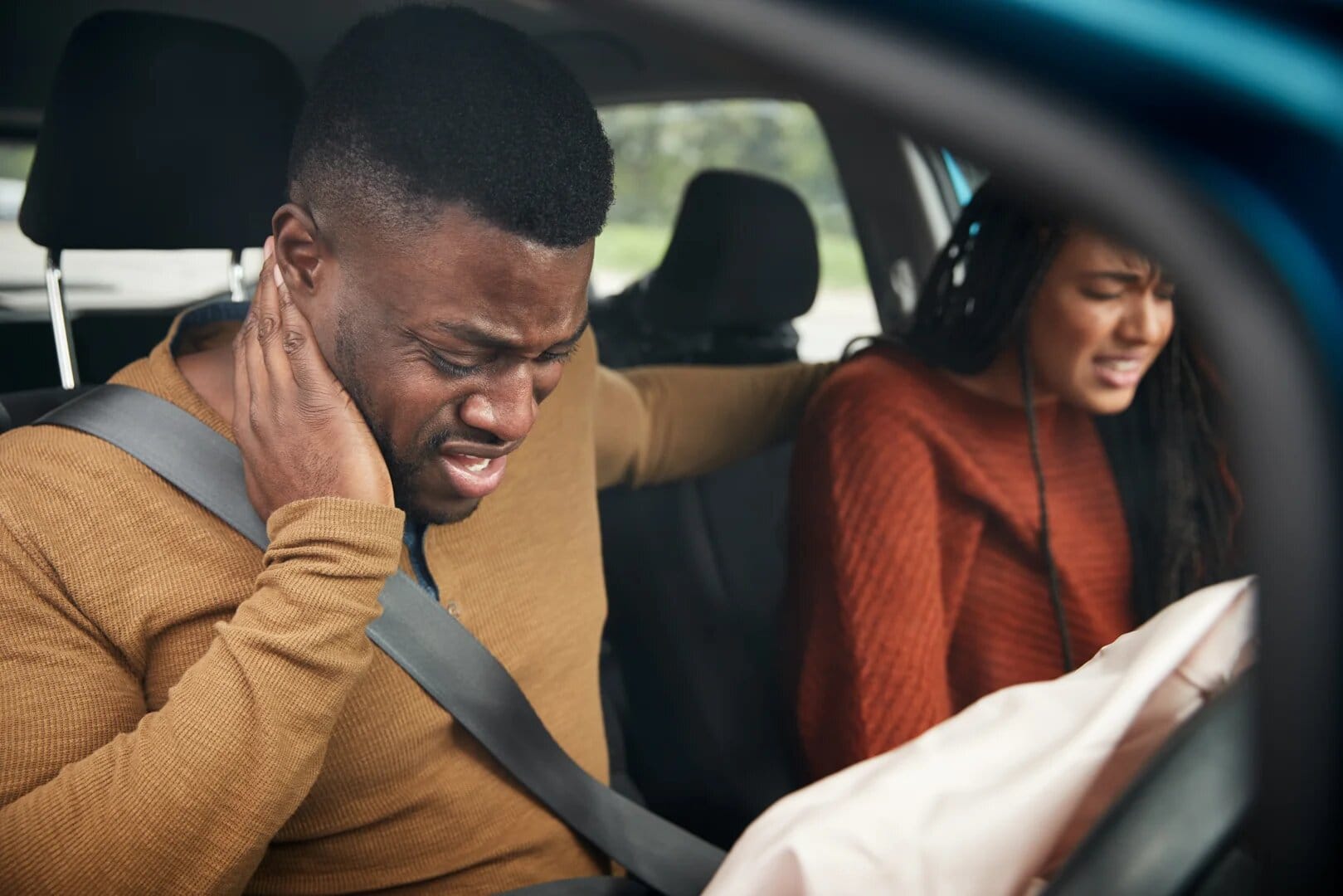
When you are hit broadside, the vehicle door crumples inward almost instantly. This intrusion can cause catastrophic harm, including traumatic brain injuries from head contact with side windows, severe spinal disc herniations, fractured ribs, crushed pelvic bones, and internal organ lacerations. When dealing with injuries this severe, retaining an attorney is critical to protect your right to full financial recovery while you focus entirely on healing.
Understanding the Severe Mechanics and Injuries of Broadside Crashes
Unlike frontal or rear-end collisions, which benefit from several feet of engine block, trunk space, and engineered crumple zones designed to absorb kinetic energy, side doors offer only a thin layer of sheet metal and glass. This direct transmission of crash energy into the passenger cabin leaves drivers and passengers vulnerable to immense physical trauma.
Victims often endure severe whiplash, compound fractures, punctured lungs, and severe nerve damage. Recovering from these injuries requires months of extensive medical care, specialized surgeries, and physical therapy before reaching maximum medical improvement. Securing proper compensation requires working with skilled accident lawyers New Orleans residents recommend for serious injury claims who understand how to calculate long-term medical costs and build strong cases against negligent drivers.
Types of Collisions Handled by a T-Bone Accident Lawyer
Side-impact collisions happen in many different driving environments, each presenting unique legal questions:
- Four-Way Intersection Crashes: Occur when a driver fails to stop at a red light or stop sign, striking cross-traffic that has the legal right-of-way.
- Left-Turn Failures: Happen when a motorist misjudges the speed of oncoming vehicles or turns across lanes without a clear green arrow.
- Parking Lot Collisions: Occur when drivers back out of parking stalls without looking or speed through travel lanes without yielding.
- Commercial Truck and Delivery Crashes: Broadside impacts involving delivery vans, tractor-trailers, or heavy freight haulers carrying higher commercial liability insurance policies.
- Rideshare Collisions: Crashes involving Uber or Lyft vehicles where complex layered insurance policies apply depending on the driver’s app status.
- Malfunctioning Traffic Control Devices: Incidents where improper signal timing or municipal infrastructure failures contribute directly to the crash.
Establishing Fault and Gathering Critical Evidence After an Intersection Crash
Proving liability in a side-impact wreck is rarely straightforward. Insurance carriers routinely dispute liability, claiming their policyholder had the green light or that the other motorist failed to yield. Establishing clear legal fault requires a detailed review of T-Bone Car Accident Fault principles, physical collision data, and eyewitness statements.

How Fault Is Determined in Disputed Right-of-Way Wrecks
When both drivers claim they had the green light, we must dig deeper than the initial statements given to responding officers. Establishing negligence involves reviewing driver behavior such as speeding, texting while driving, or driving under the influence.
Knowing what to do after a car accident in Louisiana can protect your case from day one. We use objective technical evidence, including event data recorders (black boxes) that track vehicle speed, braking, and steering inputs in the seconds leading up to impact. We also pull municipal traffic signal sequence logs to prove which direction had the green phase at the exact moment of the crash, overcoming neutral or disputed police reports.
Essential Evidence to Preserve at the Crash Scene
The scene of an intersection crash changes rapidly. Physical roadway markings fade, debris is cleared by road crews, and commercial security video is frequently overwritten within days.
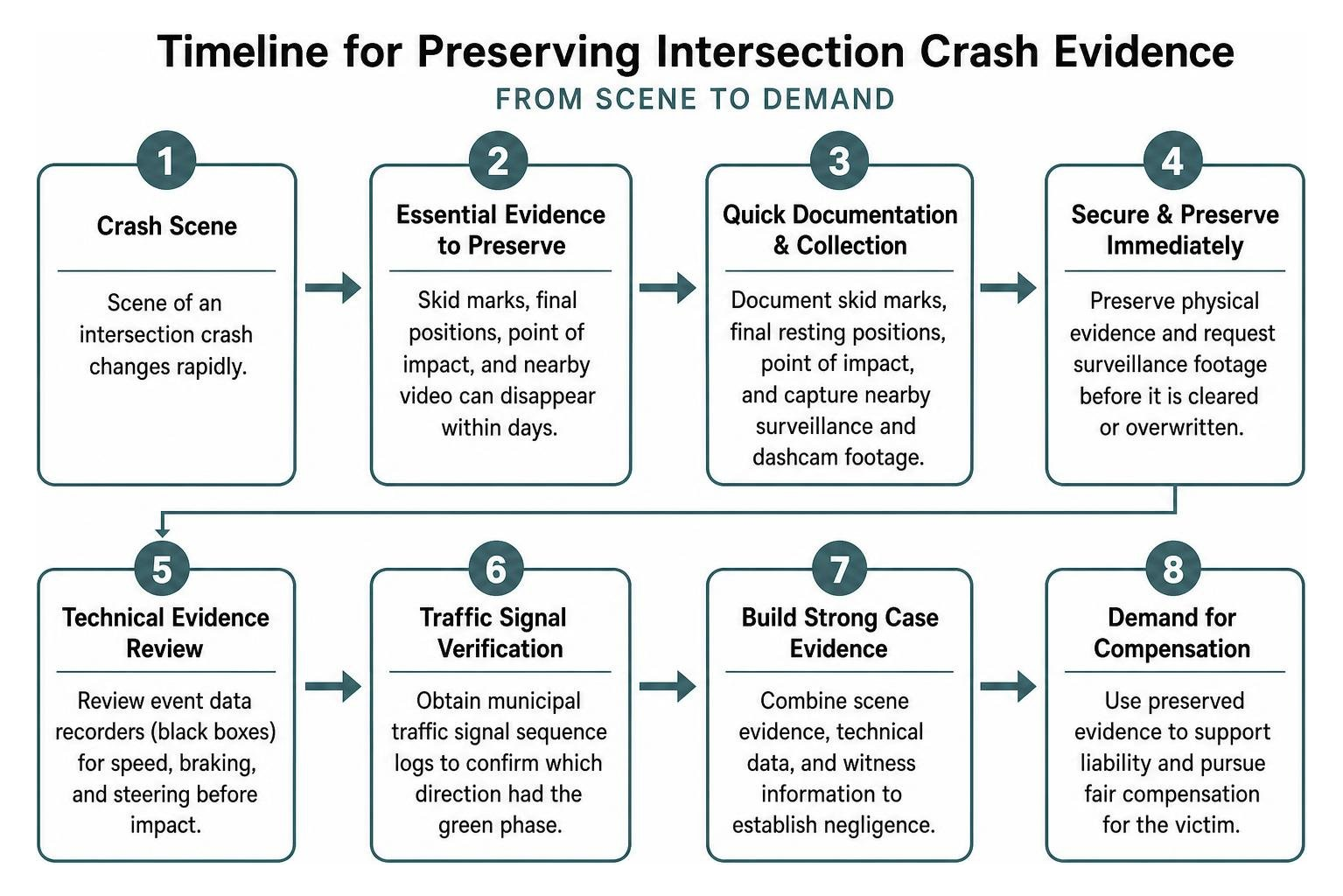
To build a solid claim, crucial evidence must be preserved quickly:
- Skid marks and yaw marks that reveal braking attempts, steering adjustments, and pre-impact vehicle speed.
- Final resting positions of both vehicles relative to the center of the intersection.
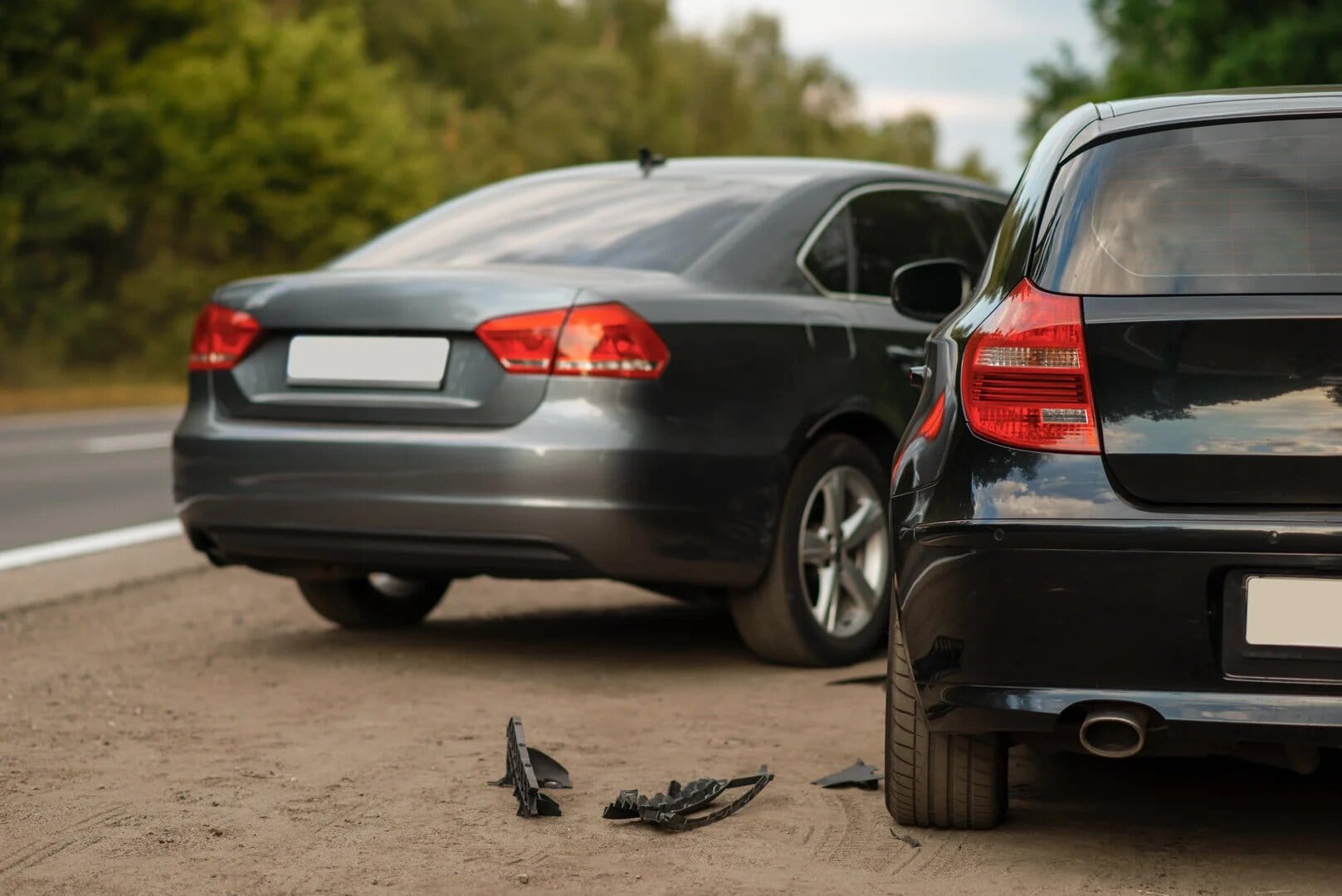
- Point-of-impact photographs showing direct door intrusion, frame deformation, and paint transfer.
- Nearby surveillance and dashcam footage captured from local storefronts, municipal traffic cameras, or nearby motorists.
- Eyewitness contact information from independent observers who saw traffic signal states before the collision occurred.
- The official uniform crash report, including the investigating officer’s diagram and initial field notes.
Compensation and Comparative Fault in Broadside Collision Claims
A serious broadside collision can create overwhelming financial strain alongside physical pain. Filing a personal injury claim allows you to pursue compensation for both your financial losses and personal suffering.
| Damage Category | Examples of Recoverable Losses | Method of Proof |
|---|---|---|
| Economic Damages | Emergency transport, hospital bills, future surgeries, physical therapy, prescription medication, lost wages, diminished earning capacity, vehicle repair or total loss value. | Medical bills, wage statements, tax returns, repair estimates, life care plans. |
| Noneconomic Damages | Physical pain and suffering, emotional anguish, loss of enjoyment of life, permanent scarring, physical impairment, sleep disruption. | Treatment notes, personal pain journals, testimony from loved ones, multiplier formulas. |
Calculating Economic and Noneconomic Damages
Economic damages compensate you directly for quantifiable out-of-pocket costs, while noneconomic damages address the personal toll of your injuries. In many personal injury cases, noneconomic damages are evaluated using a multiplier approach, where your total medical expenses are multiplied by a number typically between 1.5 and 5, depending on injury severity, recovery duration, and permanent disability.
To maximize your financial compensation for car crash losses across New Orleans, every medical bill, rehabilitation receipt, and lost work hour must be documented thoroughly.
How Comparative Negligence and Statutory Deadlines Impact Your Claim
Many states, including Louisiana and Arizona, follow comparative fault rules. Under pure comparative negligence, you can recover damages even if you share partial responsibility for the collision, but your financial payout is reduced by your assigned percentage of fault. For example, if your total damages are $100,000 but an insurer proves you were 20 percent at fault for driving slightly over the speed limit, your final recovery would be $80,000.
Additionally, you must file your claim within strict legal deadlines, known as the prescriptive period or statute of limitations. Failing to take formal legal action before this deadline passes will permanently bar you from recovering financial compensation.
The Strategic Benefits of Legal Representation After a Crash
Attempting to resolve a high-stakes broadside crash on your own often leaves you at a distinct disadvantage. Insurance adjusters work to protect their company’s bottom line by minimizing claim payouts, offering early lowball settlements, or using your recorded statements against you. Understanding why an accident injury lawyer in Louisiana is essential for your claim can make a significant difference in your financial recovery.
How a T Bone Accident Lawyer Negotiates with Insurance Companies
Our team handles every detail of the legal and insurance process so you can concentrate on your medical recovery. We collect comprehensive medical records, consult accident reconstruction professionals, identify all available auto insurance policies—including commercial fleet coverage and uninsured/underinsured motorist (UM/UIM) benefits—and craft a strong settlement demand package. We represent clients on a contingency fee basis, meaning you pay no upfront legal fees unless we successfully resolve your case through settlement or verdict.
Overcoming Adverse Police Reports and Unfair Blame
Police officers responding to chaotic intersection wrecks often arrive after vehicles have been moved, leaving them to rely on incomplete driver accounts. If a police report assigns unearned fault to you, that finding does not automatically decide your civil case.
We challenge incorrect police conclusions by gathering physical vehicle evidence, analyzing traffic signal timing, and bringing forward independent witnesses. Handling these disputes effectively is a core part of building successful New Orleans personal injury claims that protect your rights and your future.
Frequently Asked Questions About T-Bone Accidents
What is the most common cause of a T-bone accident?
The most common cause of a T-bone accident is failing to yield the right-of-way at an intersection. This often involves running red lights, failing to stop at stop signs, making illegal or misjudged left turns across oncoming lanes, and driving while distracted by a smartphone.
How long do I have to file a side-impact car accident claim?
The time limit to file a lawsuit depends on state law. In Louisiana, tort claims are subject to strict prescriptive periods, making it important to consult legal counsel as soon as possible after a wreck to avoid missing filing deadlines.
How is pain and suffering calculated in broadside crash settlements?
Pain and suffering is typically calculated using the multiplier method or a per diem daily rate. The multiplier method takes your total economic medical damages and multiplies them by a number—usually between 1.5 and 5—based on the severity of your pain, the duration of your medical treatment, and whether you sustained permanent physical impairments.
Take Action to Protect Your Recovery Today
Recovering from a serious broadside crash requires dedicated medical attention and strong legal advocacy. Do not let insurance companies minimize your injuries or shift unfair blame onto you. At J Reese Law Firm, we stand up for injured individuals across the Greater New Orleans and Gretna communities, fighting for every dollar our clients deserve.
If you or a loved one has been hurt in a side-impact collision, reach out today to speak with a dedicated New Orleans car accident injury lawyer who can evaluate your case, investigate your crash, and guide your recovery forward.