When a Nursing Home Fails Your Family, You Have Legal Options
A nursing home abuse lawyer can be one of the most important calls you make when something feels wrong with your loved one’s care. Here is a quick look at what that means for your family:
What a nursing home abuse lawyer does for you:
- Investigates abuse, neglect, and facility failures on your behalf
- Gathers medical records, staffing logs, and evidence to build your case
- Identifies every party that can be held liable — staff, administrators, corporate owners
- Negotiates settlements or takes your case to trial
- Works on contingency — you pay nothing unless you win
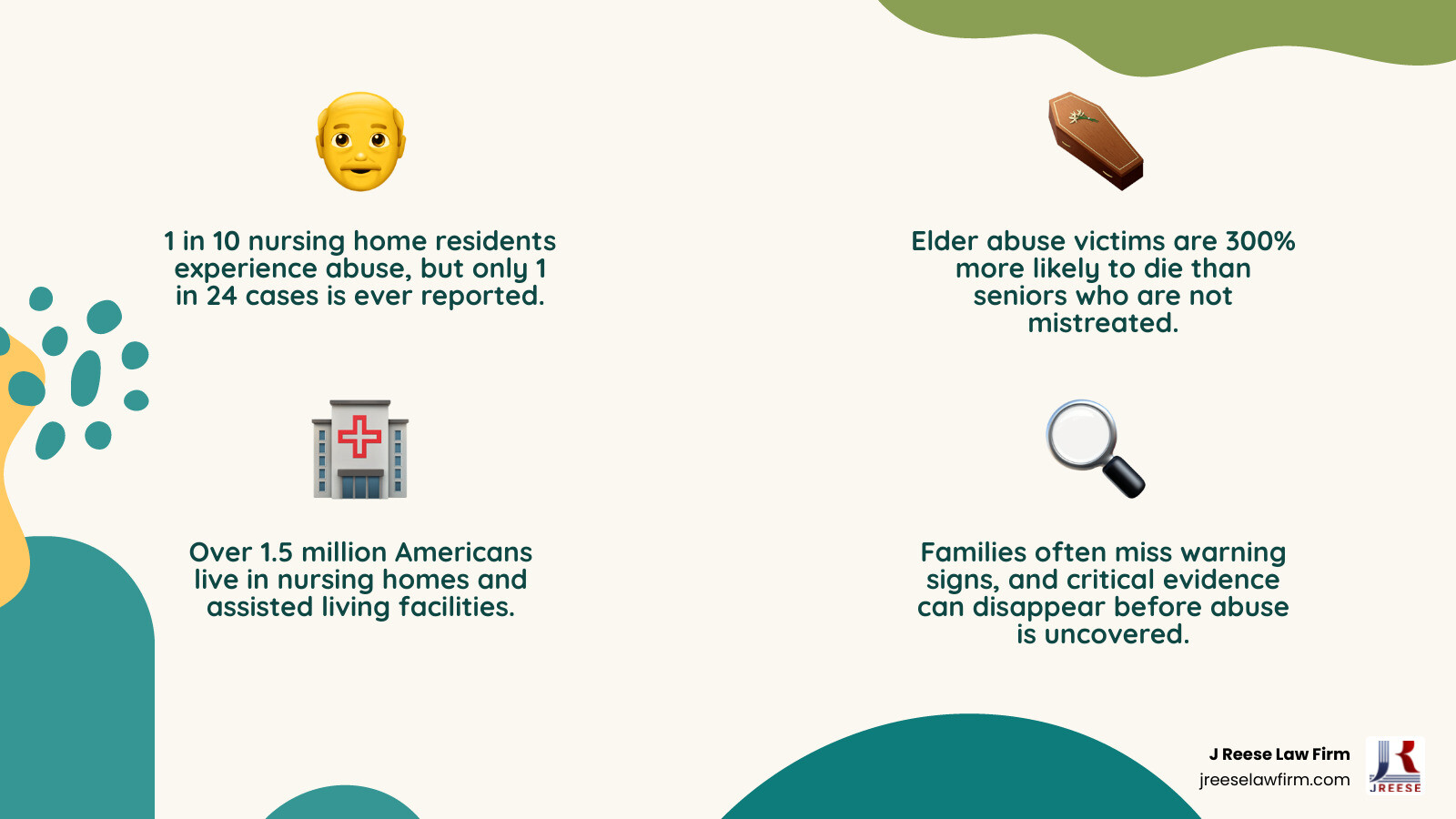
The numbers behind nursing home abuse are alarming. More than 1.5 million Americans currently live in nursing homes and assisted living facilities. Research shows that 1 in 10 residents will experience some form of abuse — yet only 1 in 24 cases ever gets reported. Victims of elder abuse are 300% more likely to die than seniors who are not mistreated. In short, the stakes could not be higher.
Families often miss the warning signs. They trust the facility. They don’t want to believe it. And by the time the abuse becomes undeniable, critical evidence may already be gone.
If something feels off — trust that instinct.
I’m Justin Reese, a civil litigation attorney with J Reese Law Firm and a New Orleans native with over a decade of experience in catastrophic injury and wrongful death cases, including cases involving nursing home abuse lawyer representation for families across Louisiana. If your loved one has been harmed in a care facility, I want to help you understand exactly what your options are.
Basic Nursing home abuse lawyer glossary:
Warning Signs and Types of Elder Abuse in Care Facilities
When we place our parents, grandparents, or spouses into a long-term care facility, we expect them to receive the dignity and care they deserve. Unfortunately, many families discover that the reality inside these facilities is far from the promises made during the admissions process.
Elder abuse in nursing homes is not always obvious. It can occur in several distinct ways, and understanding the different forms of Nursing Home Abuse is the first step toward stopping it.
- Physical Abuse: This involves the intentional use of physical force that results in bodily injury, pain, or impairment. It includes hitting, slapping, pinching, or the inappropriate use of physical and chemical restraints.
- Emotional Abuse: Verbal assaults, threats, intimidation, humiliation, or isolating the resident from friends, family, and activities can cause severe psychological trauma.
- Financial Exploitation: This occurs when staff members, administrators, or even third parties unauthorizedly access a resident’s bank accounts, steal their personal property, or coerce them into altering legal documents like wills or powers of attorney.
- Sexual Abuse: Any non-consensual sexual contact or interaction with a resident, particularly those who lack the cognitive capacity to consent due to dementia or Alzheimer’s.
Recognizing these issues early can save a life. Let’s look closer at how these problems develop and how you can spot them.
The Difference Between Neglect and Intentional Abuse
While both neglect and intentional abuse cause devastating harm, they stem from different behaviors. Intentional abuse involves active, deliberate harm—such as a caregiver striking a resident or stealing their money. Neglect, on the other hand, is often passive. It is a failure to provide the basic necessities of life, such as food, water, hygiene, medication, and adequate supervision.
However, passive neglect is rarely just an accident. It is often the direct result of staff burnout and extreme job stress. In many understaffed facilities, employees are stretched to their absolute limits. A stunning 51 percent of certified nursing assistants (CNAs) surveyed admitted to yelling at nursing home residents due to frustration and workplace pressure.
When a facility operates with too few workers, basic duties are missed. We call this identifying systemic facility failures: when a corporation cuts corners on staffing, they create a ticking time bomb where both neglect and active abuse become inevitable.
Identifying Bedsores and Pressure Ulcers
One of the most undeniable signs of medical negligence in a care facility is the development of pressure ulcers, commonly known as bedsores. Bedsores occur when a resident is left lying or sitting in one position for too long, cutting off blood flow to vulnerable areas like the heels, ankles, hips, and tailbone.
Bedsores are categorized by severity:
- Stage I: The skin is intact but appears red and does not turn white when pressed.
- Stage II: The skin breaks open, creating an open sore or blister.
- Stage III: The wound deepens into the tissue beneath the skin.
- Stage IV: The most severe stage, where the skin breakdown is so deep that muscle, tendon, or bone is exposed.
A Stage IV bedsore is a massive infection risk. It can quickly lead to sepsis, bone infections, and death. Because bedsores are almost entirely preventable through routine repositioning, proper hygiene, and adequate nutrition, their presence is often the smoking gun of severe nursing home neglect.
Unsupervised Falls and Premises Liability
Seniors with limited mobility require close supervision and assistance when transferring from beds, wheelchairs, or toilets. When facilities fail to provide this assistance, unsupervised falls occur, often leading to traumatic brain injuries, hip fractures, and other catastrophic harm.
These incidents frequently cross into the realm of premises liability. If your loved one fell because of a physical hazard in the facility—such as a spill left uncleaned or a lack of proper safety equipment—the facility can be held liable.
If you suspect a fall was caused by unsafe conditions, it is vital to gather evidence immediately. Take pictures of the substance or liquid on the floor, document the lack of wet floor signs, and photograph any broken handrails or poor lighting.
To understand how these claims work in our local legal system, you can read about How a New Orleans Premises Liability Lawyer Saves the Day After a Bad Fall or find more general information on Premises Accident Lawyer Help.
Legal Rights, Liability, and Compensation in Louisiana
Nursing home residents do not lose their legal rights when they move into a care facility. In fact, both federal and state laws provide them with specific, robust protections designed to preserve their health, safety, and dignity.
| Legal Framework | Key Rights & Protections |
|---|---|
| Federal Law (OBRA 1987) | Right to be free from physical/chemical restraints; right to participate in care planning; right to privacy and regular clinical assessments. |
| Louisiana State Protections | Right to civil and religious liberties; right to be fully informed of medical status; right to manage personal financial affairs. |
Under the federal Nursing Home Reform Act of 1987, any facility receiving Medicare or Medicaid funding must maintain a Residents’ Bill of Rights. If a facility violates these rights, or if their negligent operations cause physical harm, they can be held legally accountable.
Who Can Be Held Liable in a Nursing Home Abuse Case?
Establishing liability in an elder abuse lawsuit requires looking beyond the immediate caregiver who committed the act. While an individual staff member can be held personally liable for assault or theft, the facility itself is usually the primary target of a civil lawsuit.
We look at three levels of liability:
- The Caregiver: For active abuse, physical assaults, or medication theft.
- Facility Administrators: For failing to supervise staff, failing to report incidents, or ignoring complaints from families.
- Corporate Owners: For systemic issues like severe understaffing, inadequate training, and failing to conduct proper background checks on employees.
If a corporate owner cuts staffing budgets to maximize profit, knowing it will lead to neglect, they can—and should—be held liable for the resulting injuries.
Louisiana’s Strict Deadlines for Filing a Claim
If you suspect your loved one has been abused or neglected, you cannot afford to wait to take action. Louisiana has some of the shortest legal deadlines in the country.
Under Louisiana’s One Year Statute of Limitations, you generally have only one year from the date of the injury (or the date you discovered the injury) to file a civil lawsuit. As we navigate the legal landscape in July 2026, missing this strict one-year window means your family will lose the right to seek justice and compensation forever. A dedicated nursing home abuse lawyer can help you file your claim on time to preserve your rights.
Recovering Compensation for Abuse and Wrongful Death
When a family files a lawsuit against a negligent facility, they can seek compensation for both economic and non-economic damages. This includes:
- Medical Expenses: The cost of hospitalization, surgeries, physical therapy, and transferring your loved one to a safe facility.
- Pain and Suffering: Compensation for the physical agony and emotional trauma caused by the abuse or neglect.
- Wrongful Death Damages: If the facility’s negligence resulted in a fatality, the family can pursue a wrongful death claim to cover funeral expenses, medical bills, and the loss of companionship.
Every case is unique, and calculating the value of a claim requires looking at similar historical cases. You can explore our resources on the Average Nursing Home Neglect Settlement to see how these payouts are structured.
If the neglect led to a tragedy, you can learn How to Hold Facilities Accountable for Nursing Home Wrongful Death. We also provide tools like our Wrongful Death Settlement Calculator Typical Payouts Explained and articles detailing Wrongful Death Settlement Amounts to help families set realistic expectations.
If you are ready to take legal action, consulting a Wrongful Death Claims Attorney is the most effective way to protect your family’s interests.
How a Nursing Home Abuse Lawyer Builds a Strong Case

Building a successful case against a nursing home requires a thorough investigation. Facilities have deep pockets, corporate legal teams, and insurance companies whose entire job is to deny, delay, and devalue your claim. To beat them, we must build an ironclad case based on objective evidence.
Our process involves:
- Gathering Medical Records: We analyze charts, physician orders, and wound care logs to find discrepancies.
- Securing Witness Statements: We interview other residents, visiting family members, and former staff who can testify to the conditions inside the home.
- Reviewing Staffing Logs: We look at daily sign-in sheets to prove the facility was operating below safe staffing ratios.
- Establishing a Breach of standard of care: We work with medical professionals to prove that the facility’s care fell below acceptable professional standards.
Immediate Steps to Take Before Contacting a Nursing Home Abuse Lawyer
If you suspect your loved one is in immediate physical danger, call 911 right away. If they are safe but you believe they are victims of neglect or abuse, take these steps immediately to build a foundation for your case:
- Document Everything: Write down dates, times, names of staff members on duty, and exactly what you observed.
- Take Photographs: Photograph any physical injuries, bedsores, unexplained bruises, or unsanitary living conditions (such as uncleaned rooms or soiled bedding).
- Report the Abuse: File an official complaint with the Louisiana Department of Health, which oversees long-term care facilities in our state.
- Contact an Ombudsman: Reach out to the local Louisiana Long-Term Care Ombudsman, who advocates for residents’ rights.
How a Nursing Home Abuse Lawyer Investigates Corporate Neglect
When we take on a nursing home, we look beyond the individual incident to find patterns of corporate neglect. Many facilities are owned by large, out-of-state private equity firms that view elderly care purely as a numbers game. To increase profits, they cut staff, reduce training, and limit supplies.
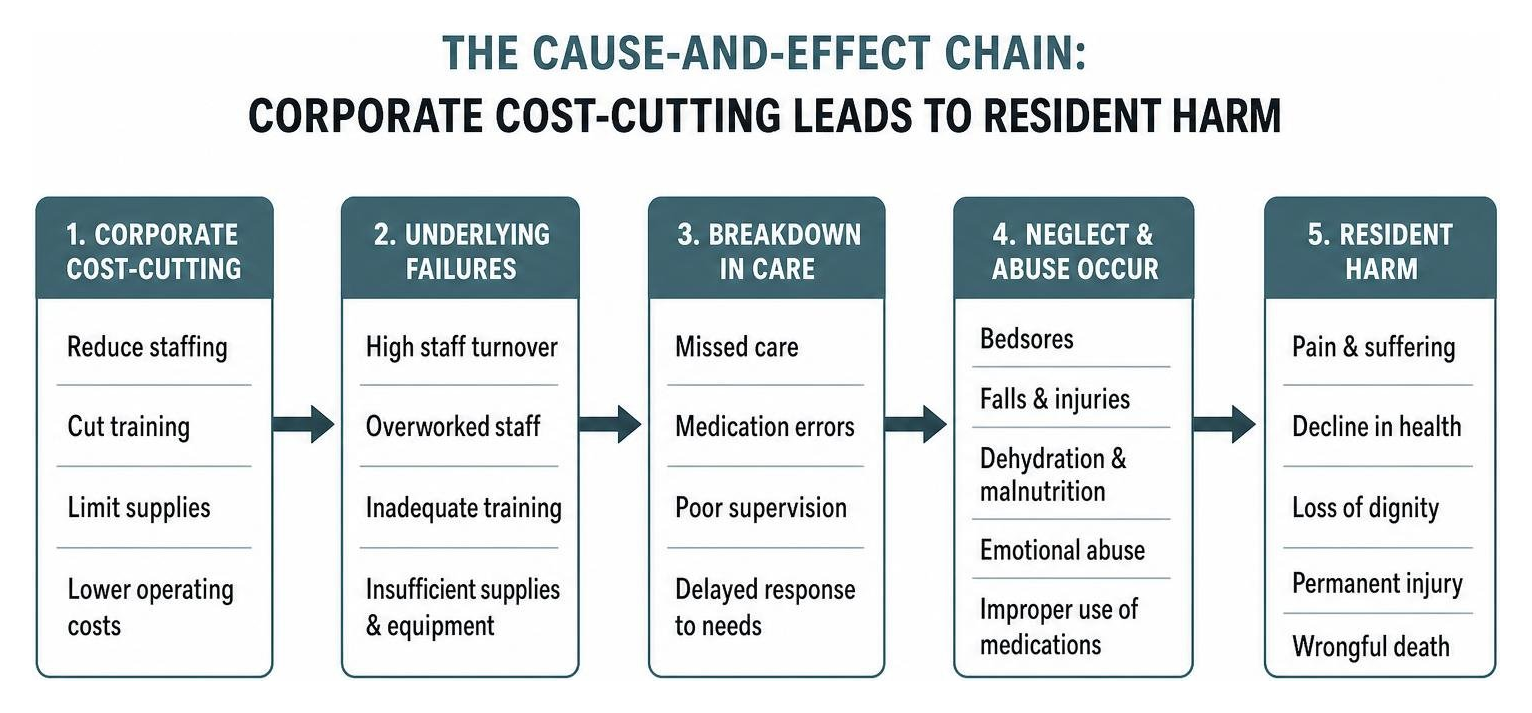
We dig deep into the facility’s administrative records. We review their medication logs to see if medication errors—which cause 7,000 to 9,000 deaths annually in the United States—are a systemic issue.
We also look for the inappropriate use of chemical restraints. This is the practice of over-medicating residents with antipsychotics or sedatives simply to make them easier to manage for an understaffed shift, rather than using the drugs for legitimate medical treatments.
Frequently Asked Questions About Nursing Home Litigation
Navigating a legal claim against a care facility can feel overwhelming. Here are answers to some of the most common questions families ask us during initial consultations.
How common is nursing home abuse and why does it go unreported?
As noted earlier, approximately 1 in 10 seniors living in facilities will experience some form of abuse or neglect. Yet, only 1 in 24 cases is ever reported to authorities.
There are several reasons for this massive underreporting:
- Fear of Retaliation: Residents worry that if they complain, staff members will treat them worse when their family is not around.
- Cognitive Impairment: Many residents suffer from dementia, Alzheimer’s, or severe speech limitations, making it physically or mentally impossible for them to report what is happening.
- Shame and Isolation: Some seniors feel embarrassed that they cannot care for themselves and choose to suffer in silence.
This silence is deadly. Seniors who experience elder abuse face a 300% higher mortality risk than those who receive proper, compassionate care.
What is the difference between nursing home neglect and medical malpractice?
While they often overlap, they are distinct legal concepts. Medical malpractice occurs when a licensed healthcare professional (like a doctor or physical therapist) provides treatment that deviates from the accepted professional standard of care, causing injury.
Nursing home neglect is broader. It often involves failures in custodial care rather than medical treatment. This includes failing to assist a resident with basic hygiene, failing to provide clean water, or leaving a resident unsupervised, leading to a fall.
An experienced attorney will evaluate your case to determine if it should be filed as a standard personal injury claim, a premises liability claim, or a medical malpractice action, as each has different procedural requirements under Louisiana law.
Can we sue a nursing home if we signed an arbitration agreement?
Many nursing homes slip mandatory arbitration clauses into the mountain of paperwork families must sign during the admission process. These clauses state that if a dispute or injury occurs, the family waives their right to a jury trial and must resolve the issue through a private arbitrator.
Do not assume you cannot sue just because you signed one of these agreements. Courts frequently strike down arbitration clauses if they are found to be unconscionable, confusing, or signed under duress. We regularly challenge these agreements to preserve our clients’ right to a public jury trial, where facilities can be held fully accountable.
Standing Up for Your Loved One’s Dignity and Rights
Your loved one spent a lifetime caring for others. Now that they need care themselves, they deserve to be treated with respect, safety, and comfort. When a facility breaks that trust and prioritizes corporate profits over human lives, they must be held accountable.
You do not have to carry this burden alone. At the J Reese Law Firm, we are dedicated to standing up for New Orleans families and vulnerable seniors who cannot fight for themselves. We will handle the investigations, the paperwork, and the corporate insurance companies so you can focus on your family.
If you suspect your loved one has been harmed by nursing home neglect or abuse in New Orleans, time is of the essence. Contact us today for a free, confidential consultation. For more information on navigating personal injury claims in our city, you can also read New Orleans Personal Injury Your Guide to Getting Every Dollar You Deserve. Let us help you protect your family and seek the justice your loved one deserves.