What to Do If You Suspect Nursing Home Emotional Abuse in Gretna
If you suspect emotional abuse, act quickly: protect your loved one’s safety, document what you see, report concerns in writing, and speak with a nursing home emotional abuse attorney about possible legal options. Emotional abuse may leave no visible injury, but threats, yelling, humiliation, isolation, and intimidation can cause real psychological harm.
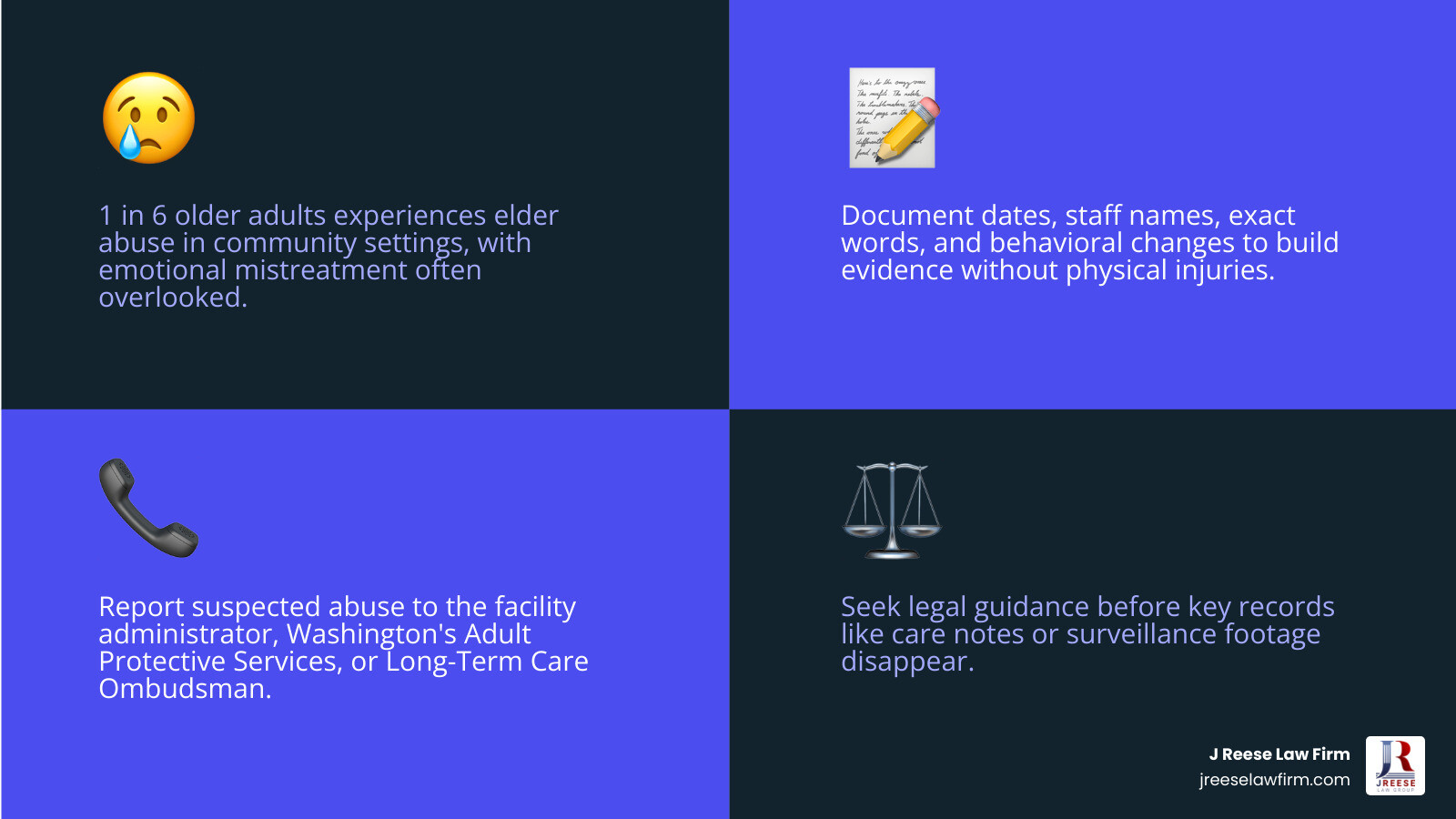
- Write down dates, staff names, exact words, and changes in behavior.
- Save texts, emails, photos, videos, and facility complaint records.
- Report suspected abuse to the facility administrator and the appropriate Louisiana adult-protection or long-term-care advocacy resource.
- Seek legal guidance before key records, such as care notes or surveillance footage, disappear.
Families should watch for sudden fear around certain staff members, withdrawal, depression, anxiety, reluctance to talk, or a resident who no longer wants visitors or group activities. National research estimates that one in six older adults experiences elder abuse in community settings, and emotional mistreatment is often overlooked because its effects are harder to see.
I am Justin Reese, a civil litigation and personal injury attorney with years of experience representing people and families facing serious harm and institutional wrongdoing. My work as a nursing home emotional abuse attorney focuses on helping families understand their rights, preserve evidence, and pursue accountability when a resident’s dignity and safety are at risk.
Nursing home emotional abuse attorney vocab explained:
Understanding Emotional Elder Abuse and Its Legal Definitions
Emotional elder abuse in long-term care facilities involves verbal or non-verbal conduct that inflicts mental anguish, fear, humiliation, or severe distress on a vulnerable adult. While broken bones or bruises leave obvious physical evidence, psychological cruelty erodes a person’s sense of safety and self-worth from the inside out.
Under Louisiana law and broader civil legal frameworks, emotional mistreatment can take multiple forms:
- Verbal Degradation: Screaming, insulting, belittling, mocking physical infirmities, or using patronizing language.
- Threats and Intimidation: Threatening physical harm, withholding food or medication, or threatening to transfer the resident to an undesirable unit.
- Social Isolation: Purposefully restricting a resident’s contact with family, friends, phone access, or group social activities as a form of punishment.
- Gaslighting and Manipulation: Convincing an elder they are losing their sanity, lying about family visits, or blaming them for their medical conditions.
- Humiliation: Mocking personal hygiene needs or posting unauthorized recordings of vulnerable moments online.
Emotional mistreatment can be especially difficult to prove because its effects are not always visible. For Gretna families, prompt documentation and legal guidance can help preserve the facts needed to evaluate whether a facility or caregiver should be held accountable.
| Factor | Standard Negligence | Intentional Elder Abuse |
|---|---|---|
| Legal Definition | Failure to exercise reasonable care | Willful, reckless, malicious, or oppressive conduct aimed at causing harm |
| State of Mind | Carelessness, inattention, or ordinary oversight | Intentional, deliberate cruelty, or conscious disregard of safety |
| Examples | Forgetting to refill a water pitcher or a delayed call-light response | Yelling insults, taunting, isolating a resident in a dark room, or issuing threats |
| Potential Remedies | Compensation for losses tied to the harm | Damages and other remedies that depend on the facts and applicable law |
The Difference Between Standard Negligence and Elder Abuse
Understanding the legal distinction between basic negligence and actionable elder abuse is vital when seeking justice. Ordinary negligence occurs when a facility breaches its duty of care through carelessness—such as understaffing that leads to delayed assistance. While negligent acts cause harm, they may lack an element of deliberate cruelty.
Conversely, fighting back against elder abuse may require evidence of intentional infliction of emotional distress, recklessness, or oppressive behavior. When a facility’s staff members deliberately torment a resident, families may have grounds to seek accountability from the responsible individuals and the facility.
How to Recognize and Document the Signs of Psychological Abuse

Because emotional abuse rarely leaves physical marks, recognizing subtle behavioral shifts is the first line of defense. Families should remain attentive during visits and watch for clear warning signs:
- Sudden withdrawal from conversations or social activities.
- Uncharacteristic agitation, panic attacks, or depressive episodes.
- Avoidance of eye contact when staff members enter the room.
- Fear of speaking openly about the care they receive.
- Sudden reluctance to participate in hobbies they once loved.
- Changes in eating or sleeping habits without medical explanations.
If you observe these changes, document everything systematically:
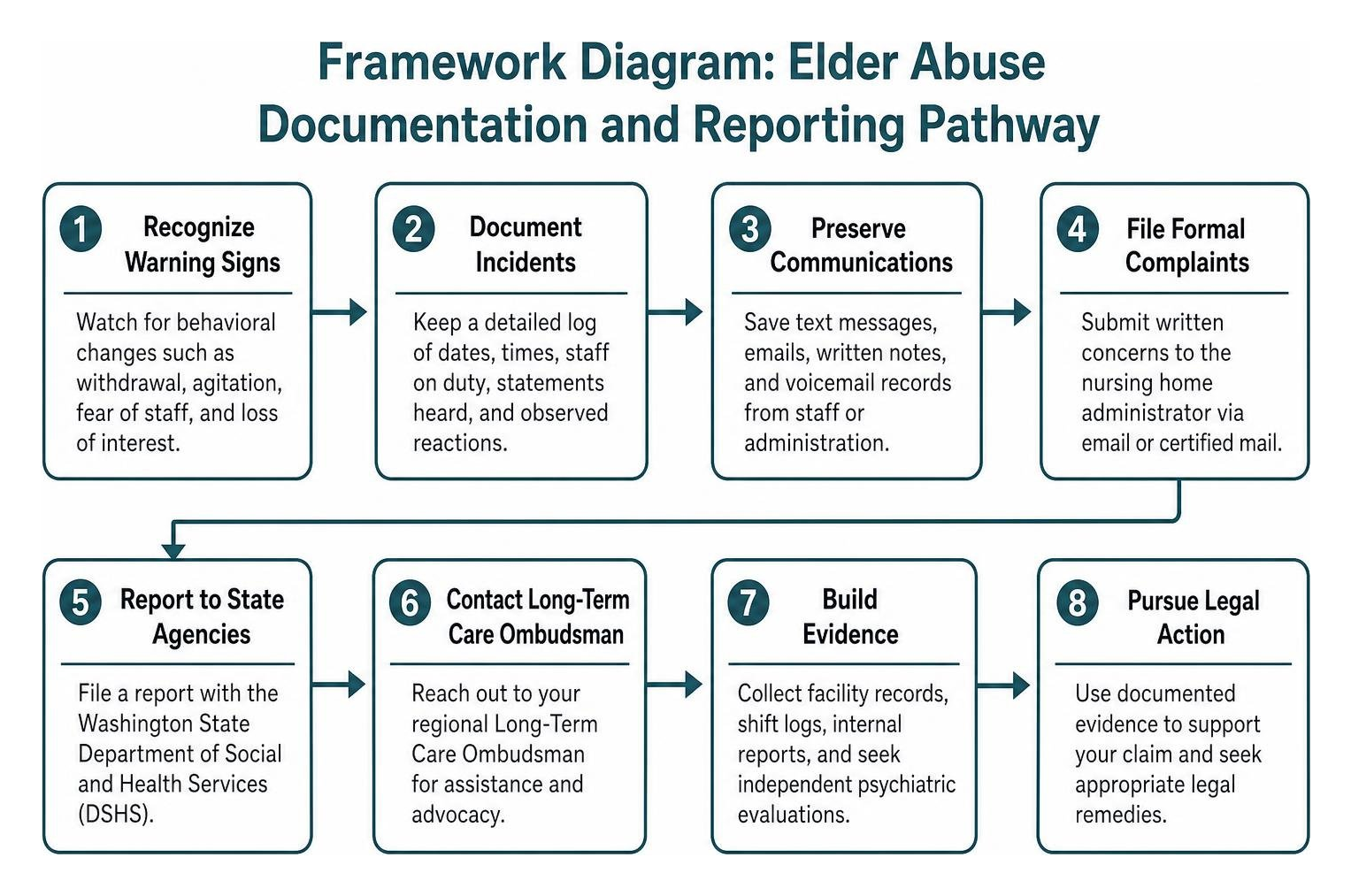
- Keep a Detailed Incident Log: Note dates, times, staff on duty, specific statements overheard, and observable behavioral reactions.
- Preserve Communications: Save text messages, written notes, emails, and voicemail records from staff or administration.
- File Formal Written Complaints: Submit your concerns directly to the nursing home administrator via email or certified mail so a paper trail exists.
- Report to Appropriate Louisiana Resources: Contact the applicable Louisiana adult-protection agency and long-term-care ombudsman program, and keep copies of each report.
Building Evidence Without Physical Injuries
Winning an emotional abuse claim without physical injuries depends on comprehensive documentation. We utilize multiple sources of corroborating evidence to demonstrate that psychological harm occurred:
- Facility Records and Shift Logs: Staffing rosters, internal incident reports, and medication administration charts often reveal patterns of neglect or retaliatory behavior.
- Third-Party Psychiatric Evaluations: Evaluations by independent psychologists or geriatric mental health counselors can help document post-traumatic stress, sudden anxiety, or severe depression after mistreatment.
- Witness and Roommate Testimony: Statements from visitors, roommates, volunteers, or ethical staff members who witnessed verbal degradation or isolation.
- Digital and Surveillance Records: Facility hallway cameras, electronic door logs, and phone call histories that can help establish when a resident was isolated or ignored.
Similar to other civil claims, establishing liability requires evidence connecting the facility’s conduct to the psychological harm suffered.
When to Consult a Nursing Home Emotional Abuse Attorney
When administrative complaints fail to resolve mistreatment, or when facility staff retaliate against your loved one for speaking out, knowing when should you hire nursing home abuse attorneys becomes essential. You should reach out immediately if:
- The resident exhibits severe psychological decline or expresses fear for their life.
- The facility refuses to provide medical charts, staff logs, or incident reports.
- Administration dismisses complaints as mere confusion or dementia-related paranoia.
- Staff members intentionally restrict your visitation rights or isolate your family member.
Taking legal action early can help preserve vital records and digital surveillance footage before they are altered or destroyed.
How a Nursing Home Emotional Abuse Attorney Builds a Claim
When our firm takes on a case, we initiate a thorough investigation to establish institutional liability. We examine whether the facility engaged in systemic understaffing, failed to conduct adequate background checks, or ignored prior employee disciplinary warnings.
We issue legal demands to preserve available physical and digital evidence, seek relevant records, and consult with appropriate professionals to document the resident’s psychological trauma. Discovering why a facility permitted toxic workplace behavior is why hiring a nursing home abuse lawyer is a smart move when demanding full accountability.
Choosing the Right Nursing Home Emotional Abuse Attorney in Gretna
Choosing appropriate legal representation helps protect your family’s rights. Key criteria include:
- Local Court Familiarity: Knowledge of the legal process, Louisiana elder-protection laws, and reporting systems that may apply to a Gretna-area case.
- Contingency Fee Representation: Ask how fees are handled before retaining counsel, including whether the firm works on a contingency basis when appropriate.
- Dedicated Track Record: Reviewing the top qualities to look for in an elder neglect lawyer helps you choose a team capable of managing complex institutional disputes.
- Clear Guidance and Compassion: Using a practical guide to choosing nursing home lawyers in city can help you identify an attorney who provides open communication every step of the way.
Legal Grounds, Damages, and Timelines for Filing a Lawsuit
Filing a civil lawsuit may allow families to seek justice, address financial burdens, and deter future wrongdoing. Depending on the facts and applicable law, recoverable damages in an emotional mistreatment claim may include:
- Economic Damages: Medical bills, psychotherapy costs, counseling expenses, and moving fees associated with transferring the resident to a safe facility.
- Non-Economic Damages: Compensation for pain and suffering, emotional distress, loss of dignity, terror, anxiety, and diminished quality of life.
- Additional Damages or Remedies: In cases involving intentional or egregious conduct, additional remedies may be available under the circumstances.
Settlement values vary based on the severity of the conduct, the duration of the abuse, and the measurable psychological harm suffered. Reviewing benchmarks like an average nursing home neglect settlement can provide general context, but every claim turns on its own facts.
Filing Deadlines and Case Timelines
Deadlines for pursuing a nursing home abuse claim can vary based on the legal theory, the date of discovery, the resident’s circumstances, and other case-specific facts. Families in Gretna should seek legal advice promptly rather than waiting to determine which deadline applies.
Certain circumstances can affect the time available to pursue a claim, including cognitive incapacity or efforts to conceal misconduct. Understanding how long does a nursing home lawsuit take helps families prepare for the steps involved—from initial investigation through settlement discussions or trial.
Pursuing Claims for Residents with Dementia or Deceased Victims
A common misconception is that a resident living with Alzheimer’s or dementia cannot be the subject of a successful emotional abuse claim. Depending on the family’s legal authority and the facts of the case, a representative may be able to act on an incapacitated loved one’s behalf.
If an elderly resident passes away before or during litigation, surviving family members may have legal options through the resident’s estate. Knowing how to hold facilities accountable for nursing home wrongful death can help families understand the questions to discuss with an attorney.
Frequently Asked Questions About Nursing Home Emotional Abuse
Can an emotional abuse lawsuit succeed if there are no visible physical injuries?
Yes. Civil law recognizes psychological trauma as a genuine, compensable injury. Successful cases rely on documented behavioral changes, medical evaluations from psychologists, witness testimony, facility logs, and internal communications demonstrating a pattern of cruel or reckless conduct.
Can a family member file a claim if the victim has dementia?
Yes. Having a cognitive impairment does not strip an individual of their human rights or legal protections. Family members holding a durable power of attorney, legal guardianship, or appointed as a guardian ad litem can initiate legal proceedings on the resident’s behalf.
What types of financial compensation can be recovered in an emotional abuse case?
Victims and their families can recover compensation for psychological therapy, psychiatric medical expenses, facility relocation costs, physical therapy necessitated by stress-induced health decline, and substantial damages for mental anguish, loss of enjoyment of life, and emotional suffering.
Protecting Your Loved One’s Rights and Dignity
Nursing home residents deserve to live their later years with respect, peace, and dignity. When caregivers violate that trust through verbal degradation, threats, or deliberate isolation, holding them legally responsible protects not just your family member, but every vulnerable senior in that facility.
At J Reese Law Firm, we stand up against corporate care facilities that put profits and convenience ahead of human dignity. If you suspect your loved one is suffering from psychological mistreatment in Gretna or the greater New Orleans area, visit our nursing home abuse practice area to learn more about your legal rights and request a free, confidential case evaluation today.